

Teaching Co Great Courses DVDs UNDERSTANDING INVENTIONS CHANGED WORLD + bonus
Teaching Co Great Courses DVDs UNDERSTANDING INVENTIONS CHANGED WORLD + bonus





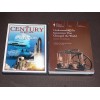

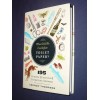


Teaching Co Great Courses DVDs UNDERSTANDING INVENTIONS CHANGED WORLD + bonus
Product Overview
INVENTIONS THAT CHANGED THE WORLD
( course # 1100 )
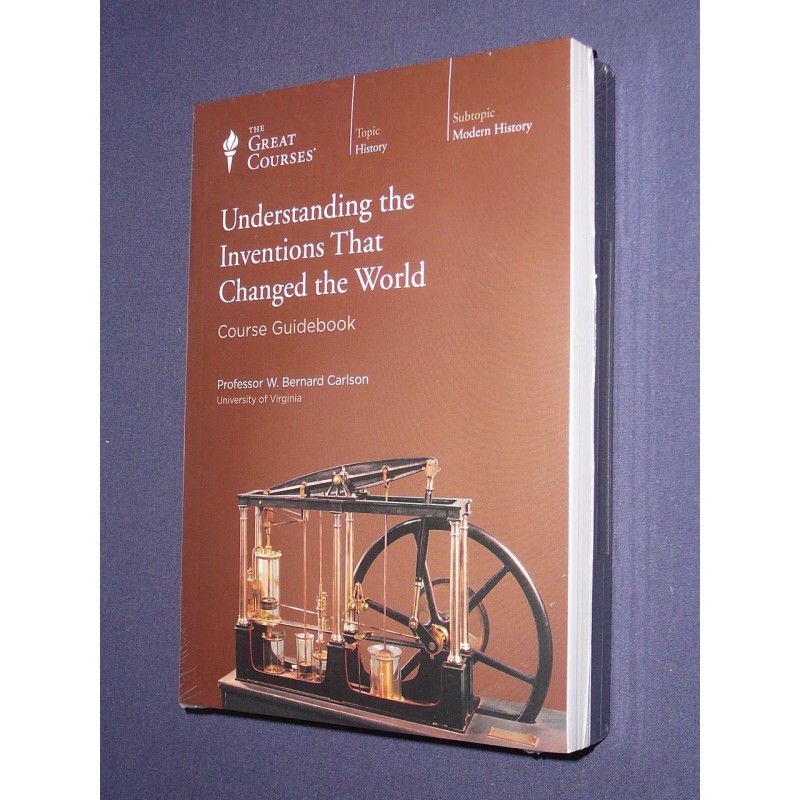
The complete course of 36 lectures on 6 DVDs, and the guidebook.
Condition : Brand New & Sealed
My photos are real --- never air-brushed or photo-shopped
As a bonus for the next buyer ( bonus is for US residents ONLY ) I will include either :
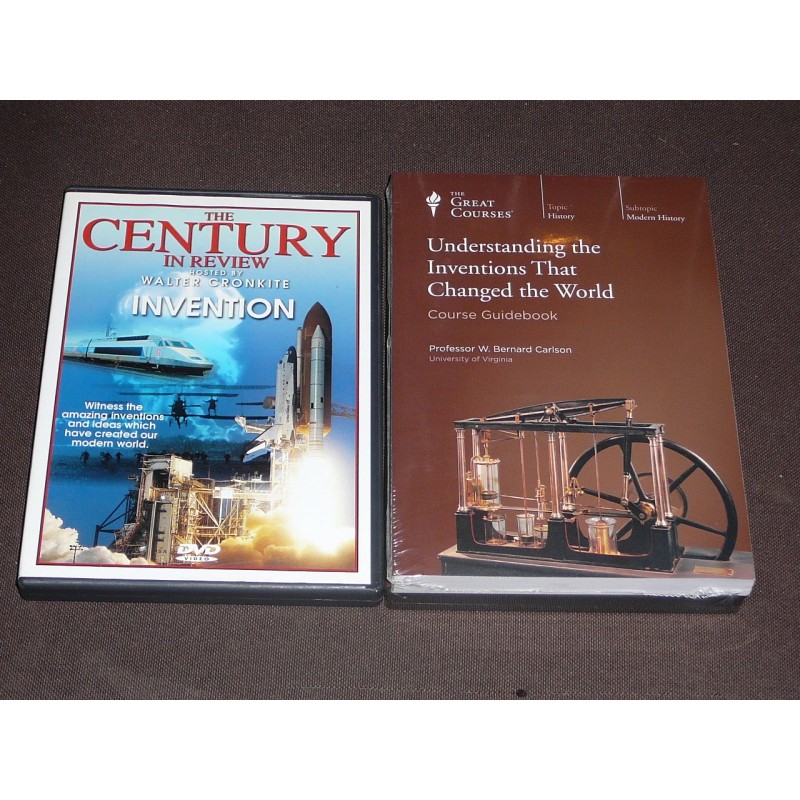
a mint DVD narrated by the great Walter Cronkite
"The Century in Review : INVENTION"
OR:
a new & sealed PBS DVD
"MAKERS : Women Who Make America"
plays for 3 hours
OR :
a mint 463-page book
** You must indicate your bonus choice before shipping or I'll send the first one I find ! **
Shipping 6 days a week
I offer combined shipping : $2 off the shipping on each additional item
( course # 1100 )
The complete course of 36 lectures on 6 DVDs, and the guidebook.
Condition : Brand New & Sealed
My photos are real --- never air-brushed or photo-shopped
As a bonus for the next buyer ( bonus is for US residents ONLY ) I will include either :
a mint DVD narrated by the great Walter Cronkite
"The Century in Review : INVENTION"
OR:
a new & sealed PBS DVD
"MAKERS : Women Who Make America"
plays for 3 hours
OR :
a mint 463-page book
"Extraordinary Origins of Everyday Things"
OR :
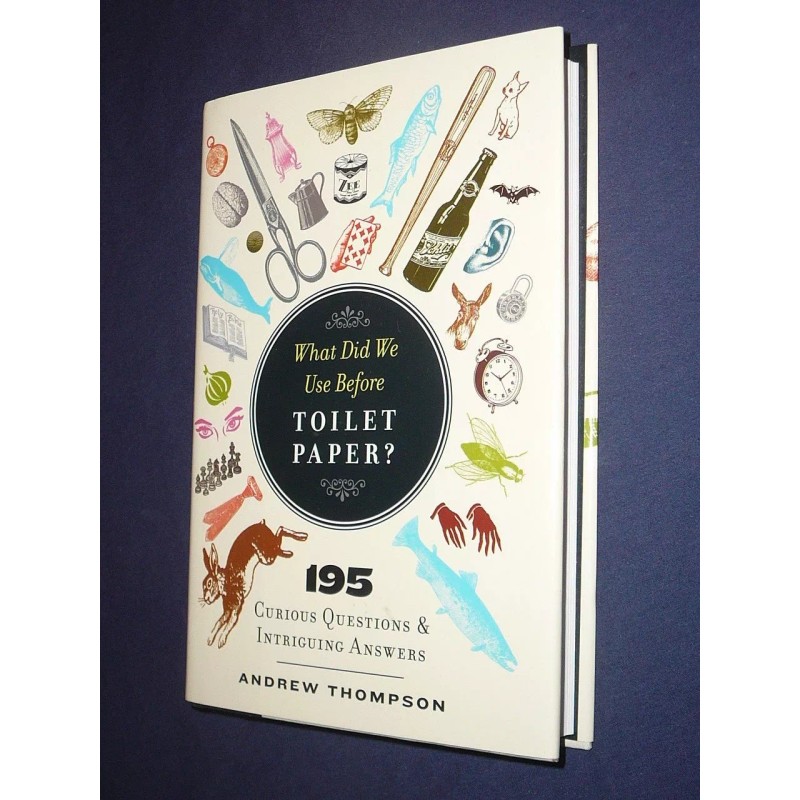
my mint 262-page hardcover book
"What Did We Use Before Toilet Paper ? "
OR :
my good condition set of 2 Transcript books for this course
** You must indicate your bonus choice before shipping or I'll send the first one I find ! **
Shipping 6 days a week
I offer combined shipping : $2 off the shipping on each additional item
About This Course
36 lectures
|
30 minutes per lecture
We’re surrounded by inventions. Consider the clocks, appliances, and transportation that coordinate our days. Or the televisions, cell phones, and social media that connect us to each other. And the shopping malls, department stores, and catalogs that define the modern retailing experience.
Where did all these inventions come from? How do they work? And how do they reflect—even define—the values of our culture? From prehistoric times to the 21st century, inventions have changed the world, enabling humans to produce more food and energy and to establish social order and cultural meaning. In fact, great inventions have marked a number of key turning points in human history, transforming society and our daily lives. For instance:
- The invention of clocks redefined our sense of time, life, and labor.
- Telescopes and microscopes led to the scientific method of observation.
- Access to clean water has perhaps saved more lives than any other technology in the history of the world.
- Coal power gave rise to iron and steel, the basic materials of the Industrial Revolution.
- The integrated circuit opened the floodgates for our world of modern electronics.
Now, you can learn the remarkable stories surrounding such monumental inventions—and how consequential these inventions were to history—in Understanding the Inventions That Changed the World. Taught by Professor W. Bernard Carlson of the University of Virginia, who is an expert on the role of innovation in history, these 36 enlightening lectures give you a broad survey of material history, from the ancient pottery wheel to the Internet and social media. Along with recounting the famous inventions you might expect, such as the steam engine, the airplane, and the atomic bomb, this course explores a number of surprising innovations, including beer, pagodas, and the operating room.
You’ll see how each invention is not only a product of engineering know-how, but a result of social and cultural conditions as well. You’ll meet some of the inventors and companies responsible for these innovations, and you’ll investigate what inspired these ideas. You’ll also get an inside look at the sometimes spirited competition between innovators to see who could develop—and market—the best, most cost-effective product.
From ancient China to 21st-century America, from the English coal mines to the high-tech companies of Silicon Valley, this course takes you around the world and across the ages to show you some of the most innovative moments in human civilization. This unique approach to history will boost your technology literacy and give you a completely new appreciation for the everyday objects around you.
Discover the Mechanics of Great Inventions
Material form has shaped the course of human history. In many ways, ours is a story of producing more—more calories, more work, more goods—with the same finite resources. Remarkably, while the materials and production techniques have changed over the centuries, from bronze to semiconductors and from the waterwheel to the assembly line, the process of invention remains largely the same. You’ll discover some key methods that have informed innovation for thousands of years:
Close observation: The great inventors pay attention to details. Close observation allowed ancient metallurgists to develop copper tools and bronze weapons. This same technique allowed 20th-century scientists to develop semiconductors, which are responsible for all of today’s electronics.
Invention by analogy: Inventors often borrow an existing idea and adapt it to another purpose. For instance, ancient potters created coiled pots modeled on the woven baskets already in existence. Similarly, Thomas Edison dreamed up motion pictures as a visual equivalent of the sound recordings played on a phonograph.
Thinking in terms of systems: Inventions don’t exist in a vacuum. Edison’s incandescent light bulb required a network of wires and generators. Likewise, cable television and cellular telephones require networks of computers, cables, satellites, and devices in order to work. Many inventors you study succeeded because they didn't design one machine but an entire system of coordinated devices.
Cultural contact: The story of inventions is the story of cultural contact, from the way merchants developed currencies and alphabets to facilitate trade between different societies, to the 21st-century political revolutions spurred on by social media and the introduction of new ideas into closed societies. You’ll compare and contrast how different cultures approach technical problems, and you’ll see how ideas spread around the globe.
Some of the great innovations you’ll explore are “vernacular inventions,” meaning they are the product of a group or community rather than a single individual. But with modern inventions in particular, we often know the individual responsible. In addition to studying how invention happens, you’ll enjoy learning about the personalities of notable figures such as
- Leonardo da Vinci,
- Prince Henry the Navigator,
- Thomas Edison,
- Nikola Tesla,
- Alexander Graham Bell,
- Henry Ford, and
- Grace Hopper.
Explore the Turning Points in Human History
We often think of history in terms of great events—the invasions and battles and rulers of the world. But history is also a result of the interplay between individuals and technology. From bronze armor to the crossbow, and from gunpowder to nuclear weapons, the materials of war have shaped the nature of battle and, often, determined the victor. Professor Carlson gives you an intriguing look at some of the key points in our historical narrative from a wholly unique vantage point:
Early civilizations: Ancient humans are often classified as “primitive,” but in fact their inventions show they were capable of devising and controlling remarkably complex technical processes, such as the smelting of copper from ore and the brewing of beer from grains.
The shift into the modern era: From the waterwheel, our first major energy source beyond the muscle power of humans, to Prince Henry’s navigation techniques to get ships around the Horn of Africa, you’ll look at the inventions that moved humans out of the ancient world and into the modern.
The Industrial Revolution: Coal, steel, steam engines, and railroads—see how inventors and entrepreneurs used these technologies to increase speed, scale, and coordination, all of which led to dramatic improvements in productivity in the 19th century.
The “Mass” Century: The 20th century brought an unprecedented volume of goods, services—and threats—to the masses. Examine the inventions that allowed for mass production, mass consumption, mass media, and mass destruction.
The Information Age: It’s a brave new world, where messages are translated into binary code and transmitted instantly around the globe. Learn about personal computing, the Internet, search engines, and programming that make it possible.
In studying these turning points, you’ll also explore the icons of industry and discover the origins of some of our most recognizable brands, including
- Ford Motor Company;
- General Electric;
- Sears, Roebuck & Co.;
- Great Atlantic and Pacific Tea Company (A&P);
- Hoover, Maytag, and Whirlpool;
- NBC, CBS, and ABC;
- Proctor & Gamble;
- Texas Instruments;
- Intel;
- Apple; and
- Google.
You’ll Never Look at the World the Same Way Again
These lectures feature an array of charts, diagrams, and demonstrations that will help you understand the science that underpins the world’s great inventions. Scientists, engineers, and laypeople alike will delight in finding out how all the wheels, gears, engines, and circuits operate, and you’ll come away with a solid understanding of what it took to create these inventions—both from an engineering stance and from a sociocultural perspective.
Professor Carlson clearly explains the key concepts, from the chemistry of distillation to the physics of electric currents to the principles behind computer programming. A witty storyteller, he packs the course with fascinating nuggets of information you can’t get anywhere else. You’ll find out where U.S. time zones came from, why Clarence Birdseye’s name fills your grocery store’s frozen foods aisle, and how 4G cellular signals actually work.
A dazzling introduction to the history of technology and innovation, Understanding the Inventions That Changed the World will change the way you see the world—and it will transform the way you think about business, economics, science, technology, and the course of human history.
36 Lectures
-
1Great Inventions in Everyday Life
-
2The Potter’s Wheel and Metallurgy
-
3Beer, Wine, and Distilled Spirits
-
4The Galley, Coins, and the Alphabet
-
5Crossbows East and West
-
6Roman Arches—Aqueducts and the Colosseum
-
7Waterwheels and Clocks
-
8Pagodas and Cathedrals
-
9Paper and Printing
-
10Gunpowder, Cannons, and Guns
-
11Telescopes and Microscopes
-
12The Caravel and Celestial Navigation
-
13Unblocking the Power of Coal and Iron
-
14Steam Engines and Pin Making
-
15Canals and Railroads
-
16Food Preservation
-
17Water and Sewer Systems
-
18Batteries and Electric Generators
-
19Cameras, Telephones, and Phonographs
-
20Electric Light and Power
-
21Department Stores and Modern Retailing
-
22Motion Pictures
-
23Surgery and the Operating Room
-
24Steel, Glass, and Plastics
-
25The Model T
-
26Aviation—The “Wright” Time for Flight
-
27Radio and Television
-
28Nuclear Power
-
29Household Appliances
-
30Electronics and the Chip
-
31Satellites and Cell Phones
-
32Personal Computing
-
33Genetic Engineering
-
34The Internet
-
35Social Media and Democracy
-
36Inventions and History
| Isin: | IIYAHWDGZHH2 |
|---|
Out of Stock
In Stock
Backordered
Out of Stock


IBspot Buyer Protection
Shop confidently on IBspot, receive your item as described or your money back for eligible orders. Learn Program Terms
Product Overview
INVENTIONS THAT CHANGED THE WORLD
( course # 1100 )
The complete course of 36 lectures on 6 DVDs, and the guidebook.
Condition : Brand New & Sealed
My photos are real --- never air-brushed or photo-shopped
As a bonus for the next buyer ( bonus is for US residents ONLY ) I will include either :
a mint DVD narrated by the great Walter Cronkite
"The Century in Review : INVENTION"
OR:
a new & sealed PBS DVD
"MAKERS : Women Who Make America"
plays for 3 hours
OR :
a mint 463-page book
** You must indicate your bonus choice before shipping or I'll send the first one I find ! **
Shipping 6 days a week
I offer combined shipping : $2 off the shipping on each additional item
( course # 1100 )
The complete course of 36 lectures on 6 DVDs, and the guidebook.
Condition : Brand New & Sealed
My photos are real --- never air-brushed or photo-shopped
As a bonus for the next buyer ( bonus is for US residents ONLY ) I will include either :
a mint DVD narrated by the great Walter Cronkite
"The Century in Review : INVENTION"
OR:
a new & sealed PBS DVD
"MAKERS : Women Who Make America"
plays for 3 hours
OR :
a mint 463-page book
"Extraordinary Origins of Everyday Things"
OR :
my mint 262-page hardcover book
"What Did We Use Before Toilet Paper ? "
OR :
my good condition set of 2 Transcript books for this course
** You must indicate your bonus choice before shipping or I'll send the first one I find ! **
Shipping 6 days a week
I offer combined shipping : $2 off the shipping on each additional item
About This Course
36 lectures
|
30 minutes per lecture
We’re surrounded by inventions. Consider the clocks, appliances, and transportation that coordinate our days. Or the televisions, cell phones, and social media that connect us to each other. And the shopping malls, department stores, and catalogs that define the modern retailing experience.
Where did all these inventions come from? How do they work? And how do they reflect—even define—the values of our culture? From prehistoric times to the 21st century, inventions have changed the world, enabling humans to produce more food and energy and to establish social order and cultural meaning. In fact, great inventions have marked a number of key turning points in human history, transforming society and our daily lives. For instance:
- The invention of clocks redefined our sense of time, life, and labor.
- Telescopes and microscopes led to the scientific method of observation.
- Access to clean water has perhaps saved more lives than any other technology in the history of the world.
- Coal power gave rise to iron and steel, the basic materials of the Industrial Revolution.
- The integrated circuit opened the floodgates for our world of modern electronics.
Now, you can learn the remarkable stories surrounding such monumental inventions—and how consequential these inventions were to history—in Understanding the Inventions That Changed the World. Taught by Professor W. Bernard Carlson of the University of Virginia, who is an expert on the role of innovation in history, these 36 enlightening lectures give you a broad survey of material history, from the ancient pottery wheel to the Internet and social media. Along with recounting the famous inventions you might expect, such as the steam engine, the airplane, and the atomic bomb, this course explores a number of surprising innovations, including beer, pagodas, and the operating room.
You’ll see how each invention is not only a product of engineering know-how, but a result of social and cultural conditions as well. You’ll meet some of the inventors and companies responsible for these innovations, and you’ll investigate what inspired these ideas. You’ll also get an inside look at the sometimes spirited competition between innovators to see who could develop—and market—the best, most cost-effective product.
From ancient China to 21st-century America, from the English coal mines to the high-tech companies of Silicon Valley, this course takes you around the world and across the ages to show you some of the most innovative moments in human civilization. This unique approach to history will boost your technology literacy and give you a completely new appreciation for the everyday objects around you.
Discover the Mechanics of Great Inventions
Material form has shaped the course of human history. In many ways, ours is a story of producing more—more calories, more work, more goods—with the same finite resources. Remarkably, while the materials and production techniques have changed over the centuries, from bronze to semiconductors and from the waterwheel to the assembly line, the process of invention remains largely the same. You’ll discover some key methods that have informed innovation for thousands of years:
Close observation: The great inventors pay attention to details. Close observation allowed ancient metallurgists to develop copper tools and bronze weapons. This same technique allowed 20th-century scientists to develop semiconductors, which are responsible for all of today’s electronics.
Invention by analogy: Inventors often borrow an existing idea and adapt it to another purpose. For instance, ancient potters created coiled pots modeled on the woven baskets already in existence. Similarly, Thomas Edison dreamed up motion pictures as a visual equivalent of the sound recordings played on a phonograph.
Thinking in terms of systems: Inventions don’t exist in a vacuum. Edison’s incandescent light bulb required a network of wires and generators. Likewise, cable television and cellular telephones require networks of computers, cables, satellites, and devices in order to work. Many inventors you study succeeded because they didn't design one machine but an entire system of coordinated devices.
Cultural contact: The story of inventions is the story of cultural contact, from the way merchants developed currencies and alphabets to facilitate trade between different societies, to the 21st-century political revolutions spurred on by social media and the introduction of new ideas into closed societies. You’ll compare and contrast how different cultures approach technical problems, and you’ll see how ideas spread around the globe.
Some of the great innovations you’ll explore are “vernacular inventions,” meaning they are the product of a group or community rather than a single individual. But with modern inventions in particular, we often know the individual responsible. In addition to studying how invention happens, you’ll enjoy learning about the personalities of notable figures such as
- Leonardo da Vinci,
- Prince Henry the Navigator,
- Thomas Edison,
- Nikola Tesla,
- Alexander Graham Bell,
- Henry Ford, and
- Grace Hopper.
Explore the Turning Points in Human History
We often think of history in terms of great events—the invasions and battles and rulers of the world. But history is also a result of the interplay between individuals and technology. From bronze armor to the crossbow, and from gunpowder to nuclear weapons, the materials of war have shaped the nature of battle and, often, determined the victor. Professor Carlson gives you an intriguing look at some of the key points in our historical narrative from a wholly unique vantage point:
Early civilizations: Ancient humans are often classified as “primitive,” but in fact their inventions show they were capable of devising and controlling remarkably complex technical processes, such as the smelting of copper from ore and the brewing of beer from grains.
The shift into the modern era: From the waterwheel, our first major energy source beyond the muscle power of humans, to Prince Henry’s navigation techniques to get ships around the Horn of Africa, you’ll look at the inventions that moved humans out of the ancient world and into the modern.
The Industrial Revolution: Coal, steel, steam engines, and railroads—see how inventors and entrepreneurs used these technologies to increase speed, scale, and coordination, all of which led to dramatic improvements in productivity in the 19th century.
The “Mass” Century: The 20th century brought an unprecedented volume of goods, services—and threats—to the masses. Examine the inventions that allowed for mass production, mass consumption, mass media, and mass destruction.
The Information Age: It’s a brave new world, where messages are translated into binary code and transmitted instantly around the globe. Learn about personal computing, the Internet, search engines, and programming that make it possible.
In studying these turning points, you’ll also explore the icons of industry and discover the origins of some of our most recognizable brands, including
- Ford Motor Company;
- General Electric;
- Sears, Roebuck & Co.;
- Great Atlantic and Pacific Tea Company (A&P);
- Hoover, Maytag, and Whirlpool;
- NBC, CBS, and ABC;
- Proctor & Gamble;
- Texas Instruments;
- Intel;
- Apple; and
- Google.
You’ll Never Look at the World the Same Way Again
These lectures feature an array of charts, diagrams, and demonstrations that will help you understand the science that underpins the world’s great inventions. Scientists, engineers, and laypeople alike will delight in finding out how all the wheels, gears, engines, and circuits operate, and you’ll come away with a solid understanding of what it took to create these inventions—both from an engineering stance and from a sociocultural perspective.
Professor Carlson clearly explains the key concepts, from the chemistry of distillation to the physics of electric currents to the principles behind computer programming. A witty storyteller, he packs the course with fascinating nuggets of information you can’t get anywhere else. You’ll find out where U.S. time zones came from, why Clarence Birdseye’s name fills your grocery store’s frozen foods aisle, and how 4G cellular signals actually work.
A dazzling introduction to the history of technology and innovation, Understanding the Inventions That Changed the World will change the way you see the world—and it will transform the way you think about business, economics, science, technology, and the course of human history.
36 Lectures
-
1Great Inventions in Everyday Life
-
2The Potter’s Wheel and Metallurgy
-
3Beer, Wine, and Distilled Spirits
-
4The Galley, Coins, and the Alphabet
-
5Crossbows East and West
-
6Roman Arches—Aqueducts and the Colosseum
-
7Waterwheels and Clocks
-
8Pagodas and Cathedrals
-
9Paper and Printing
-
10Gunpowder, Cannons, and Guns
-
11Telescopes and Microscopes
-
12The Caravel and Celestial Navigation
-
13Unblocking the Power of Coal and Iron
-
14Steam Engines and Pin Making
-
15Canals and Railroads
-
16Food Preservation
-
17Water and Sewer Systems
-
18Batteries and Electric Generators
-
19Cameras, Telephones, and Phonographs
-
20Electric Light and Power
-
21Department Stores and Modern Retailing
-
22Motion Pictures
-
23Surgery and the Operating Room
-
24Steel, Glass, and Plastics
-
25The Model T
-
26Aviation—The “Wright” Time for Flight
-
27Radio and Television
-
28Nuclear Power
-
29Household Appliances
-
30Electronics and the Chip
-
31Satellites and Cell Phones
-
32Personal Computing
-
33Genetic Engineering
-
34The Internet
-
35Social Media and Democracy
-
36Inventions and History
| Isin: | IIYAHWDGZHH2 |
|---|
INVENTIONS THAT CHANGED THE WORLD
( course # 1100 )
The complete course of 36 lectures on 6 DVDs, and the guidebook.
Condition : Brand New & Sealed
My photos are real --- never air-brushed or photo-shopped
As a bonus for the next buyer ( bonus is for US residents ONLY ) I will include either :
a mint DVD narrated by the great Walter Cronkite
"The Century in Review : INVENTION"
OR:
a new & sealed PBS DVD
"MAKERS : Women Who Make America"
plays for 3 hours
OR :
a mint 463-page book
** You must indicate your bonus choice before shipping or I'll send the first one I find ! **
Shipping 6 days a week
I offer combined shipping : $2 off the shipping on each additional item
( course # 1100 )
The complete course of 36 lectures on 6 DVDs, and the guidebook.
Condition : Brand New & Sealed
My photos are real --- never air-brushed or photo-shopped
As a bonus for the next buyer ( bonus is for US residents ONLY ) I will include either :
a mint DVD narrated by the great Walter Cronkite
"The Century in Review : INVENTION"
OR:
a new & sealed PBS DVD
"MAKERS : Women Who Make America"
plays for 3 hours
OR :
a mint 463-page book
"Extraordinary Origins of Everyday Things"
OR :
my mint 262-page hardcover book
"What Did We Use Before Toilet Paper ? "
OR :
my good condition set of 2 Transcript books for this course
** You must indicate your bonus choice before shipping or I'll send the first one I find ! **
Shipping 6 days a week
I offer combined shipping : $2 off the shipping on each additional item
About This Course
36 lectures
|
30 minutes per lecture
We’re surrounded by inventions. Consider the clocks, appliances, and transportation that coordinate our days. Or the televisions, cell phones, and social media that connect us to each other. And the shopping malls, department stores, and catalogs that define the modern retailing experience.
Where did all these inventions come from? How do they work? And how do they reflect—even define—the values of our culture? From prehistoric times to the 21st century, inventions have changed the world, enabling humans to produce more food and energy and to establish social order and cultural meaning. In fact, great inventions have marked a number of key turning points in human history, transforming society and our daily lives. For instance:
- The invention of clocks redefined our sense of time, life, and labor.
- Telescopes and microscopes led to the scientific method of observation.
- Access to clean water has perhaps saved more lives than any other technology in the history of the world.
- Coal power gave rise to iron and steel, the basic materials of the Industrial Revolution.
- The integrated circuit opened the floodgates for our world of modern electronics.
Now, you can learn the remarkable stories surrounding such monumental inventions—and how consequential these inventions were to history—in Understanding the Inventions That Changed the World. Taught by Professor W. Bernard Carlson of the University of Virginia, who is an expert on the role of innovation in history, these 36 enlightening lectures give you a broad survey of material history, from the ancient pottery wheel to the Internet and social media. Along with recounting the famous inventions you might expect, such as the steam engine, the airplane, and the atomic bomb, this course explores a number of surprising innovations, including beer, pagodas, and the operating room.
You’ll see how each invention is not only a product of engineering know-how, but a result of social and cultural conditions as well. You’ll meet some of the inventors and companies responsible for these innovations, and you’ll investigate what inspired these ideas. You’ll also get an inside look at the sometimes spirited competition between innovators to see who could develop—and market—the best, most cost-effective product.
From ancient China to 21st-century America, from the English coal mines to the high-tech companies of Silicon Valley, this course takes you around the world and across the ages to show you some of the most innovative moments in human civilization. This unique approach to history will boost your technology literacy and give you a completely new appreciation for the everyday objects around you.
Discover the Mechanics of Great Inventions
Material form has shaped the course of human history. In many ways, ours is a story of producing more—more calories, more work, more goods—with the same finite resources. Remarkably, while the materials and production techniques have changed over the centuries, from bronze to semiconductors and from the waterwheel to the assembly line, the process of invention remains largely the same. You’ll discover some key methods that have informed innovation for thousands of years:
Close observation: The great inventors pay attention to details. Close observation allowed ancient metallurgists to develop copper tools and bronze weapons. This same technique allowed 20th-century scientists to develop semiconductors, which are responsible for all of today’s electronics.
Invention by analogy: Inventors often borrow an existing idea and adapt it to another purpose. For instance, ancient potters created coiled pots modeled on the woven baskets already in existence. Similarly, Thomas Edison dreamed up motion pictures as a visual equivalent of the sound recordings played on a phonograph.
Thinking in terms of systems: Inventions don’t exist in a vacuum. Edison’s incandescent light bulb required a network of wires and generators. Likewise, cable television and cellular telephones require networks of computers, cables, satellites, and devices in order to work. Many inventors you study succeeded because they didn't design one machine but an entire system of coordinated devices.
Cultural contact: The story of inventions is the story of cultural contact, from the way merchants developed currencies and alphabets to facilitate trade between different societies, to the 21st-century political revolutions spurred on by social media and the introduction of new ideas into closed societies. You’ll compare and contrast how different cultures approach technical problems, and you’ll see how ideas spread around the globe.
Some of the great innovations you’ll explore are “vernacular inventions,” meaning they are the product of a group or community rather than a single individual. But with modern inventions in particular, we often know the individual responsible. In addition to studying how invention happens, you’ll enjoy learning about the personalities of notable figures such as
- Leonardo da Vinci,
- Prince Henry the Navigator,
- Thomas Edison,
- Nikola Tesla,
- Alexander Graham Bell,
- Henry Ford, and
- Grace Hopper.
Explore the Turning Points in Human History
We often think of history in terms of great events—the invasions and battles and rulers of the world. But history is also a result of the interplay between individuals and technology. From bronze armor to the crossbow, and from gunpowder to nuclear weapons, the materials of war have shaped the nature of battle and, often, determined the victor. Professor Carlson gives you an intriguing look at some of the key points in our historical narrative from a wholly unique vantage point:
Early civilizations: Ancient humans are often classified as “primitive,” but in fact their inventions show they were capable of devising and controlling remarkably complex technical processes, such as the smelting of copper from ore and the brewing of beer from grains.
The shift into the modern era: From the waterwheel, our first major energy source beyond the muscle power of humans, to Prince Henry’s navigation techniques to get ships around the Horn of Africa, you’ll look at the inventions that moved humans out of the ancient world and into the modern.
The Industrial Revolution: Coal, steel, steam engines, and railroads—see how inventors and entrepreneurs used these technologies to increase speed, scale, and coordination, all of which led to dramatic improvements in productivity in the 19th century.
The “Mass” Century: The 20th century brought an unprecedented volume of goods, services—and threats—to the masses. Examine the inventions that allowed for mass production, mass consumption, mass media, and mass destruction.
The Information Age: It’s a brave new world, where messages are translated into binary code and transmitted instantly around the globe. Learn about personal computing, the Internet, search engines, and programming that make it possible.
In studying these turning points, you’ll also explore the icons of industry and discover the origins of some of our most recognizable brands, including
- Ford Motor Company;
- General Electric;
- Sears, Roebuck & Co.;
- Great Atlantic and Pacific Tea Company (A&P);
- Hoover, Maytag, and Whirlpool;
- NBC, CBS, and ABC;
- Proctor & Gamble;
- Texas Instruments;
- Intel;
- Apple; and
- Google.
You’ll Never Look at the World the Same Way Again
These lectures feature an array of charts, diagrams, and demonstrations that will help you understand the science that underpins the world’s great inventions. Scientists, engineers, and laypeople alike will delight in finding out how all the wheels, gears, engines, and circuits operate, and you’ll come away with a solid understanding of what it took to create these inventions—both from an engineering stance and from a sociocultural perspective.
Professor Carlson clearly explains the key concepts, from the chemistry of distillation to the physics of electric currents to the principles behind computer programming. A witty storyteller, he packs the course with fascinating nuggets of information you can’t get anywhere else. You’ll find out where U.S. time zones came from, why Clarence Birdseye’s name fills your grocery store’s frozen foods aisle, and how 4G cellular signals actually work.
A dazzling introduction to the history of technology and innovation, Understanding the Inventions That Changed the World will change the way you see the world—and it will transform the way you think about business, economics, science, technology, and the course of human history.
36 Lectures
-
1Great Inventions in Everyday Life
-
2The Potter’s Wheel and Metallurgy
-
3Beer, Wine, and Distilled Spirits
-
4The Galley, Coins, and the Alphabet
-
5Crossbows East and West
-
6Roman Arches—Aqueducts and the Colosseum
-
7Waterwheels and Clocks
-
8Pagodas and Cathedrals
-
9Paper and Printing
-
10Gunpowder, Cannons, and Guns
-
11Telescopes and Microscopes
-
12The Caravel and Celestial Navigation
-
13Unblocking the Power of Coal and Iron
-
14Steam Engines and Pin Making
-
15Canals and Railroads
-
16Food Preservation
-
17Water and Sewer Systems
-
18Batteries and Electric Generators
-
19Cameras, Telephones, and Phonographs
-
20Electric Light and Power
-
21Department Stores and Modern Retailing
-
22Motion Pictures
-
23Surgery and the Operating Room
-
24Steel, Glass, and Plastics
-
25The Model T
-
26Aviation—The “Wright” Time for Flight
-
27Radio and Television
-
28Nuclear Power
-
29Household Appliances
-
30Electronics and the Chip
-
31Satellites and Cell Phones
-
32Personal Computing
-
33Genetic Engineering
-
34The Internet
-
35Social Media and Democracy
-
36Inventions and History
- Country/Region of Manufacture: United States
- Studio: Great Courses
- Format: DVD
- Features: Book Included
- Actor: Bernard Carlson
- Language: English
- Movie/TV Title: Understanding the Inventions
- Genre: Educational
- Sub-Genre: History : Inventors
- UPC: 9781598039870
Processing Time
- We process and ship orders Monday through Friday, excluding holidays.
- Most orders are processed within 1–3 business days, depending on product availability.
- Processing time does not include delivery time, which varies based on your location and the product’s shipping origin.
Shipping Coverage
We currently ship to addresses within the United States only.
Products may ship from:
- Our U.S. warehouses, or
- Our international fulfillment centers (including Korea, Japan, China, Australia, Mexico, Canada, the United Kingdom, and the EU).
Each product page clearly displays the “Ships From” location before checkout.
Shipping Methods & Estimated Delivery
| Shipping Method | Estimated Delivery | Cost |
|---|---|---|
| Free Shipping (US) | 5–10 business days | Free, available on eligible items |
| Standard Shipping (US to US by Item) | 5–10 business days | $6.50 for the first item, $2.00 each additional |
| Standard Shipping (From US Warehouse by Weight) | 3–7 business days | Starts at $6.50, increasing by $2 for every additional 4 oz (0.25 lb) up to 1 lb, then by $4 for each additional pound beyond 1 lb. |
| Extended Delivery (Ships from Overseas Warehouse) | 10–20 business days | $14.50 for the first item, $2.00 each additional |
Shipping costs vary by product weight, quantity and origin. Exact rates and delivery estimates are displayed on each product page and confirmed during checkout.
Free Shipping
We offer free standard shipping on select products or during promotional periods. Availability of free shipping will be displayed on the product page and at checkout.
Carriers
We primarily use USPS and UPS for U.S. deliveries. Items shipped from international warehouses may be handled by partner carriers depending on the country of origin.
Import Duties & Taxes
All import duties and taxes for goods imported into the United States are included in the product price. There are no hidden fees or additional charges at checkout.
Tracking & Notifications
Every order is fully trackable. You will receive a tracking number via email once your order ships. If your order ships in multiple packages, each package will have its own tracking number. If you don’t receive a shipping confirmation immediately, your order is still being processed and will arrive within the estimated timeframe shown at checkout.
You can track your shipment anytime using the Track Your Order page on our website.
Order Changes & Cancellations
If you need to modify or cancel an order, please contact our customer support team as soon as possible. Orders can only be canceled before they ship. Once shipped, cancellations are not possible, but you may request a return after the item is delivered.
Contact: support@ibspot.com
Item Not Received
If your tracking number shows “Delivered” but you haven’t received your package:
- Check with your local USPS or UPS office.
- Confirm that the shipping address provided was correct.
- If the issue remains unresolved, contact support@ibspot.com for assistance.
Damaged or Lost Parcels
If your package arrives damaged or fails to arrive, please contact us immediately. For deliveries to P.O. boxes, ibspot is not responsible for damage caused by weather, temperature, or theft.
Customer Support
For any questions about shipping, tracking, or delivery, our customer support team is here to help.
Email: support@ibspot.com
We’re always happy to help.
Please read our policy carefully before making a purchase.
We aim to ensure every customer has a smooth and transparent experience with ibspot.com.
Order Cancellation Policy
Customers may request to cancel an order before it has been shipped.
Once the package has been shipped, cancellations are no longer possible; however, you may still request a return after receiving your order.
How to Request a Cancellation
You can contact us through:
- Email: support@ibspot.com
- Contact Form: Submit a request through our Contact Us page
Please submit your cancellation request as soon as possible after placing the order to allow us to process it before shipment.
Return Policy
We accept returns for most items within 30 days of delivery for a full refund.
To be eligible for a return:
- The item must be unused, in the same condition as received, and in its original packaging.
- A tracking number must be provided to confirm the return shipment.
Non-Returnable Items
Certain products cannot be returned, including:
- Perishable goods (for example, food, flowers, newspapers, magazines)
- Intimate or sanitary goods
- Hazardous materials or flammable liquids/gases
- Gift cards
- Downloadable software
- Some health and personal care items
Partial Refunds (If Applicable)
Partial refunds may be granted in specific situations, such as:
- Books with obvious signs of use
- Opened CDs, DVDs, software, or vinyl records
- Items not in their original condition, damaged, or missing parts not due to our error
- Items returned more than 30 days after delivery
How to Return an Item
To initiate a return, please contact us at support@ibspot.com with your order number and details about the product you wish to return.
Our team will provide you with return instructions and a prepaid return label.
Shipping Cost for Returns
Please contact us before returning any item.
We will provide a free return shipping label.
If a return is sent back without prior contact or without our provided label, we cannot be held responsible for return shipping costs.
For items valued over $75, we recommend using a trackable shipping service or purchasing shipping insurance.
We cannot guarantee that we will receive your returned item if shipped independently.
Refund Processing
Once your return is received and inspected:
- In-store returns are refunded to the original form of payment or issued as a gift card.
- Mail-in returns using our prepaid label are refunded to the original payment method within 3–5 business days after we receive your return.
Please allow:
- 5–7 business days for the return to reach our Returns Center.
- An additional 3–10 business days for your bank to post the refund to your account.
Damages, Issues & Claims
Please inspect your order immediately upon receipt.
If you receive a defective, damaged, or incorrect item, contact us right away at support@ibspot.com.
We’ll evaluate the issue promptly and make it right.
Product Claims
Before purchasing, please review product details carefully.
If there is a problem with your order upon arrival, visit our Support Center or contact us directly to arrange return shipping or replacement.
Exchanges
We do not process direct exchanges.
The fastest way to get what you need is to return the original item and place a new order once your return is accepted.
Return Address
IBSPOT Return Center
15 Sawmill Ln
Dover Plains, NY 12522
United States
Customer Support
Our support team is available 24/7 to assist with cancellations, returns, or general inquiries.
Email: support@ibspot.com
Contact Form: Contact Us page

Oops!
Sorry, it looks like some products are not available in selected quantity.