

New Riders Of The Purple Sage ~ Gypsy Cowboy / Panama Red CD 2000 BGO UK ••NEW••
New Riders Of The Purple Sage ~ Gypsy Cowboy / Panama Red CD 2000 BGO UK ••NEW••
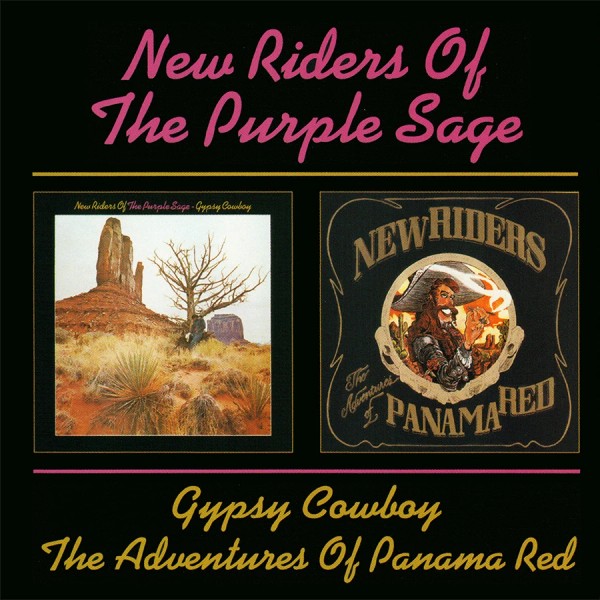

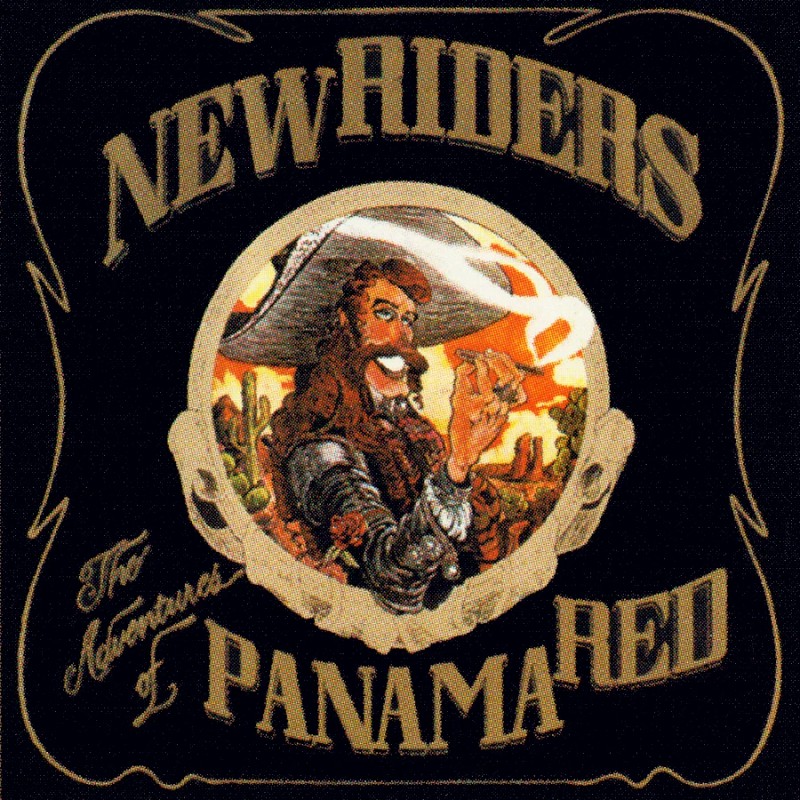
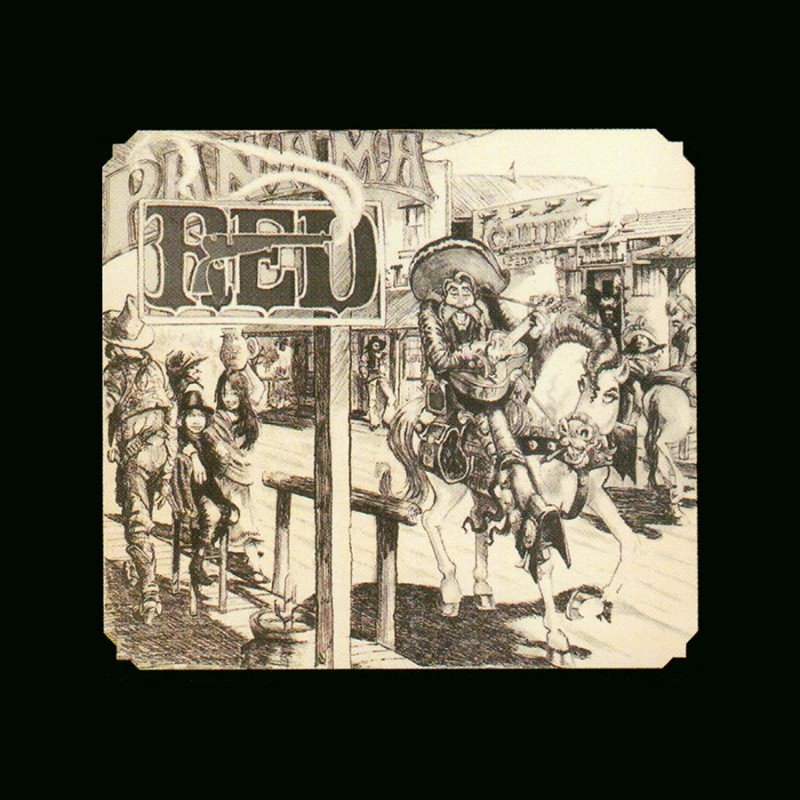


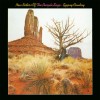
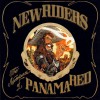

New Riders Of The Purple Sage ~ Gypsy Cowboy / Panama Red CD 2000 BGO UK ••NEW••
New Riders Of The Purple Sage
Gypsy Cowboy
The Adventures Of Panama Red
AUDIO CD
BRAND NEW & FACTORY SEALED
BRAND NEW & FACTORY SEALED
Beat Goes On Records (BGO)
BGOCD509
UPC | 5017261205094
Made In Great Britain
1972, 1973, 2000
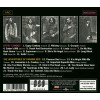
TRACK LISTING
Gypsy Cowboy (1972)
01. Gypsy Cowboy
02. Whiskey
03. Groupie
04. Sutter's Mill
05. Death And Destruction
06. Linda
07. On My Way Back Home
08. Superman
09. She's No Angel
10. Long Black Veil
11. Sailin'
The Adventures Of Panama Red (1973)
12. Panama Red
13. It's Alright With Me
14. Lonesome L.A. Cowboy
15. Important Exportin Man
16. One Too Many Stories
17. Kick In The Head
18. You Should Have Seen Me Running
19. Teardrops In My Eyes
20. L.A. Lady
21. Thank The Day
22. Cement, Clay And Glass
To claim that 1970s San Francisco-based country/rock combo The New Riders Of The Purple Sage were world-beaters is simply impossible to justify. However, to dismiss the group as nonentities is similarly incorrect, as their eight US chart albums in only five years clearly confirms. This collection features material from their third album, 'Gypsy Cowboy', which was released at the tail end of 1972, and their fourth (and most successful) LP, The Adventures Of Panama Red', which emerged in the summer of 1973, and became their only release to be certified gold. Their romantic group name was taken, according to some sources, from a pre- World War One story by prolific American cowboy novelist Zane Grey, but Grey’s connection with music seems at best peripheral, and it appears more likely that the New Riders were nominally inspired by a popular 1940s country group, Foy Willing & His Riders Of The Purple Sage. Just to complete this thought, Texas born Foy Willingham (his real name) appeared on local radio shows as a teenager in the early 1930s, before spending time in New York, which was presumably not a great success, as he returned to Texas, where he worked as a disc jockey. By 1940, he had relocated to California, where he formed his band, who performed frequently on ‘Hollywood Barn Dance', as well as appearing in a handful of movies. During the latter half of that decade, the group also occasionally reached the U.S. country singles chart, their best year being 1946, when both 'Detour' and ‘Have I Told You Lately That I Love You' briefly reached the Top 10 of that chart. After the group folded in 1952, Willing continued as a soloist, and died in 1978.
It was probably during his time in California that Willing made an impression on such young local musicians as Jerry Garcia, John Dawson and David Nelson, who were three of the founder members of The New Riders Of The Purple Sage. Jerry Garcia? Indeed, the extraordinary guitarist who fronted and founded The Grateful Dead, that most revered of San Francisco bands - and it has to be said that were it not for Garcia's involvement, the New Riders might never have even started, and even though his part in this story is small and, when it comes to the two albums here, is almost non- existent, the fact that he was at one time heavily involved with this band immediately makes them, in the eyes of so-called Deadheads, worthy of investigation. The principal members of the group had met in the early 1960s, when singer/guitarists Dave Nelson and John ‘Marmaduke’ Dawson were members of bluegrass bands in the Bay Area. Nelson’s first band seems to have been The Pine Valley Boys, another member of which was banjo man Herb Pedersen, who later went on to join The Dillards before becoming a much in-demand session musician during the 1970s. Later on, Pedersen became friendly with Chris Hillman (ex-The Byrds, Flying Burrito Brothers, Manassas, etc.) and they founded the Desert Rose Band, but that’s another story for another day. After The Pine Valley Boys, Nelson moved on to the quite similar Wildwood Boys, which included Jerry Garcia and Grateful Dead lyricist Robert Hunter, as well as Peter Albin, who later became a founder member of Big Brother & The Holding Company, whose vocalist was Janis Joplin.
But that was later - before that, Garcia, Hunter and Nelson formed the short lived Hart Valley Drifters in 1963, which evolved into the fancifully named Mother McCree’s Uptown Jug Champions, which also included Bob Weir and Ron ‘Pigpen’ McKernan. The latter duo, along with Garcia and Hunter, next launched The Warlocks, who, by 1966, had become The Grateful Dead. Dave Nelson and Peter Albin did not join The Warlocks, preferring instead to launch Big Brother & The Holding Company, although Nelson only stayed for a few months and had left some time before Janis Joplin arrived.
John Dawson had also been a member of Mother McCree's Uptown Jug Champions, from where he was another short-staying member of the original Big Brother & The Holding Company, after which he joined The Liberty Hill Aristocrats. Then he and Dawson apparently reunited in the New Delhi River Band, which also included bass player Dave Torbert, who would later join the New Riders. Confused? Perfectly understandable...
The story goes that circa 1969, Jerry Garcia had acquired a pedal steel guitar, which was not really appropriate for use in the Grateful Dead. As a result, he needed a group in which he could play his new instrument, and started rehearsing/informally working with Dawson and Nelson. Before long, two of Garcia’s Grateful Dead colleagues, drummer Mickey Hart and bass player Phil Lesh, had also become the part-time rhythm section of the new band, which inevitably attracted attention among ‘Deadheads’, especially when Grateful Dead concerts involved The New Riders as opening act. However, only Garcia was still a member of N.R.P.S. when they signed with the Columbia/ CBS label, the replacement for Hart as drummer being the equally celebrated Spencer Dryden, who had joined Jefferson Airplane for their breakthrough second LP, ‘Surrealistic Pillow', which was also the first by the Airplane to feature vocalist Grace Slick. The new bass player was Dave Torbert, with whom both Dawson and Nelson had played in the aforementioned New Delhi River Band. So the line-up for their first recordings was Garcia (pedal steel), Dawson and Nelson (both vocals and guitar), Torbert (bass) and Dryden (drums).
Their eponymous debut album emerged in the second half of 1971 on the Columbia/CBS label, and was an above average hit, peaking inside the Top 40 of the US album charts, where it remained for over three months, but of course Garcia was not about to jump ship from the Dead. Perhaps more to the point, Warner Bros., who had been carefully nurturing the latter band since 1967, and had just hit pay dirt in 1970 with a couple of platinum-selling US Top 40 albums in ‘Working Man's Dead' and 'American Beauty', would have been incandescent with rage. These two masterpieces came on top of 1969's momentous double live album 'Live/Dead', which had for the first time demonstrated to those who had never seen a Grateful Dead live show that this was indeed the real thing. No, if the New Riders were to continue (and who wouldn't after a Top 40 album?), they would have to manage without Garcia.
To replace him for the second LP, Vowerglide', they recruited Buddy Cage, who had emerged working with Canadian husband and wife Ian & Sylvia Tyson. Perhaps Cage was also Canadian. Vowerglide' was released in mid-1972, and performed as well as its predecessor, although it still failed to crack the US Top 30, despite over four months in the chart.
Which brings us to the earlier of the two albums which are being reissued here. 'Gypsy Cowboy' included half a dozen songs written by Marmaduke Dawson, three (including the title track) by Torbert, and a couple of “outside" songs, the better known of which was the very familiar long Black Veil', which was co-written by the notable Nashville composer, Marijohn Wilkin. The album, not to put too fine a point on it, was not a great success in commercial terms, and its chart peak (in the U.S. Top 100, but well outside the Top 50) was undoubtedly disappointing for all concerned - although hearing it again today, it sounds very typical of the kind of country/rock music that was so prevalent in the early Seventies. Perhaps the trouble was that there was rather a lot of premier league country/rock happening, in the particular shape of The Eagles, Jackson Browne, Linda Ronstadt, Emmylou Harris, etc., and in all honesty, if you had the choice of buying either the first Eagles LP, with Take It Easy’, ‘Witchy Woman', 'Train Leaves Here This Morning' and so on, or the third album by the New Riders Of The Purple Sage, most would shoot for The Eagles, who later became superstars, of course.
But let’s be clear - while 'Gypsy Cowboy' certainly wasn’t a disaster, the group’s visibility was rather limited. Everyone knew who they were, how they had emerged and all the rest, but 27 years ago, they were just one of a couple of dozen similar bands, including Poco, Pure Prairie League and doubtless other bands whose name began with a ‘P' like Commander Cody & His Lost Planet Airmen (joke!). Something different was required for the fourth N.R.P.S album, and that was a hit single. In fact, 'Powerglide' had included a minor hit single, but any fule noes that radio play is the key to selling albums, and 'Gypsy Cowboy' hadn't included such an ingredient. Maybe what was needed was a few “outside" songs, as Marmaduke and Dave Torbert weren’t coming up with anything that was irresistible to radio.
It is not known precisely how they came across Peter Rowan, for almost 30 years now a cult figure, and with numerous albums on numerous labels both as a soloist and a group member (eg Earth Opera, and probably Sea Train around this time), but conceivably, Rowan was recommended by Jerry Garcia, with whom Rowan had worked in Old & In The Way, a so called “new grass" (new bluegrass) band. Rowan was only too pleased to write a couple of songs for these chums of Jerry Garcia, and the two he came up with, 'Panama Red' (which became the album’s title track) and lonesome LA. Cowboy' (“smoking dope, snortin’ coke and trying to write a song"), were regarded as rather radio-friendly in Los Angeles in the fall of 1973, when the undersigned first visited California. My failing memory suggests that lonesome L.A.Cowboy' was being aired as often as 'The Joker' by Steve Miller, but hindsight tells us it wasn’t destined to equal the success of Miller's breakthrough single. Another song on the album was written by Grateful Dead lyricist Robert Hunter (mentioned above), and while it is tempting to suggest that the famous Waylon Jennings co-wrote ‘L.A.Lady', it seems more likely that the W.Jennings credited was Will Jennings. Whatever, the album, when it was released in late 1973, achieved gold status, although it peaked just outside the Top 50 of the US album chart.
‘The Adventures Of Panama Red' was the commercial highlight of the around ten year recording career of The New Riders Of The Purple Sage. From this point, they began to fall out of public favor, as, of course, did country/rock. Glam rock was still popular in England, and in 1974 and 1975, the US singles chart contained no less than 35 different chart-topping singles in each year, with solo ex- Beatles, John Denver, Elton John, Frankie Valli, Van McCoy, The Captain & Tennille, K.C & The Sunshine Band, Labelle, Bowie, Glen Campbell - no overall majority for any musical style. The next N.R.P.S. album, ‘Home, Home On The Road' was a live album released six months after The Adventures Of Panama Red' in 1974, but once again, it peaked some way outside the U.S. Top 50. After that, Dave Torbert left to join Kingfish, a Grateful Dead spinoff group with connections to Bob Weir and the aforementioned Robert Hunter, although Weir seemingly took no part on their eponymous debut LP, which featured Torbert plus four members of a San Francisco band with the unlikely name of Lonesome Janet.
Late 1974 brought ‘Brujo', which the 'Billboard’ US Album Chart Book helpfully informs us is Spanish for sorcerer (this sleeve note aims to be educational as well as confusing). The new bass player was Skip Battin, a Fifties hit maker as half of Skip & Flip: Flip was Gary Paxton, later supposedly the man responsible for forming The Hollywood Argyles (of 'Alley Oop’ fame). Skip & Flip had three US hit singles in 1959/60, two of which peaked just short of the Top 10, and many years later, Battin had joined The Byrds. The new album wasn't much of an improvement sales wise, although, like the vast majority of the NRPS albums, it has its moments. ‘Brujo' equaled the chart peak of its live predecessor, but dropped out of the listings in just over two months, although that was far better than the fate which awaited 'Oh What A Mighty Time’, released at the end of 1975, and a commercial disappointment which only just crept into the Top 150 of the US chart. The writing was veritably on the wall, and Battin left to join the reformed Flying Burrito Brothers, and was replaced by Steve Love, ex- Rick Nelson’s Stone Canyon Band.
The New Riders Of The Purple Sage (now comprising Marmaduke, Nelson, Dryden, Cage and Love) signed with MCA, and released 'New Riders’, whose unimaginative title was matched by its average chart showing - a peak just inside the US Top 150 during two chart months. That was the group’s final chart album, but they soldiered on for several more years. The next LP was a 'Best Of released by Columbia/CBS with another imaginative title: ‘Best Of The New Riders Of The Purple Sage', which was probably released as a spoiler to confuse potential buyers of the group’s next original album, 1976’s Who Are These Guys', which featured the same line-up as ‘Brujo’. Then Spencer Dryden left, and was replaced by one of Steve Love’s ex-colleagues from the Stone Canyon Band, Pat Shanahan, for the final MCA LP, ‘Marin County Line’, in 1978.
It was probably during his time in California that Willing made an impression on such young local musicians as Jerry Garcia, John Dawson and David Nelson, who were three of the founder members of The New Riders Of The Purple Sage. Jerry Garcia? Indeed, the extraordinary guitarist who fronted and founded The Grateful Dead, that most revered of San Francisco bands - and it has to be said that were it not for Garcia's involvement, the New Riders might never have even started, and even though his part in this story is small and, when it comes to the two albums here, is almost non- existent, the fact that he was at one time heavily involved with this band immediately makes them, in the eyes of so-called Deadheads, worthy of investigation. The principal members of the group had met in the early 1960s, when singer/guitarists Dave Nelson and John ‘Marmaduke’ Dawson were members of bluegrass bands in the Bay Area. Nelson’s first band seems to have been The Pine Valley Boys, another member of which was banjo man Herb Pedersen, who later went on to join The Dillards before becoming a much in-demand session musician during the 1970s. Later on, Pedersen became friendly with Chris Hillman (ex-The Byrds, Flying Burrito Brothers, Manassas, etc.) and they founded the Desert Rose Band, but that’s another story for another day. After The Pine Valley Boys, Nelson moved on to the quite similar Wildwood Boys, which included Jerry Garcia and Grateful Dead lyricist Robert Hunter, as well as Peter Albin, who later became a founder member of Big Brother & The Holding Company, whose vocalist was Janis Joplin.
But that was later - before that, Garcia, Hunter and Nelson formed the short lived Hart Valley Drifters in 1963, which evolved into the fancifully named Mother McCree’s Uptown Jug Champions, which also included Bob Weir and Ron ‘Pigpen’ McKernan. The latter duo, along with Garcia and Hunter, next launched The Warlocks, who, by 1966, had become The Grateful Dead. Dave Nelson and Peter Albin did not join The Warlocks, preferring instead to launch Big Brother & The Holding Company, although Nelson only stayed for a few months and had left some time before Janis Joplin arrived.
John Dawson had also been a member of Mother McCree's Uptown Jug Champions, from where he was another short-staying member of the original Big Brother & The Holding Company, after which he joined The Liberty Hill Aristocrats. Then he and Dawson apparently reunited in the New Delhi River Band, which also included bass player Dave Torbert, who would later join the New Riders. Confused? Perfectly understandable...
The story goes that circa 1969, Jerry Garcia had acquired a pedal steel guitar, which was not really appropriate for use in the Grateful Dead. As a result, he needed a group in which he could play his new instrument, and started rehearsing/informally working with Dawson and Nelson. Before long, two of Garcia’s Grateful Dead colleagues, drummer Mickey Hart and bass player Phil Lesh, had also become the part-time rhythm section of the new band, which inevitably attracted attention among ‘Deadheads’, especially when Grateful Dead concerts involved The New Riders as opening act. However, only Garcia was still a member of N.R.P.S. when they signed with the Columbia/ CBS label, the replacement for Hart as drummer being the equally celebrated Spencer Dryden, who had joined Jefferson Airplane for their breakthrough second LP, ‘Surrealistic Pillow', which was also the first by the Airplane to feature vocalist Grace Slick. The new bass player was Dave Torbert, with whom both Dawson and Nelson had played in the aforementioned New Delhi River Band. So the line-up for their first recordings was Garcia (pedal steel), Dawson and Nelson (both vocals and guitar), Torbert (bass) and Dryden (drums).
Their eponymous debut album emerged in the second half of 1971 on the Columbia/CBS label, and was an above average hit, peaking inside the Top 40 of the US album charts, where it remained for over three months, but of course Garcia was not about to jump ship from the Dead. Perhaps more to the point, Warner Bros., who had been carefully nurturing the latter band since 1967, and had just hit pay dirt in 1970 with a couple of platinum-selling US Top 40 albums in ‘Working Man's Dead' and 'American Beauty', would have been incandescent with rage. These two masterpieces came on top of 1969's momentous double live album 'Live/Dead', which had for the first time demonstrated to those who had never seen a Grateful Dead live show that this was indeed the real thing. No, if the New Riders were to continue (and who wouldn't after a Top 40 album?), they would have to manage without Garcia.
To replace him for the second LP, Vowerglide', they recruited Buddy Cage, who had emerged working with Canadian husband and wife Ian & Sylvia Tyson. Perhaps Cage was also Canadian. Vowerglide' was released in mid-1972, and performed as well as its predecessor, although it still failed to crack the US Top 30, despite over four months in the chart.
Which brings us to the earlier of the two albums which are being reissued here. 'Gypsy Cowboy' included half a dozen songs written by Marmaduke Dawson, three (including the title track) by Torbert, and a couple of “outside" songs, the better known of which was the very familiar long Black Veil', which was co-written by the notable Nashville composer, Marijohn Wilkin. The album, not to put too fine a point on it, was not a great success in commercial terms, and its chart peak (in the U.S. Top 100, but well outside the Top 50) was undoubtedly disappointing for all concerned - although hearing it again today, it sounds very typical of the kind of country/rock music that was so prevalent in the early Seventies. Perhaps the trouble was that there was rather a lot of premier league country/rock happening, in the particular shape of The Eagles, Jackson Browne, Linda Ronstadt, Emmylou Harris, etc., and in all honesty, if you had the choice of buying either the first Eagles LP, with Take It Easy’, ‘Witchy Woman', 'Train Leaves Here This Morning' and so on, or the third album by the New Riders Of The Purple Sage, most would shoot for The Eagles, who later became superstars, of course.
But let’s be clear - while 'Gypsy Cowboy' certainly wasn’t a disaster, the group’s visibility was rather limited. Everyone knew who they were, how they had emerged and all the rest, but 27 years ago, they were just one of a couple of dozen similar bands, including Poco, Pure Prairie League and doubtless other bands whose name began with a ‘P' like Commander Cody & His Lost Planet Airmen (joke!). Something different was required for the fourth N.R.P.S album, and that was a hit single. In fact, 'Powerglide' had included a minor hit single, but any fule noes that radio play is the key to selling albums, and 'Gypsy Cowboy' hadn't included such an ingredient. Maybe what was needed was a few “outside" songs, as Marmaduke and Dave Torbert weren’t coming up with anything that was irresistible to radio.
It is not known precisely how they came across Peter Rowan, for almost 30 years now a cult figure, and with numerous albums on numerous labels both as a soloist and a group member (eg Earth Opera, and probably Sea Train around this time), but conceivably, Rowan was recommended by Jerry Garcia, with whom Rowan had worked in Old & In The Way, a so called “new grass" (new bluegrass) band. Rowan was only too pleased to write a couple of songs for these chums of Jerry Garcia, and the two he came up with, 'Panama Red' (which became the album’s title track) and lonesome LA. Cowboy' (“smoking dope, snortin’ coke and trying to write a song"), were regarded as rather radio-friendly in Los Angeles in the fall of 1973, when the undersigned first visited California. My failing memory suggests that lonesome L.A.Cowboy' was being aired as often as 'The Joker' by Steve Miller, but hindsight tells us it wasn’t destined to equal the success of Miller's breakthrough single. Another song on the album was written by Grateful Dead lyricist Robert Hunter (mentioned above), and while it is tempting to suggest that the famous Waylon Jennings co-wrote ‘L.A.Lady', it seems more likely that the W.Jennings credited was Will Jennings. Whatever, the album, when it was released in late 1973, achieved gold status, although it peaked just outside the Top 50 of the US album chart.
‘The Adventures Of Panama Red' was the commercial highlight of the around ten year recording career of The New Riders Of The Purple Sage. From this point, they began to fall out of public favor, as, of course, did country/rock. Glam rock was still popular in England, and in 1974 and 1975, the US singles chart contained no less than 35 different chart-topping singles in each year, with solo ex- Beatles, John Denver, Elton John, Frankie Valli, Van McCoy, The Captain & Tennille, K.C & The Sunshine Band, Labelle, Bowie, Glen Campbell - no overall majority for any musical style. The next N.R.P.S. album, ‘Home, Home On The Road' was a live album released six months after The Adventures Of Panama Red' in 1974, but once again, it peaked some way outside the U.S. Top 50. After that, Dave Torbert left to join Kingfish, a Grateful Dead spinoff group with connections to Bob Weir and the aforementioned Robert Hunter, although Weir seemingly took no part on their eponymous debut LP, which featured Torbert plus four members of a San Francisco band with the unlikely name of Lonesome Janet.
Late 1974 brought ‘Brujo', which the 'Billboard’ US Album Chart Book helpfully informs us is Spanish for sorcerer (this sleeve note aims to be educational as well as confusing). The new bass player was Skip Battin, a Fifties hit maker as half of Skip & Flip: Flip was Gary Paxton, later supposedly the man responsible for forming The Hollywood Argyles (of 'Alley Oop’ fame). Skip & Flip had three US hit singles in 1959/60, two of which peaked just short of the Top 10, and many years later, Battin had joined The Byrds. The new album wasn't much of an improvement sales wise, although, like the vast majority of the NRPS albums, it has its moments. ‘Brujo' equaled the chart peak of its live predecessor, but dropped out of the listings in just over two months, although that was far better than the fate which awaited 'Oh What A Mighty Time’, released at the end of 1975, and a commercial disappointment which only just crept into the Top 150 of the US chart. The writing was veritably on the wall, and Battin left to join the reformed Flying Burrito Brothers, and was replaced by Steve Love, ex- Rick Nelson’s Stone Canyon Band.
The New Riders Of The Purple Sage (now comprising Marmaduke, Nelson, Dryden, Cage and Love) signed with MCA, and released 'New Riders’, whose unimaginative title was matched by its average chart showing - a peak just inside the US Top 150 during two chart months. That was the group’s final chart album, but they soldiered on for several more years. The next LP was a 'Best Of released by Columbia/CBS with another imaginative title: ‘Best Of The New Riders Of The Purple Sage', which was probably released as a spoiler to confuse potential buyers of the group’s next original album, 1976’s Who Are These Guys', which featured the same line-up as ‘Brujo’. Then Spencer Dryden left, and was replaced by one of Steve Love’s ex-colleagues from the Stone Canyon Band, Pat Shanahan, for the final MCA LP, ‘Marin County Line’, in 1978.
Things seem a bit uncertain after that, but there was reputedly another NRPS album released in 1981 on A&M, although it has never been seen by anyone of my acquaintance. Buddy Cage seemingly left circa 1979 or 1980, and was replaced by Sneaky Pete Kleinow, while Steve Love left and was replaced by Gib Guilbeau (both Kleinow and Gilbeau had been members of the reformed Flying Burrito Brothers with Skip Battin), after which the New Riders were very rarely mentioned in despatches. However, the two albums which are twinned here were arguably the artistic (as well as commercial) peak of a band who made eight US chart albums, but never quite achieved promotion to the premier league. ~ John Tobler, 2000
SHIPPING TO USA ONLY
Buyer Pays Shipping
$3.99
1st CD $3.99... each additional $1.50
CDs will only be combined with other CDs or DVDs
To qualify for the combined
discount, all items must be purchased together, paid for with 1
payment, and shipped all together in 1 shipment. Please use the add to
cart feature, once you have ordered all your desired items, proceed to
checkout to complete your order with the combined total.
$3.99
| Isin: | ICB9IQFRFAKP |
|---|
Out of Stock
In Stock
Backordered
Out of Stock



IBspot Buyer Protection
Shop confidently on IBspot, receive your item as described or your money back for eligible orders. Learn Program Terms
GUARANTEED SAFE CHECKOUT
-

MONEY BACK GUARANTEE
30 days money back guarantee, no additional fee charged.
-

EXCELLENT SUPPORT
We provide 24/7 online customer support via email.
-

Fast Shipping
One week domestic shipping. Global delivery to the US in 2 weeks.

New Riders Of The Purple Sage
Gypsy Cowboy
The Adventures Of Panama Red

AUDIO CD
BRAND NEW & FACTORY SEALED
BRAND NEW & FACTORY SEALED

Beat Goes On Records (BGO)
BGOCD509
UPC | 5017261205094
Made In Great Britain
1972, 1973, 2000
TRACK LISTING
Gypsy Cowboy (1972)
01. Gypsy Cowboy
02. Whiskey
03. Groupie
04. Sutter's Mill
05. Death And Destruction
06. Linda
07. On My Way Back Home
08. Superman
09. She's No Angel
10. Long Black Veil
11. Sailin'
The Adventures Of Panama Red (1973)
12. Panama Red
13. It's Alright With Me
14. Lonesome L.A. Cowboy
15. Important Exportin Man
16. One Too Many Stories
17. Kick In The Head
18. You Should Have Seen Me Running
19. Teardrops In My Eyes
20. L.A. Lady
21. Thank The Day
22. Cement, Clay And Glass

To claim that 1970s San Francisco-based country/rock combo The New Riders Of The Purple Sage were world-beaters is simply impossible to justify. However, to dismiss the group as nonentities is similarly incorrect, as their eight US chart albums in only five years clearly confirms. This collection features material from their third album, 'Gypsy Cowboy', which was released at the tail end of 1972, and their fourth (and most successful) LP, The Adventures Of Panama Red', which emerged in the summer of 1973, and became their only release to be certified gold. Their romantic group name was taken, according to some sources, from a pre- World War One story by prolific American cowboy novelist Zane Grey, but Grey’s connection with music seems at best peripheral, and it appears more likely that the New Riders were nominally inspired by a popular 1940s country group, Foy Willing & His Riders Of The Purple Sage. Just to complete this thought, Texas born Foy Willingham (his real name) appeared on local radio shows as a teenager in the early 1930s, before spending time in New York, which was presumably not a great success, as he returned to Texas, where he worked as a disc jockey. By 1940, he had relocated to California, where he formed his band, who performed frequently on ‘Hollywood Barn Dance', as well as appearing in a handful of movies. During the latter half of that decade, the group also occasionally reached the U.S. country singles chart, their best year being 1946, when both 'Detour' and ‘Have I Told You Lately That I Love You' briefly reached the Top 10 of that chart. After the group folded in 1952, Willing continued as a soloist, and died in 1978.
It was probably during his time in California that Willing made an impression on such young local musicians as Jerry Garcia, John Dawson and David Nelson, who were three of the founder members of The New Riders Of The Purple Sage. Jerry Garcia? Indeed, the extraordinary guitarist who fronted and founded The Grateful Dead, that most revered of San Francisco bands - and it has to be said that were it not for Garcia's involvement, the New Riders might never have even started, and even though his part in this story is small and, when it comes to the two albums here, is almost non- existent, the fact that he was at one time heavily involved with this band immediately makes them, in the eyes of so-called Deadheads, worthy of investigation. The principal members of the group had met in the early 1960s, when singer/guitarists Dave Nelson and John ‘Marmaduke’ Dawson were members of bluegrass bands in the Bay Area. Nelson’s first band seems to have been The Pine Valley Boys, another member of which was banjo man Herb Pedersen, who later went on to join The Dillards before becoming a much in-demand session musician during the 1970s. Later on, Pedersen became friendly with Chris Hillman (ex-The Byrds, Flying Burrito Brothers, Manassas, etc.) and they founded the Desert Rose Band, but that’s another story for another day. After The Pine Valley Boys, Nelson moved on to the quite similar Wildwood Boys, which included Jerry Garcia and Grateful Dead lyricist Robert Hunter, as well as Peter Albin, who later became a founder member of Big Brother & The Holding Company, whose vocalist was Janis Joplin.
But that was later - before that, Garcia, Hunter and Nelson formed the short lived Hart Valley Drifters in 1963, which evolved into the fancifully named Mother McCree’s Uptown Jug Champions, which also included Bob Weir and Ron ‘Pigpen’ McKernan. The latter duo, along with Garcia and Hunter, next launched The Warlocks, who, by 1966, had become The Grateful Dead. Dave Nelson and Peter Albin did not join The Warlocks, preferring instead to launch Big Brother & The Holding Company, although Nelson only stayed for a few months and had left some time before Janis Joplin arrived.
John Dawson had also been a member of Mother McCree's Uptown Jug Champions, from where he was another short-staying member of the original Big Brother & The Holding Company, after which he joined The Liberty Hill Aristocrats. Then he and Dawson apparently reunited in the New Delhi River Band, which also included bass player Dave Torbert, who would later join the New Riders. Confused? Perfectly understandable...
The story goes that circa 1969, Jerry Garcia had acquired a pedal steel guitar, which was not really appropriate for use in the Grateful Dead. As a result, he needed a group in which he could play his new instrument, and started rehearsing/informally working with Dawson and Nelson. Before long, two of Garcia’s Grateful Dead colleagues, drummer Mickey Hart and bass player Phil Lesh, had also become the part-time rhythm section of the new band, which inevitably attracted attention among ‘Deadheads’, especially when Grateful Dead concerts involved The New Riders as opening act. However, only Garcia was still a member of N.R.P.S. when they signed with the Columbia/ CBS label, the replacement for Hart as drummer being the equally celebrated Spencer Dryden, who had joined Jefferson Airplane for their breakthrough second LP, ‘Surrealistic Pillow', which was also the first by the Airplane to feature vocalist Grace Slick. The new bass player was Dave Torbert, with whom both Dawson and Nelson had played in the aforementioned New Delhi River Band. So the line-up for their first recordings was Garcia (pedal steel), Dawson and Nelson (both vocals and guitar), Torbert (bass) and Dryden (drums).
Their eponymous debut album emerged in the second half of 1971 on the Columbia/CBS label, and was an above average hit, peaking inside the Top 40 of the US album charts, where it remained for over three months, but of course Garcia was not about to jump ship from the Dead. Perhaps more to the point, Warner Bros., who had been carefully nurturing the latter band since 1967, and had just hit pay dirt in 1970 with a couple of platinum-selling US Top 40 albums in ‘Working Man's Dead' and 'American Beauty', would have been incandescent with rage. These two masterpieces came on top of 1969's momentous double live album 'Live/Dead', which had for the first time demonstrated to those who had never seen a Grateful Dead live show that this was indeed the real thing. No, if the New Riders were to continue (and who wouldn't after a Top 40 album?), they would have to manage without Garcia.
To replace him for the second LP, Vowerglide', they recruited Buddy Cage, who had emerged working with Canadian husband and wife Ian & Sylvia Tyson. Perhaps Cage was also Canadian. Vowerglide' was released in mid-1972, and performed as well as its predecessor, although it still failed to crack the US Top 30, despite over four months in the chart.
Which brings us to the earlier of the two albums which are being reissued here. 'Gypsy Cowboy' included half a dozen songs written by Marmaduke Dawson, three (including the title track) by Torbert, and a couple of “outside" songs, the better known of which was the very familiar long Black Veil', which was co-written by the notable Nashville composer, Marijohn Wilkin. The album, not to put too fine a point on it, was not a great success in commercial terms, and its chart peak (in the U.S. Top 100, but well outside the Top 50) was undoubtedly disappointing for all concerned - although hearing it again today, it sounds very typical of the kind of country/rock music that was so prevalent in the early Seventies. Perhaps the trouble was that there was rather a lot of premier league country/rock happening, in the particular shape of The Eagles, Jackson Browne, Linda Ronstadt, Emmylou Harris, etc., and in all honesty, if you had the choice of buying either the first Eagles LP, with Take It Easy’, ‘Witchy Woman', 'Train Leaves Here This Morning' and so on, or the third album by the New Riders Of The Purple Sage, most would shoot for The Eagles, who later became superstars, of course.
But let’s be clear - while 'Gypsy Cowboy' certainly wasn’t a disaster, the group’s visibility was rather limited. Everyone knew who they were, how they had emerged and all the rest, but 27 years ago, they were just one of a couple of dozen similar bands, including Poco, Pure Prairie League and doubtless other bands whose name began with a ‘P' like Commander Cody & His Lost Planet Airmen (joke!). Something different was required for the fourth N.R.P.S album, and that was a hit single. In fact, 'Powerglide' had included a minor hit single, but any fule noes that radio play is the key to selling albums, and 'Gypsy Cowboy' hadn't included such an ingredient. Maybe what was needed was a few “outside" songs, as Marmaduke and Dave Torbert weren’t coming up with anything that was irresistible to radio.
It is not known precisely how they came across Peter Rowan, for almost 30 years now a cult figure, and with numerous albums on numerous labels both as a soloist and a group member (eg Earth Opera, and probably Sea Train around this time), but conceivably, Rowan was recommended by Jerry Garcia, with whom Rowan had worked in Old & In The Way, a so called “new grass" (new bluegrass) band. Rowan was only too pleased to write a couple of songs for these chums of Jerry Garcia, and the two he came up with, 'Panama Red' (which became the album’s title track) and lonesome LA. Cowboy' (“smoking dope, snortin’ coke and trying to write a song"), were regarded as rather radio-friendly in Los Angeles in the fall of 1973, when the undersigned first visited California. My failing memory suggests that lonesome L.A.Cowboy' was being aired as often as 'The Joker' by Steve Miller, but hindsight tells us it wasn’t destined to equal the success of Miller's breakthrough single. Another song on the album was written by Grateful Dead lyricist Robert Hunter (mentioned above), and while it is tempting to suggest that the famous Waylon Jennings co-wrote ‘L.A.Lady', it seems more likely that the W.Jennings credited was Will Jennings. Whatever, the album, when it was released in late 1973, achieved gold status, although it peaked just outside the Top 50 of the US album chart.
‘The Adventures Of Panama Red' was the commercial highlight of the around ten year recording career of The New Riders Of The Purple Sage. From this point, they began to fall out of public favor, as, of course, did country/rock. Glam rock was still popular in England, and in 1974 and 1975, the US singles chart contained no less than 35 different chart-topping singles in each year, with solo ex- Beatles, John Denver, Elton John, Frankie Valli, Van McCoy, The Captain & Tennille, K.C & The Sunshine Band, Labelle, Bowie, Glen Campbell - no overall majority for any musical style. The next N.R.P.S. album, ‘Home, Home On The Road' was a live album released six months after The Adventures Of Panama Red' in 1974, but once again, it peaked some way outside the U.S. Top 50. After that, Dave Torbert left to join Kingfish, a Grateful Dead spinoff group with connections to Bob Weir and the aforementioned Robert Hunter, although Weir seemingly took no part on their eponymous debut LP, which featured Torbert plus four members of a San Francisco band with the unlikely name of Lonesome Janet.
Late 1974 brought ‘Brujo', which the 'Billboard’ US Album Chart Book helpfully informs us is Spanish for sorcerer (this sleeve note aims to be educational as well as confusing). The new bass player was Skip Battin, a Fifties hit maker as half of Skip & Flip: Flip was Gary Paxton, later supposedly the man responsible for forming The Hollywood Argyles (of 'Alley Oop’ fame). Skip & Flip had three US hit singles in 1959/60, two of which peaked just short of the Top 10, and many years later, Battin had joined The Byrds. The new album wasn't much of an improvement sales wise, although, like the vast majority of the NRPS albums, it has its moments. ‘Brujo' equaled the chart peak of its live predecessor, but dropped out of the listings in just over two months, although that was far better than the fate which awaited 'Oh What A Mighty Time’, released at the end of 1975, and a commercial disappointment which only just crept into the Top 150 of the US chart. The writing was veritably on the wall, and Battin left to join the reformed Flying Burrito Brothers, and was replaced by Steve Love, ex- Rick Nelson’s Stone Canyon Band.
The New Riders Of The Purple Sage (now comprising Marmaduke, Nelson, Dryden, Cage and Love) signed with MCA, and released 'New Riders’, whose unimaginative title was matched by its average chart showing - a peak just inside the US Top 150 during two chart months. That was the group’s final chart album, but they soldiered on for several more years. The next LP was a 'Best Of released by Columbia/CBS with another imaginative title: ‘Best Of The New Riders Of The Purple Sage', which was probably released as a spoiler to confuse potential buyers of the group’s next original album, 1976’s Who Are These Guys', which featured the same line-up as ‘Brujo’. Then Spencer Dryden left, and was replaced by one of Steve Love’s ex-colleagues from the Stone Canyon Band, Pat Shanahan, for the final MCA LP, ‘Marin County Line’, in 1978.
It was probably during his time in California that Willing made an impression on such young local musicians as Jerry Garcia, John Dawson and David Nelson, who were three of the founder members of The New Riders Of The Purple Sage. Jerry Garcia? Indeed, the extraordinary guitarist who fronted and founded The Grateful Dead, that most revered of San Francisco bands - and it has to be said that were it not for Garcia's involvement, the New Riders might never have even started, and even though his part in this story is small and, when it comes to the two albums here, is almost non- existent, the fact that he was at one time heavily involved with this band immediately makes them, in the eyes of so-called Deadheads, worthy of investigation. The principal members of the group had met in the early 1960s, when singer/guitarists Dave Nelson and John ‘Marmaduke’ Dawson were members of bluegrass bands in the Bay Area. Nelson’s first band seems to have been The Pine Valley Boys, another member of which was banjo man Herb Pedersen, who later went on to join The Dillards before becoming a much in-demand session musician during the 1970s. Later on, Pedersen became friendly with Chris Hillman (ex-The Byrds, Flying Burrito Brothers, Manassas, etc.) and they founded the Desert Rose Band, but that’s another story for another day. After The Pine Valley Boys, Nelson moved on to the quite similar Wildwood Boys, which included Jerry Garcia and Grateful Dead lyricist Robert Hunter, as well as Peter Albin, who later became a founder member of Big Brother & The Holding Company, whose vocalist was Janis Joplin.
But that was later - before that, Garcia, Hunter and Nelson formed the short lived Hart Valley Drifters in 1963, which evolved into the fancifully named Mother McCree’s Uptown Jug Champions, which also included Bob Weir and Ron ‘Pigpen’ McKernan. The latter duo, along with Garcia and Hunter, next launched The Warlocks, who, by 1966, had become The Grateful Dead. Dave Nelson and Peter Albin did not join The Warlocks, preferring instead to launch Big Brother & The Holding Company, although Nelson only stayed for a few months and had left some time before Janis Joplin arrived.
John Dawson had also been a member of Mother McCree's Uptown Jug Champions, from where he was another short-staying member of the original Big Brother & The Holding Company, after which he joined The Liberty Hill Aristocrats. Then he and Dawson apparently reunited in the New Delhi River Band, which also included bass player Dave Torbert, who would later join the New Riders. Confused? Perfectly understandable...
The story goes that circa 1969, Jerry Garcia had acquired a pedal steel guitar, which was not really appropriate for use in the Grateful Dead. As a result, he needed a group in which he could play his new instrument, and started rehearsing/informally working with Dawson and Nelson. Before long, two of Garcia’s Grateful Dead colleagues, drummer Mickey Hart and bass player Phil Lesh, had also become the part-time rhythm section of the new band, which inevitably attracted attention among ‘Deadheads’, especially when Grateful Dead concerts involved The New Riders as opening act. However, only Garcia was still a member of N.R.P.S. when they signed with the Columbia/ CBS label, the replacement for Hart as drummer being the equally celebrated Spencer Dryden, who had joined Jefferson Airplane for their breakthrough second LP, ‘Surrealistic Pillow', which was also the first by the Airplane to feature vocalist Grace Slick. The new bass player was Dave Torbert, with whom both Dawson and Nelson had played in the aforementioned New Delhi River Band. So the line-up for their first recordings was Garcia (pedal steel), Dawson and Nelson (both vocals and guitar), Torbert (bass) and Dryden (drums).
Their eponymous debut album emerged in the second half of 1971 on the Columbia/CBS label, and was an above average hit, peaking inside the Top 40 of the US album charts, where it remained for over three months, but of course Garcia was not about to jump ship from the Dead. Perhaps more to the point, Warner Bros., who had been carefully nurturing the latter band since 1967, and had just hit pay dirt in 1970 with a couple of platinum-selling US Top 40 albums in ‘Working Man's Dead' and 'American Beauty', would have been incandescent with rage. These two masterpieces came on top of 1969's momentous double live album 'Live/Dead', which had for the first time demonstrated to those who had never seen a Grateful Dead live show that this was indeed the real thing. No, if the New Riders were to continue (and who wouldn't after a Top 40 album?), they would have to manage without Garcia.
To replace him for the second LP, Vowerglide', they recruited Buddy Cage, who had emerged working with Canadian husband and wife Ian & Sylvia Tyson. Perhaps Cage was also Canadian. Vowerglide' was released in mid-1972, and performed as well as its predecessor, although it still failed to crack the US Top 30, despite over four months in the chart.
Which brings us to the earlier of the two albums which are being reissued here. 'Gypsy Cowboy' included half a dozen songs written by Marmaduke Dawson, three (including the title track) by Torbert, and a couple of “outside" songs, the better known of which was the very familiar long Black Veil', which was co-written by the notable Nashville composer, Marijohn Wilkin. The album, not to put too fine a point on it, was not a great success in commercial terms, and its chart peak (in the U.S. Top 100, but well outside the Top 50) was undoubtedly disappointing for all concerned - although hearing it again today, it sounds very typical of the kind of country/rock music that was so prevalent in the early Seventies. Perhaps the trouble was that there was rather a lot of premier league country/rock happening, in the particular shape of The Eagles, Jackson Browne, Linda Ronstadt, Emmylou Harris, etc., and in all honesty, if you had the choice of buying either the first Eagles LP, with Take It Easy’, ‘Witchy Woman', 'Train Leaves Here This Morning' and so on, or the third album by the New Riders Of The Purple Sage, most would shoot for The Eagles, who later became superstars, of course.
But let’s be clear - while 'Gypsy Cowboy' certainly wasn’t a disaster, the group’s visibility was rather limited. Everyone knew who they were, how they had emerged and all the rest, but 27 years ago, they were just one of a couple of dozen similar bands, including Poco, Pure Prairie League and doubtless other bands whose name began with a ‘P' like Commander Cody & His Lost Planet Airmen (joke!). Something different was required for the fourth N.R.P.S album, and that was a hit single. In fact, 'Powerglide' had included a minor hit single, but any fule noes that radio play is the key to selling albums, and 'Gypsy Cowboy' hadn't included such an ingredient. Maybe what was needed was a few “outside" songs, as Marmaduke and Dave Torbert weren’t coming up with anything that was irresistible to radio.
It is not known precisely how they came across Peter Rowan, for almost 30 years now a cult figure, and with numerous albums on numerous labels both as a soloist and a group member (eg Earth Opera, and probably Sea Train around this time), but conceivably, Rowan was recommended by Jerry Garcia, with whom Rowan had worked in Old & In The Way, a so called “new grass" (new bluegrass) band. Rowan was only too pleased to write a couple of songs for these chums of Jerry Garcia, and the two he came up with, 'Panama Red' (which became the album’s title track) and lonesome LA. Cowboy' (“smoking dope, snortin’ coke and trying to write a song"), were regarded as rather radio-friendly in Los Angeles in the fall of 1973, when the undersigned first visited California. My failing memory suggests that lonesome L.A.Cowboy' was being aired as often as 'The Joker' by Steve Miller, but hindsight tells us it wasn’t destined to equal the success of Miller's breakthrough single. Another song on the album was written by Grateful Dead lyricist Robert Hunter (mentioned above), and while it is tempting to suggest that the famous Waylon Jennings co-wrote ‘L.A.Lady', it seems more likely that the W.Jennings credited was Will Jennings. Whatever, the album, when it was released in late 1973, achieved gold status, although it peaked just outside the Top 50 of the US album chart.
‘The Adventures Of Panama Red' was the commercial highlight of the around ten year recording career of The New Riders Of The Purple Sage. From this point, they began to fall out of public favor, as, of course, did country/rock. Glam rock was still popular in England, and in 1974 and 1975, the US singles chart contained no less than 35 different chart-topping singles in each year, with solo ex- Beatles, John Denver, Elton John, Frankie Valli, Van McCoy, The Captain & Tennille, K.C & The Sunshine Band, Labelle, Bowie, Glen Campbell - no overall majority for any musical style. The next N.R.P.S. album, ‘Home, Home On The Road' was a live album released six months after The Adventures Of Panama Red' in 1974, but once again, it peaked some way outside the U.S. Top 50. After that, Dave Torbert left to join Kingfish, a Grateful Dead spinoff group with connections to Bob Weir and the aforementioned Robert Hunter, although Weir seemingly took no part on their eponymous debut LP, which featured Torbert plus four members of a San Francisco band with the unlikely name of Lonesome Janet.
Late 1974 brought ‘Brujo', which the 'Billboard’ US Album Chart Book helpfully informs us is Spanish for sorcerer (this sleeve note aims to be educational as well as confusing). The new bass player was Skip Battin, a Fifties hit maker as half of Skip & Flip: Flip was Gary Paxton, later supposedly the man responsible for forming The Hollywood Argyles (of 'Alley Oop’ fame). Skip & Flip had three US hit singles in 1959/60, two of which peaked just short of the Top 10, and many years later, Battin had joined The Byrds. The new album wasn't much of an improvement sales wise, although, like the vast majority of the NRPS albums, it has its moments. ‘Brujo' equaled the chart peak of its live predecessor, but dropped out of the listings in just over two months, although that was far better than the fate which awaited 'Oh What A Mighty Time’, released at the end of 1975, and a commercial disappointment which only just crept into the Top 150 of the US chart. The writing was veritably on the wall, and Battin left to join the reformed Flying Burrito Brothers, and was replaced by Steve Love, ex- Rick Nelson’s Stone Canyon Band.
The New Riders Of The Purple Sage (now comprising Marmaduke, Nelson, Dryden, Cage and Love) signed with MCA, and released 'New Riders’, whose unimaginative title was matched by its average chart showing - a peak just inside the US Top 150 during two chart months. That was the group’s final chart album, but they soldiered on for several more years. The next LP was a 'Best Of released by Columbia/CBS with another imaginative title: ‘Best Of The New Riders Of The Purple Sage', which was probably released as a spoiler to confuse potential buyers of the group’s next original album, 1976’s Who Are These Guys', which featured the same line-up as ‘Brujo’. Then Spencer Dryden left, and was replaced by one of Steve Love’s ex-colleagues from the Stone Canyon Band, Pat Shanahan, for the final MCA LP, ‘Marin County Line’, in 1978.
Things seem a bit uncertain after that, but there was reputedly another NRPS album released in 1981 on A&M, although it has never been seen by anyone of my acquaintance. Buddy Cage seemingly left circa 1979 or 1980, and was replaced by Sneaky Pete Kleinow, while Steve Love left and was replaced by Gib Guilbeau (both Kleinow and Gilbeau had been members of the reformed Flying Burrito Brothers with Skip Battin), after which the New Riders were very rarely mentioned in despatches. However, the two albums which are twinned here were arguably the artistic (as well as commercial) peak of a band who made eight US chart albums, but never quite achieved promotion to the premier league. ~ John Tobler, 2000
SHIPPING TO USA ONLY
Buyer Pays Shipping
$3.99
1st CD $3.99... each additional $1.50
CDs will only be combined with other CDs or DVDs
To qualify for the combined
discount, all items must be purchased together, paid for with 1
payment, and shipped all together in 1 shipment. Please use the add to
cart feature, once you have ordered all your desired items, proceed to
checkout to complete your order with the combined total.
$3.99
Features
Compilation, Import, Remastered, Digitally Remastered
Catalog Number
BGOCD509
MPN
5017261205094
Format
CD
Run Time
01:10:33
Era
1970s
Country/Region of Manufacture
United Kingdom
CD Grading
Mint (M)
Edition
Remastered, 2ON1CD
Record Label
Beat Goes On Records (BGO)
Case Type
Jewel Case: Standard
Language
English
Release Title
Gypsy Cowboy / The Adventures Of Panama Red
Artist
New Riders Of The Purple Sage
Release Year
1972, 1973, 2000
Style
1970s, Classic Rock, Rock, Album Rock, San Francisco Bay Area
Genre
Rock, Classic Rock, Contemporary Country, Country Rock, Bluegrass, Folk Rock, Country
Type
Album
UPC
Does not apply
Processing Time
- We process and ship orders Monday through Friday, excluding holidays.
- Most orders are processed within 1–3 business days, depending on product availability.
- Processing time does not include delivery time, which varies based on your location and the product’s shipping origin.
Shipping Coverage
We currently ship to addresses within the United States only.
Products may ship from:
- Our U.S. warehouses, or
- Our international fulfillment centers (including Korea, Japan, China, Australia, Mexico, Canada, the United Kingdom, and the EU).
Each product page clearly displays the “Ships From” location before checkout.
Shipping Methods & Estimated Delivery
| Shipping Method | Estimated Delivery | Cost |
|---|---|---|
| Free Shipping (US) | 5–10 business days | Free, available on eligible items |
| Standard Shipping (US to US by Item) | 5–10 business days | $6.50 for the first item, $2.00 each additional |
| Standard Shipping (From US Warehouse by Weight) | 3–7 business days | Starts at $6.50, increasing by $2 for every additional 4 oz (0.25 lb) up to 1 lb, then by $4 for each additional pound beyond 1 lb. |
| Extended Delivery (Ships from Overseas Warehouse) | 10–20 business days | $14.50 for the first item, $2.00 each additional |
Shipping costs vary by product weight, quantity and origin. Exact rates and delivery estimates are displayed on each product page and confirmed during checkout.
Free Shipping
We offer free standard shipping on select products or during promotional periods. Availability of free shipping will be displayed on the product page and at checkout.
Carriers
We primarily use USPS and UPS for U.S. deliveries. Items shipped from international warehouses may be handled by partner carriers depending on the country of origin.
Import Duties & Taxes
All import duties and taxes for goods imported into the United States are included in the product price. There are no hidden fees or additional charges at checkout.
Tracking & Notifications
Every order is fully trackable. You will receive a tracking number via email once your order ships. If your order ships in multiple packages, each package will have its own tracking number. If you don’t receive a shipping confirmation immediately, your order is still being processed and will arrive within the estimated timeframe shown at checkout.
You can track your shipment anytime using the Track Your Order page on our website.
Order Changes & Cancellations
If you need to modify or cancel an order, please contact our customer support team as soon as possible. Orders can only be canceled before they ship. Once shipped, cancellations are not possible, but you may request a return after the item is delivered.
Contact: support@ibspot.com
Item Not Received
If your tracking number shows “Delivered” but you haven’t received your package:
- Check with your local USPS or UPS office.
- Confirm that the shipping address provided was correct.
- If the issue remains unresolved, contact support@ibspot.com for assistance.
Damaged or Lost Parcels
If your package arrives damaged or fails to arrive, please contact us immediately. For deliveries to P.O. boxes, ibspot is not responsible for damage caused by weather, temperature, or theft.
Customer Support
For any questions about shipping, tracking, or delivery, our customer support team is here to help.
Email: support@ibspot.com
We’re always happy to help.
Please read our policy carefully before making a purchase.
We aim to ensure every customer has a smooth and transparent experience with ibspot.com.
Order Cancellation Policy
Customers may request to cancel an order before it has been shipped.
Once the package has been shipped, cancellations are no longer possible; however, you may still request a return after receiving your order.
How to Request a Cancellation
You can contact us through:
- Email: support@ibspot.com
- Contact Form: Submit a request through our Contact Us page
Please submit your cancellation request as soon as possible after placing the order to allow us to process it before shipment.
Return Policy
We accept returns for most items within 30 days of delivery for a full refund.
To be eligible for a return:
- The item must be unused, in the same condition as received, and in its original packaging.
- A tracking number must be provided to confirm the return shipment.
Non-Returnable Items
Certain products cannot be returned, including:
- Perishable goods (for example, food, flowers, newspapers, magazines)
- Intimate or sanitary goods
- Hazardous materials or flammable liquids/gases
- Gift cards
- Downloadable software
- Some health and personal care items
Partial Refunds (If Applicable)
Partial refunds may be granted in specific situations, such as:
- Books with obvious signs of use
- Opened CDs, DVDs, software, or vinyl records
- Items not in their original condition, damaged, or missing parts not due to our error
- Items returned more than 30 days after delivery
How to Return an Item
To initiate a return, please contact us at support@ibspot.com with your order number and details about the product you wish to return.
Our team will provide you with return instructions and a prepaid return label.
Shipping Cost for Returns
Please contact us before returning any item.
We will provide a free return shipping label.
If a return is sent back without prior contact or without our provided label, we cannot be held responsible for return shipping costs.
For items valued over $75, we recommend using a trackable shipping service or purchasing shipping insurance.
We cannot guarantee that we will receive your returned item if shipped independently.
Refund Processing
Once your return is received and inspected:
- In-store returns are refunded to the original form of payment or issued as a gift card.
- Mail-in returns using our prepaid label are refunded to the original payment method within 3–5 business days after we receive your return.
Please allow:
- 5–7 business days for the return to reach our Returns Center.
- An additional 3–10 business days for your bank to post the refund to your account.
Damages, Issues & Claims
Please inspect your order immediately upon receipt.
If you receive a defective, damaged, or incorrect item, contact us right away at support@ibspot.com.
We’ll evaluate the issue promptly and make it right.
Product Claims
Before purchasing, please review product details carefully.
If there is a problem with your order upon arrival, visit our Support Center or contact us directly to arrange return shipping or replacement.
Exchanges
We do not process direct exchanges.
The fastest way to get what you need is to return the original item and place a new order once your return is accepted.
Return Address
IBSPOT Return Center
15 Sawmill Ln
Dover Plains, NY 12522
United States
Customer Support
Our support team is available 24/7 to assist with cancellations, returns, or general inquiries.
Email: support@ibspot.com
Contact Form: Contact Us page

Oops!
Sorry, it looks like some products are not available in selected quantity.