

National Orange Show - 1942 Advertising Poster
National Orange Show - 1942 Advertising Poster





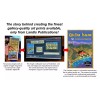
National Orange Show - 1942 Advertising Poster
Product Overview
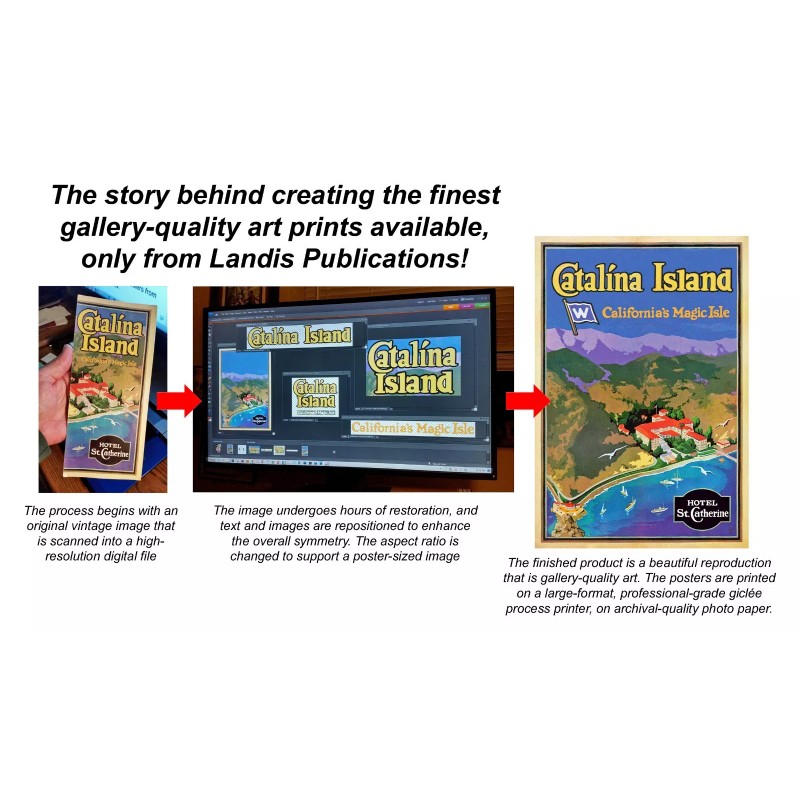
These are simply the best posters available! You will be thrilled with the image quality, vivid colors, fine paper, and unique subjects. This is an original image that has been transformed into a beautiful poster - available exclusively from Posterzilla.
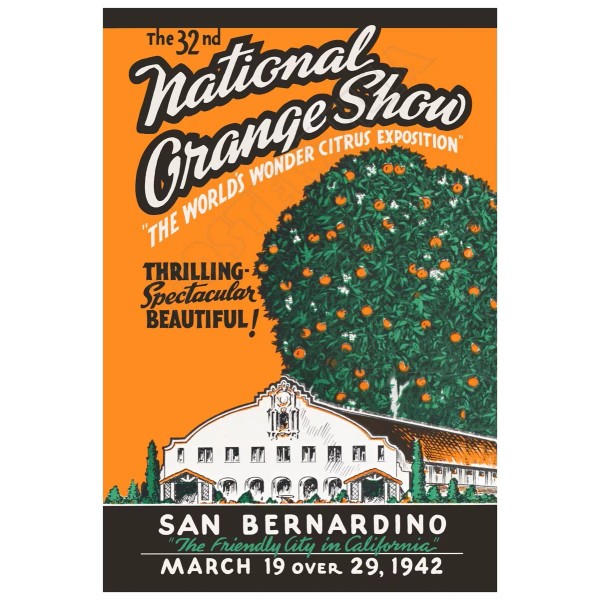
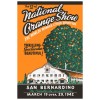
This beautiful reproduction poster has been re-mastered from a 1942 advertisement for the 32nd annual National Orange Show, in San Bernardino, Ca.
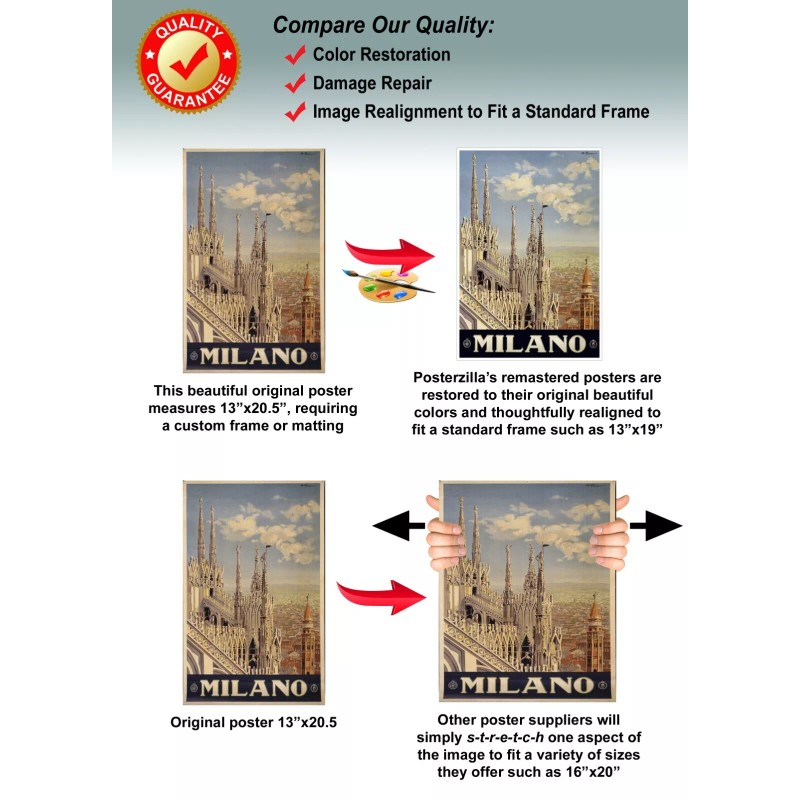
The vibrant colors and detail of this classic image have been painstakingly brought back to life to preserve a great piece of history.
The high-resolution image is printed on heavy archival photo paper, on a large-format, professional giclée process printer. The poster is shipped in a rigid cardboard tube, and is ready for framing.
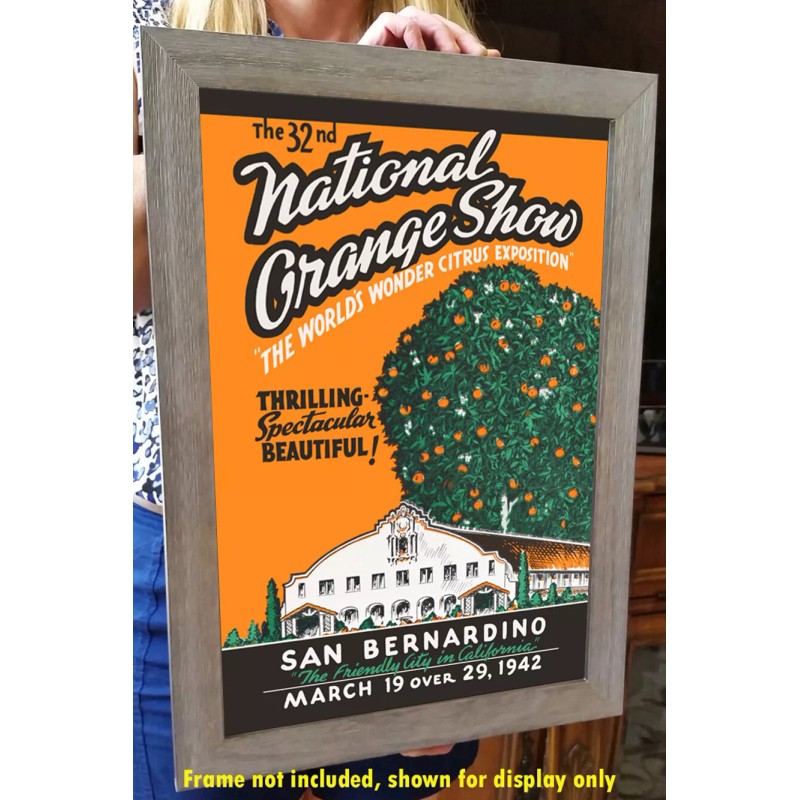
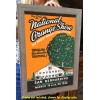
The 13"x19" format is an excellent image size that looks great as a stand-alone piece of art, or as a grouped visual statement. These posters require no cutting, trimming, or custom framing, and a wide variety of these frames are readily available at your local craft or hobby retailer, and online.
A great vintage print for your home, shop, or business!
NATIONAL ORANGE SHOW HISTORY:
It is safe to say that the National Orange Show’s long and storied history is an integral part of San Bernardino’s history. From its development in 1889 to the present day, The National Orange Show has made a major economic and cultural impact on the Inland Empire.
Fruitful Beginnings
Originally a Latin American mutation of a variety from the Iberian Peninsula named for its “belly button” at the blossom end, the Washington Navel Orange was first brought to the area in 1873. The fruit soon became a major catalyst for the development of California’s Citrus Industry. But the story goes back much further…
According to Ingersoll’s Century Annals of San Bernardino County, Anson Van Leuven brought the first orange trees, six in number, to San Bernardino Valley from San Gabriel Valley in 1857. In 1869, Lewis F. Cram was given the opportunity to buy 500 trees, but opted to purchase only enough rootstock to plant 1 ¾ acres. By 1887, he showed a net profit of $1,757 on this meager planting, over $1,100 net per acre–a good fortune in those days. In 1873, the U.S. Department of Agriculture sent California’s two original orange trees to Eliza Tibbets. The tree’s seemingly endless oranges won awards at major expositions for their superior quality and taste. Ms. Tibbets soon had a booming business selling buds from her celebrated stock. By 1910, one year before the National Orange Show began, at least 100,000 acres in California were planted with the progeny of her trees and California navel orange sales had reached $200 million.
Flavorful a-Fairs
Along with the growing industry, a series of citrus fairs were held in the 1880s and 1890s. The world’s first Citrus Fair was staged in Riverside in February of 1879. It was at this fair that the Washington Navel was first exhibited and its superior qualities recognized. The fair was such a success that a second fair followed in February 1880, and a third in March of 1881. The citizens of Riverside were so delighted with the success of the fair that they turned it into an annual event and actually erected a pavilion for the fair of 1882. Annual citrus fairs were held in Riverside, except for one or two that were held in Colton, until 1891. At the same time, similar fairs were being held in Los Angeles and San Bernardino County.
In 1889, the very first “Orange Show” was staged in San Bernardino. This premier show was scheduled to run a week, but the promoters were doubtful as to whether or not the show would last that long. Each day, a brief message appeared in the Courier (the forerunner of San Bernardino’s newspaper, The Sun) urging committee members to obtain exhibitors. When the show opened, fifteen county communities were represented in the citrus exhibits. Other county products also on display included raisins, walnuts, lemons, limes, grapes, apples, and Cucamonga wines and brandies. The show opened with the City of San Bernardino band playing from a Van Dorin Building balcony on Third Street. The event cost $744.25 to produce, with $1,180.25 in revenue. Since financial success was apparent, and the show was so well received by the community, the event was extended to an eleven-day run.
The “Orange Show” went “National” in 1911 with tents pitched at Fourth and “D” Streets in San Bernardino. By that time, the impact of the citrus industry on San Bernardino economics had escalated. For example, the 7,511 orange trees in 1872 had grown to 1,347,911 by 1900; the 15,000 boxes of oranges shipped in 1881 stood at 1,562,108 boxes by 1902-03; and the cash value of the orange crop had grown from $2,450 in 1860 to $1,634,783 in 1900. This introduction provided the setting and circumstances for the genesis of the National Orange Show, which has taken place every year since its inception in 1911, with the exception of four years during World War II.
Growing Tradition
Over the years, the National Orange Show has evolved into one of the Inland Empire’s premier events centers, hosting hundreds of interim events, including concerts, trade shows, and festivals, as well as annual events and year-round attractions. But, the Citrus Fair has remained at the heart of the National Orange Show.
In 1998, after reducing the run of the fair to five days, the content of the fair was restructured to the needs of the surrounding areas. At the realization that some children in the area have never seen a pig or a cow and have no concept of where their food comes from or what their clothes are made of, the National Orange Show developed livestock and agricultural programs that cater to education rather than competition. In addition, the fair stepped away from the industry-wide Schools Involvement Program to create a program that fits the needs of local educators. The National Orange Show’s carnival company offers affordable prices so families can enjoy an economical day at the festival. Above all else, the National Orange Show strives to present an event that is memorable, entertaining, and innovative.
As decades pass and needs and trends change, so will the National Orange Show. But what remains at the heart of the fair will always be commitment to the community, entertainment for the whole family, and a homegrown appreciation of California oranges.
| Isin: | IO8ZPNRZXTVX |
|---|
Out of Stock
In Stock
Backordered
Out of Stock


IBspot Buyer Protection
Shop confidently on IBspot, receive your item as described or your money back for eligible orders. Learn Program Terms
Product Overview
These are simply the best posters available! You will be thrilled with the image quality, vivid colors, fine paper, and unique subjects. This is an original image that has been transformed into a beautiful poster - available exclusively from Posterzilla.
This beautiful reproduction poster has been re-mastered from a 1942 advertisement for the 32nd annual National Orange Show, in San Bernardino, Ca.
The vibrant colors and detail of this classic image have been painstakingly brought back to life to preserve a great piece of history.
The high-resolution image is printed on heavy archival photo paper, on a large-format, professional giclée process printer. The poster is shipped in a rigid cardboard tube, and is ready for framing.
The 13"x19" format is an excellent image size that looks great as a stand-alone piece of art, or as a grouped visual statement. These posters require no cutting, trimming, or custom framing, and a wide variety of these frames are readily available at your local craft or hobby retailer, and online.
A great vintage print for your home, shop, or business!
NATIONAL ORANGE SHOW HISTORY:
It is safe to say that the National Orange Show’s long and storied history is an integral part of San Bernardino’s history. From its development in 1889 to the present day, The National Orange Show has made a major economic and cultural impact on the Inland Empire.
Fruitful Beginnings
Originally a Latin American mutation of a variety from the Iberian Peninsula named for its “belly button” at the blossom end, the Washington Navel Orange was first brought to the area in 1873. The fruit soon became a major catalyst for the development of California’s Citrus Industry. But the story goes back much further…
According to Ingersoll’s Century Annals of San Bernardino County, Anson Van Leuven brought the first orange trees, six in number, to San Bernardino Valley from San Gabriel Valley in 1857. In 1869, Lewis F. Cram was given the opportunity to buy 500 trees, but opted to purchase only enough rootstock to plant 1 ¾ acres. By 1887, he showed a net profit of $1,757 on this meager planting, over $1,100 net per acre–a good fortune in those days. In 1873, the U.S. Department of Agriculture sent California’s two original orange trees to Eliza Tibbets. The tree’s seemingly endless oranges won awards at major expositions for their superior quality and taste. Ms. Tibbets soon had a booming business selling buds from her celebrated stock. By 1910, one year before the National Orange Show began, at least 100,000 acres in California were planted with the progeny of her trees and California navel orange sales had reached $200 million.
Flavorful a-Fairs
Along with the growing industry, a series of citrus fairs were held in the 1880s and 1890s. The world’s first Citrus Fair was staged in Riverside in February of 1879. It was at this fair that the Washington Navel was first exhibited and its superior qualities recognized. The fair was such a success that a second fair followed in February 1880, and a third in March of 1881. The citizens of Riverside were so delighted with the success of the fair that they turned it into an annual event and actually erected a pavilion for the fair of 1882. Annual citrus fairs were held in Riverside, except for one or two that were held in Colton, until 1891. At the same time, similar fairs were being held in Los Angeles and San Bernardino County.
In 1889, the very first “Orange Show” was staged in San Bernardino. This premier show was scheduled to run a week, but the promoters were doubtful as to whether or not the show would last that long. Each day, a brief message appeared in the Courier (the forerunner of San Bernardino’s newspaper, The Sun) urging committee members to obtain exhibitors. When the show opened, fifteen county communities were represented in the citrus exhibits. Other county products also on display included raisins, walnuts, lemons, limes, grapes, apples, and Cucamonga wines and brandies. The show opened with the City of San Bernardino band playing from a Van Dorin Building balcony on Third Street. The event cost $744.25 to produce, with $1,180.25 in revenue. Since financial success was apparent, and the show was so well received by the community, the event was extended to an eleven-day run.
The “Orange Show” went “National” in 1911 with tents pitched at Fourth and “D” Streets in San Bernardino. By that time, the impact of the citrus industry on San Bernardino economics had escalated. For example, the 7,511 orange trees in 1872 had grown to 1,347,911 by 1900; the 15,000 boxes of oranges shipped in 1881 stood at 1,562,108 boxes by 1902-03; and the cash value of the orange crop had grown from $2,450 in 1860 to $1,634,783 in 1900. This introduction provided the setting and circumstances for the genesis of the National Orange Show, which has taken place every year since its inception in 1911, with the exception of four years during World War II.
Growing Tradition
Over the years, the National Orange Show has evolved into one of the Inland Empire’s premier events centers, hosting hundreds of interim events, including concerts, trade shows, and festivals, as well as annual events and year-round attractions. But, the Citrus Fair has remained at the heart of the National Orange Show.
In 1998, after reducing the run of the fair to five days, the content of the fair was restructured to the needs of the surrounding areas. At the realization that some children in the area have never seen a pig or a cow and have no concept of where their food comes from or what their clothes are made of, the National Orange Show developed livestock and agricultural programs that cater to education rather than competition. In addition, the fair stepped away from the industry-wide Schools Involvement Program to create a program that fits the needs of local educators. The National Orange Show’s carnival company offers affordable prices so families can enjoy an economical day at the festival. Above all else, the National Orange Show strives to present an event that is memorable, entertaining, and innovative.
As decades pass and needs and trends change, so will the National Orange Show. But what remains at the heart of the fair will always be commitment to the community, entertainment for the whole family, and a homegrown appreciation of California oranges.
| Isin: | IO8ZPNRZXTVX |
|---|
These are simply the best posters available! You will be thrilled with the image quality, vivid colors, fine paper, and unique subjects. This is an original image that has been transformed into a beautiful poster - available exclusively from Posterzilla.
This beautiful reproduction poster has been re-mastered from a 1942 advertisement for the 32nd annual National Orange Show, in San Bernardino, Ca.
The vibrant colors and detail of this classic image have been painstakingly brought back to life to preserve a great piece of history.
The high-resolution image is printed on heavy archival photo paper, on a large-format, professional giclée process printer. The poster is shipped in a rigid cardboard tube, and is ready for framing.
The 13"x19" format is an excellent image size that looks great as a stand-alone piece of art, or as a grouped visual statement. These posters require no cutting, trimming, or custom framing, and a wide variety of these frames are readily available at your local craft or hobby retailer, and online.
A great vintage print for your home, shop, or business!
NATIONAL ORANGE SHOW HISTORY:
It is safe to say that the National Orange Show’s long and storied history is an integral part of San Bernardino’s history. From its development in 1889 to the present day, The National Orange Show has made a major economic and cultural impact on the Inland Empire.
Fruitful Beginnings
Originally a Latin American mutation of a variety from the Iberian Peninsula named for its “belly button” at the blossom end, the Washington Navel Orange was first brought to the area in 1873. The fruit soon became a major catalyst for the development of California’s Citrus Industry. But the story goes back much further…
According to Ingersoll’s Century Annals of San Bernardino County, Anson Van Leuven brought the first orange trees, six in number, to San Bernardino Valley from San Gabriel Valley in 1857. In 1869, Lewis F. Cram was given the opportunity to buy 500 trees, but opted to purchase only enough rootstock to plant 1 ¾ acres. By 1887, he showed a net profit of $1,757 on this meager planting, over $1,100 net per acre–a good fortune in those days. In 1873, the U.S. Department of Agriculture sent California’s two original orange trees to Eliza Tibbets. The tree’s seemingly endless oranges won awards at major expositions for their superior quality and taste. Ms. Tibbets soon had a booming business selling buds from her celebrated stock. By 1910, one year before the National Orange Show began, at least 100,000 acres in California were planted with the progeny of her trees and California navel orange sales had reached $200 million.
Flavorful a-Fairs
Along with the growing industry, a series of citrus fairs were held in the 1880s and 1890s. The world’s first Citrus Fair was staged in Riverside in February of 1879. It was at this fair that the Washington Navel was first exhibited and its superior qualities recognized. The fair was such a success that a second fair followed in February 1880, and a third in March of 1881. The citizens of Riverside were so delighted with the success of the fair that they turned it into an annual event and actually erected a pavilion for the fair of 1882. Annual citrus fairs were held in Riverside, except for one or two that were held in Colton, until 1891. At the same time, similar fairs were being held in Los Angeles and San Bernardino County.
In 1889, the very first “Orange Show” was staged in San Bernardino. This premier show was scheduled to run a week, but the promoters were doubtful as to whether or not the show would last that long. Each day, a brief message appeared in the Courier (the forerunner of San Bernardino’s newspaper, The Sun) urging committee members to obtain exhibitors. When the show opened, fifteen county communities were represented in the citrus exhibits. Other county products also on display included raisins, walnuts, lemons, limes, grapes, apples, and Cucamonga wines and brandies. The show opened with the City of San Bernardino band playing from a Van Dorin Building balcony on Third Street. The event cost $744.25 to produce, with $1,180.25 in revenue. Since financial success was apparent, and the show was so well received by the community, the event was extended to an eleven-day run.
The “Orange Show” went “National” in 1911 with tents pitched at Fourth and “D” Streets in San Bernardino. By that time, the impact of the citrus industry on San Bernardino economics had escalated. For example, the 7,511 orange trees in 1872 had grown to 1,347,911 by 1900; the 15,000 boxes of oranges shipped in 1881 stood at 1,562,108 boxes by 1902-03; and the cash value of the orange crop had grown from $2,450 in 1860 to $1,634,783 in 1900. This introduction provided the setting and circumstances for the genesis of the National Orange Show, which has taken place every year since its inception in 1911, with the exception of four years during World War II.
Growing Tradition
Over the years, the National Orange Show has evolved into one of the Inland Empire’s premier events centers, hosting hundreds of interim events, including concerts, trade shows, and festivals, as well as annual events and year-round attractions. But, the Citrus Fair has remained at the heart of the National Orange Show.
In 1998, after reducing the run of the fair to five days, the content of the fair was restructured to the needs of the surrounding areas. At the realization that some children in the area have never seen a pig or a cow and have no concept of where their food comes from or what their clothes are made of, the National Orange Show developed livestock and agricultural programs that cater to education rather than competition. In addition, the fair stepped away from the industry-wide Schools Involvement Program to create a program that fits the needs of local educators. The National Orange Show’s carnival company offers affordable prices so families can enjoy an economical day at the festival. Above all else, the National Orange Show strives to present an event that is memorable, entertaining, and innovative.
As decades pass and needs and trends change, so will the National Orange Show. But what remains at the heart of the fair will always be commitment to the community, entertainment for the whole family, and a homegrown appreciation of California oranges.
Processing Time
- We process and ship orders Monday through Friday, excluding holidays.
- Most orders are processed within 1–3 business days, depending on product availability.
- Processing time does not include delivery time, which varies based on your location and the product’s shipping origin.
Shipping Coverage
We currently ship to addresses within the United States only.
Products may ship from:
- Our U.S. warehouses, or
- Our international fulfillment centers (including Korea, Japan, China, Australia, Mexico, Canada, the United Kingdom, and the EU).
Each product page clearly displays the “Ships From” location before checkout.
Shipping Methods & Estimated Delivery
| Shipping Method | Estimated Delivery | Cost |
|---|---|---|
| Free Shipping (US) | 5–10 business days | Free, available on eligible items |
| Standard Shipping (US to US by Item) | 5–10 business days | $5.95 for the first item, $3.00 each additional |
| Standard Shipping (From US Warehouse by Weight) | 3–7 business days | Starts at $5.95, increasing by $2 for every additional 4 oz (0.25 lb) up to 1 lb, then by $4 for each additional pound beyond 1 lb. |
| Extended Delivery (Ships from Overseas Warehouse) | 10–20 business days | $14.50 for the first item, $2.00 each additional |
Shipping costs vary by product weight, quantity and origin. Exact rates and delivery estimates are displayed on each product page and confirmed during checkout.
Free Shipping
We offer free standard shipping on select products or during promotional periods. Availability of free shipping will be displayed on the product page and at checkout.
Carriers
We primarily use USPS and UPS for U.S. deliveries. Items shipped from international warehouses may be handled by partner carriers depending on the country of origin.
Import Duties & Taxes
All import duties and taxes for goods imported into the United States are included in the product price. There are no hidden fees or additional charges at checkout.
Tracking & Notifications
Every order is fully trackable. You will receive a tracking number via email once your order ships. If your order ships in multiple packages, each package will have its own tracking number. If you don’t receive a shipping confirmation immediately, your order is still being processed and will arrive within the estimated timeframe shown at checkout.
You can track your shipment anytime using the Track Your Order page on our website.
Order Changes & Cancellations
If you need to modify or cancel an order, please contact our customer support team as soon as possible. Orders can only be canceled before they ship. Once shipped, cancellations are not possible, but you may request a return after the item is delivered.
Contact: support@ibspot.com
Item Not Received
If your tracking number shows “Delivered” but you haven’t received your package:
- Check with your local USPS or UPS office.
- Confirm that the shipping address provided was correct.
- If the issue remains unresolved, contact support@ibspot.com for assistance.
Damaged or Lost Parcels
If your package arrives damaged or fails to arrive, please contact us immediately. For deliveries to P.O. boxes, ibspot is not responsible for damage caused by weather, temperature, or theft.
Customer Support
For any questions about shipping, tracking, or delivery, our customer support team is here to help.
Email: support@ibspot.com
We’re always happy to help.
Please read our policy carefully before making a purchase.
We aim to ensure every customer has a smooth and transparent experience with ibspot.com.
Order Cancellation Policy
Customers may request to cancel an order before it has been shipped.
Once the package has been shipped, cancellations are no longer possible; however, you may still request a return after receiving your order.
How to Request a Cancellation
You can contact us through:
- Email: support@ibspot.com
- Contact Form: Submit a request through our Contact Us page
Please submit your cancellation request as soon as possible after placing the order to allow us to process it before shipment.
Return Policy
We accept returns for most items within 30 days of delivery for a full refund.
To be eligible for a return:
- The item must be unused, in the same condition as received, and in its original packaging.
- A tracking number must be provided to confirm the return shipment.
Non-Returnable Items
Certain products cannot be returned, including:
- Perishable goods (for example, food, flowers, newspapers, magazines)
- Intimate or sanitary goods
- Hazardous materials or flammable liquids/gases
- Gift cards
- Downloadable software
- Some health and personal care items
Partial Refunds (If Applicable)
Partial refunds may be granted in specific situations, such as:
- Books with obvious signs of use
- Opened CDs, DVDs, software, or vinyl records
- Items not in their original condition, damaged, or missing parts not due to our error
- Items returned more than 30 days after delivery
How to Return an Item
To initiate a return, please contact us at support@ibspot.com with your order number and details about the product you wish to return.
Our team will provide you with return instructions and a prepaid return label.
Shipping Cost for Returns
Please contact us before returning any item.
We will provide a free return shipping label.
If a return is sent back without prior contact or without our provided label, we cannot be held responsible for return shipping costs.
For items valued over $75, we recommend using a trackable shipping service or purchasing shipping insurance.
We cannot guarantee that we will receive your returned item if shipped independently.
Refund Processing
Once your return is received and inspected:
- In-store returns are refunded to the original form of payment or issued as a gift card.
- Mail-in returns using our prepaid label are refunded to the original payment method within 3–5 business days after we receive your return.
Please allow:
- 5–7 business days for the return to reach our Returns Center.
- An additional 3–10 business days for your bank to post the refund to your account.
Damages, Issues & Claims
Please inspect your order immediately upon receipt.
If you receive a defective, damaged, or incorrect item, contact us right away at support@ibspot.com.
We’ll evaluate the issue promptly and make it right.
Product Claims
Before purchasing, please review product details carefully.
If there is a problem with your order upon arrival, visit our Support Center or contact us directly to arrange return shipping or replacement.
Exchanges
We do not process direct exchanges.
The fastest way to get what you need is to return the original item and place a new order once your return is accepted.
Return Address
IBSPOT Return Center
15 Sawmill Ln
Dover Plains, NY 12522
United States
Customer Support
Our support team is available 24/7 to assist with cancellations, returns, or general inquiries.
Email: support@ibspot.com
Contact Form: Contact Us page
Oops!
Sorry, it looks like some products are not available in selected quantity.