

2nd Ranger BN Scroll grouping - 3 scrolls and a 75th unit insignia - Hook & Loop
2nd Ranger BN Scroll grouping - 3 scrolls and a 75th unit insignia - Hook & Loop
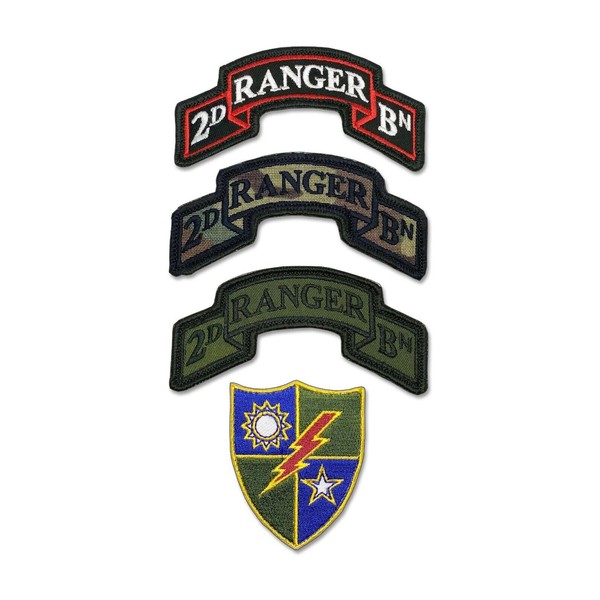
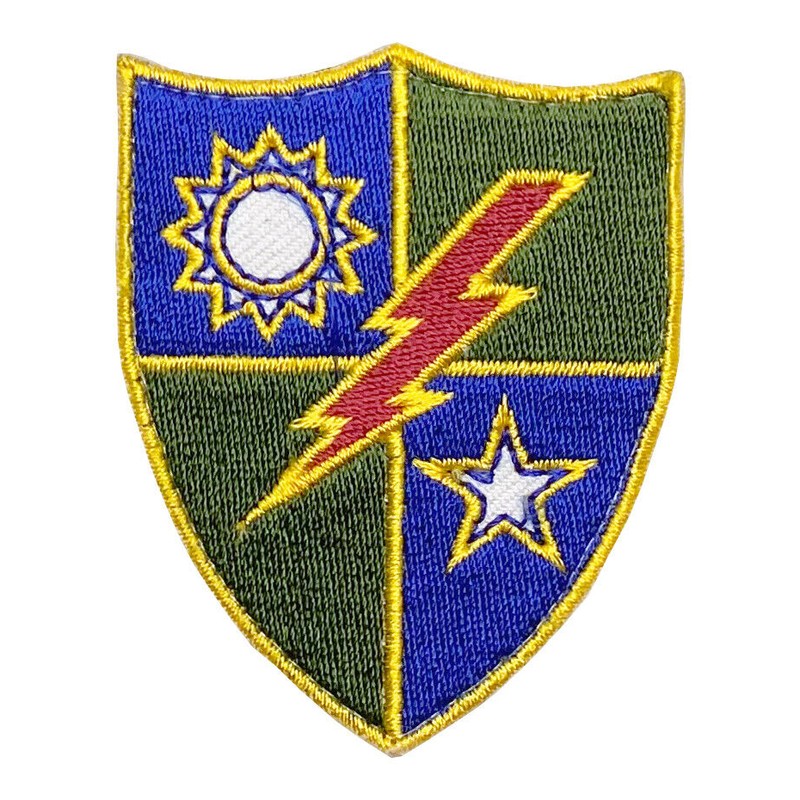


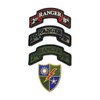
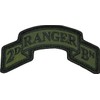
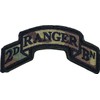
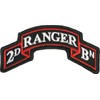
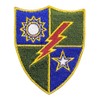
2nd Ranger BN Scroll grouping - 3 scrolls and a 75th unit insignia - Hook & Loop
Product Overview
70YearRanger
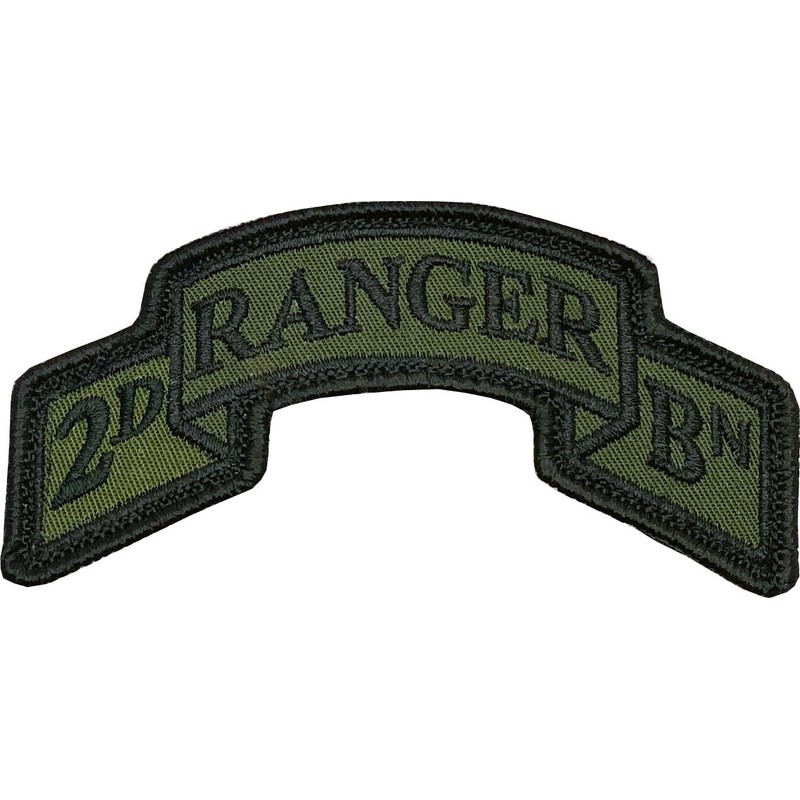
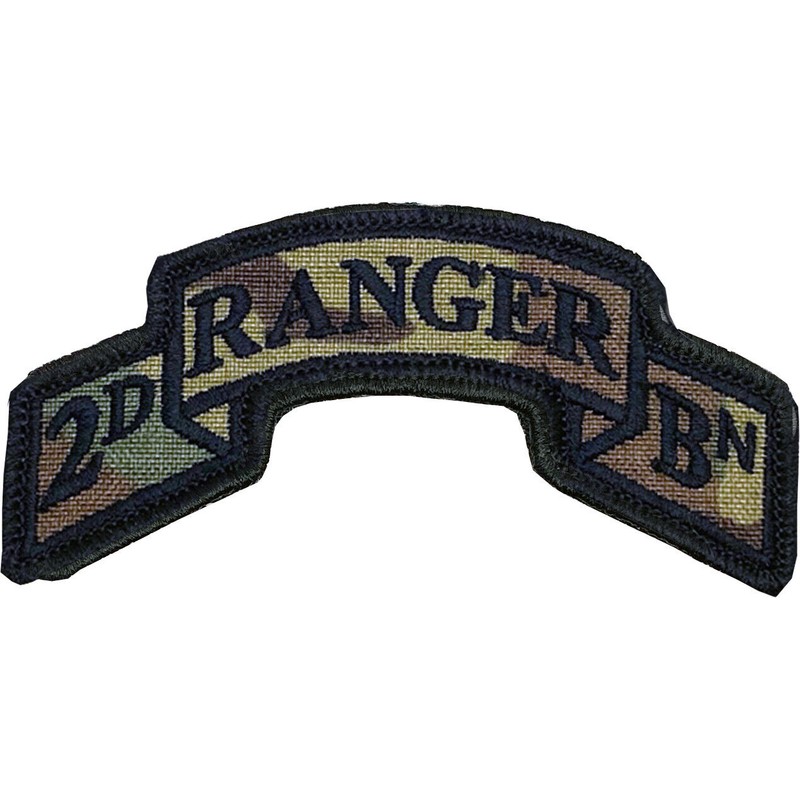
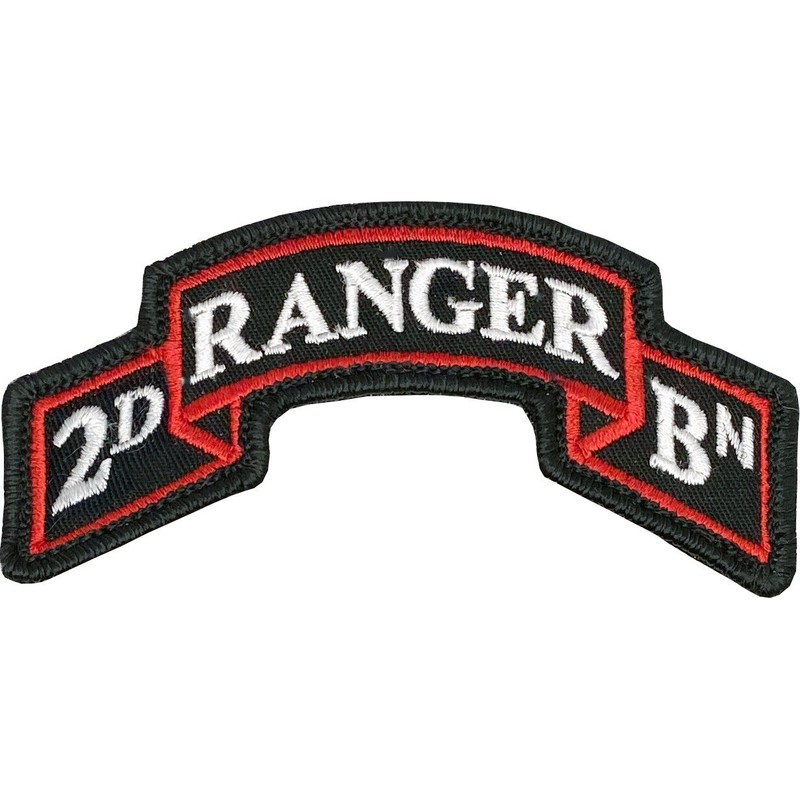
| 2nd Ranger BN Scroll grouping - 3 scrolls and a 75th unit insignia - Hook & Loop OD GREEN, DRESS, and MULTI-CAM SCROLLS all four pieces Velcro Backed (Hook & Loop) Modern US 2nd Ranger Battalion Scroll - 3 7/8" x 2" Merrowed - JBLM - Fort Lewis, WA |
| The 75th Ranger Regiment (Airborne), also known as Rangers, is a Special Operations light infantry elite, unit of the United States Army. The Regiment is headquartered in Fort Benning, Georgia with battalions in Fort Benning, Hunter Army Airfield and Joint Base Lewis-McChord. It operates as a special operations force of the United States Army Special Operations Command (USASOC). The Regiment is composed of one Special Troops Battalion and three, organizationally identical, rapidly-deployable light infantry special operations battalions with specialized skills that enable them to perform a variety of special operations missions. These missions include airborne, air assault, and direct action operations, raids, infiltration and exfiltration by air, land or sea in addition to airfield seizure, recovery of personnel and special equipment, and support of general purpose forces (GPF). Each of the Regiment's three line battalions rotates as the "Ranger Ready Force". This battalion is at a constant readiness to deploy and is expected to be able to respond anywhere in the world within 18 hours. American Ranger history predates the Revolutionary War with Ethan Allen and his guerilla fighting group The Green Mountain Boys in Vermont. Captain Benjamin Church formed Church's Rangers, which fought hostile Native American tribes during King Philip's War Major Robert Rogers formed a Ranger unit in 1757 to fight during the French and Indian War. They would become known as the "Rogers' Rangers." The Continental Congress formed eight companies of expert riflemen in 1775 to fight in the Revolutionary War. In 1777, this force of hardy frontiersmen commanded by Dan Morgan was known as The Corps of Rangers. Francis Marion, "The Swamp Fox", organized another famous Revolutionary War Ranger element known as "Marion's Partisans." During the War of 1812, companies of United States Rangers were raised from among the frontier settlers as part of the regular Army. Throughout the war, they patrolled the frontier from Ohio to Western Illinois on horseback and by boat. They participated in many skirmishes and battles with the British and their American Indian allies. The American Civil War included Rangers such as John Singleton Mosby who was the most famous Confederate Ranger during the Civil War. His company's raids on Union camps and bases were so effective, part of North-Central Virginia soon became known as Mosby's Confederacy. After the Civil War, more than half a century passed without military Ranger units in the United States. WORLD WAR II 1st Ranger Battalion On 8 December 1941, the United States of America entered World War II the day after Pearl Harbor was attacked by Japan. At the time, Major William Orlando Darby, the founder of the modern Rangers, was assigned to duty in Belfast, Northern Ireland. Darby, frustrated with his lack of hands on experience as General Russell Hartle’s aide, was put in charge of a new unit. General George C. Marshall envisioned an elite unit of 50 men selected voluntarily from the 34th Infantry Division. He believed Darby was the man to do the job. It was therefore on 8 June 1942, that Darby was officially put in charge of the 1st Ranger Battalion under General Hartle. On 19 August 1942, 50 Rangers fought alongside Canadian and British commandos in the ill-fated Dieppe raid on the coast of occupied France. In November, the entire 1st Ranger Battalion entered combat for the first time, when they landed at Arzew, Algeria. The 1st were split into two groups in hopes of assaulting Vichy-French batteries and fortifications before the 1st Infantry Division would land on the beach. The operation was successful. The unit sustained minimal casualties. On 11 February 1943, the Rangers moved 32 miles to raid an Italian encampment at Sened Station. Moving at night, the Rangers slipped to within 50 yards of the Italian outpost and began their attack. It took the battalion only 20 minutes to overtake the garrison and achieve their objective. Fifty Italians were killed and an additional 10 were taken prisoner. Darby, along with other officers, were awarded the Silver Star medal for this action. The battalion itself gained the nickname the “Black Death” by the Italians. At the time, the Italians still held the pass at Djebel El Ank, located at the far east edge of El Guettar. The Rangers linked up with engineers elements of the 26th Infantry, 1st Infantry Division, to attack the area. The 1st Rangers orders were to move overland, on foot 12 miles to outflank the enemy's position. In eight hours of fighting, the Americans captured the objective; the 1st Rangers took 200 prisoners. Creation of the 3rd and 4th Ranger Battalions With the success of the 1st Battalion during the Tunisian campaign, Darby requested up the chain of command, that the Rangers be expanded to a full regiment. The request was granted. The 3rd and 4th Ranger Battalions, were authorized shortly after and were trained and led by veteran officers and NCOs from the first battalion. After getting the "green light" to expand his unit, Darby ran into a problem. The Rangers only took volunteers, Darby knowing that the best man for the job was not always a volunteer, sought out men around Oran. Although he was still limited in that he could only accept volunteers, he began to find ways around this. For instance, he began to give speeches, put up posters and encouraged his officers to scout around for eligible candidates. The recruiting campaign worked. By June 1943, the three Ranger battalions were fully operational. 1st Rangers were still under Colonel Darby; the 3rd under Major Herman Dammer, the 4th commanded by Major Roy Murray. 1st and 4th Battalions were paired together, and positioned to spearhead General Terry Allen's 1st Division, on the Sicily campaign. Landing outside Gela, the Rangers took the town just after midnight, and were quickly sent out to San Nicola. The Rangers seized the town with the help of an armored division. Despite the fact that they were under a constant attack from enemy artillery, tank, and air forces, they still succeeded in the completion of their mission. This 50 hour barrage would be one of the most unbearable experiences for the Rangers. Following their success, the two Ranger battalions were then ordered to take the town of Buerta, a fortress suspended on the 4,000 foot high edge of the cliff at Buerta beach. After almost withdrawing from the battle, and requesting artillery to level the city, a platoon of Rangers volunteered to breach the city. Two privates, John See and John Constantine, snuck in behind enemy lines and tricked the Italians and Germans into surrendering the city. Meanwhile the 3rd Ranger Battalion headed out into the area of Agrigento, where they marched through Campobello, Naro, and Favara successfully occupying each town. The 3rd was ordered to back track to the shores of Porto Empedocle. The beach itself was not occupied, but high in the cliffs heavy machinegun and cannon fire poured onto the Rangers. Scrambling, the Rangers made their way to each machine gun nest and they managed to disable all enemy opposition before the supporting infantry battalion even hit the shore.Fall of the 1st, 3rd and 4th Battalions On 30 January 1944, after Christmas break the Rangers were put together for a joint operation, to occupy the town of Cisterna, before the main infantry division moved in. That night the 1st and 3rd battalions moved into the town, passing many German soldiers that did not appear to notice the Rangers slip by. The 4th battalion met opposition almost immediately taking an opposite route by the road. During the night the 1st and 3rd battalion separated out about 2 miles, and when daylight caught the 1st Ranger battalion out in an open field, the Germans began their assault. Unable to escape and completely surrounded, the two Ranger battalions fought on until ammunition and resources were empty. The 4th battalions tried to make a push to save their comrades but were unsuccessful and had to withdraw. After 5 hours of fighting the Germ |
| Isin: | IXRJPD1YLZPS |
|---|
Out of Stock
In Stock
Backordered
Out of Stock


IBspot Buyer Protection
Shop confidently on IBspot, receive your item as described or your money back for eligible orders. Learn Program Terms
70YearRanger
| 2nd Ranger BN Scroll grouping - 3 scrolls and a 75th unit insignia - Hook & Loop OD GREEN, DRESS, and MULTI-CAM SCROLLS all four pieces Velcro Backed (Hook & Loop) Modern US 2nd Ranger Battalion Scroll - 3 7/8" x 2" Merrowed - JBLM - Fort Lewis, WA |
| The 75th Ranger Regiment (Airborne), also known as Rangers, is a Special Operations light infantry elite, unit of the United States Army. The Regiment is headquartered in Fort Benning, Georgia with battalions in Fort Benning, Hunter Army Airfield and Joint Base Lewis-McChord. It operates as a special operations force of the United States Army Special Operations Command (USASOC). The Regiment is composed of one Special Troops Battalion and three, organizationally identical, rapidly-deployable light infantry special operations battalions with specialized skills that enable them to perform a variety of special operations missions. These missions include airborne, air assault, and direct action operations, raids, infiltration and exfiltration by air, land or sea in addition to airfield seizure, recovery of personnel and special equipment, and support of general purpose forces (GPF). Each of the Regiment's three line battalions rotates as the "Ranger Ready Force". This battalion is at a constant readiness to deploy and is expected to be able to respond anywhere in the world within 18 hours. American Ranger history predates the Revolutionary War with Ethan Allen and his guerilla fighting group The Green Mountain Boys in Vermont. Captain Benjamin Church formed Church's Rangers, which fought hostile Native American tribes during King Philip's War Major Robert Rogers formed a Ranger unit in 1757 to fight during the French and Indian War. They would become known as the "Rogers' Rangers." The Continental Congress formed eight companies of expert riflemen in 1775 to fight in the Revolutionary War. In 1777, this force of hardy frontiersmen commanded by Dan Morgan was known as The Corps of Rangers. Francis Marion, "The Swamp Fox", organized another famous Revolutionary War Ranger element known as "Marion's Partisans." During the War of 1812, companies of United States Rangers were raised from among the frontier settlers as part of the regular Army. Throughout the war, they patrolled the frontier from Ohio to Western Illinois on horseback and by boat. They participated in many skirmishes and battles with the British and their American Indian allies. The American Civil War included Rangers such as John Singleton Mosby who was the most famous Confederate Ranger during the Civil War. His company's raids on Union camps and bases were so effective, part of North-Central Virginia soon became known as Mosby's Confederacy. After the Civil War, more than half a century passed without military Ranger units in the United States. WORLD WAR II 1st Ranger Battalion On 8 December 1941, the United States of America entered World War II the day after Pearl Harbor was attacked by Japan. At the time, Major William Orlando Darby, the founder of the modern Rangers, was assigned to duty in Belfast, Northern Ireland. Darby, frustrated with his lack of hands on experience as General Russell Hartle’s aide, was put in charge of a new unit. General George C. Marshall envisioned an elite unit of 50 men selected voluntarily from the 34th Infantry Division. He believed Darby was the man to do the job. It was therefore on 8 June 1942, that Darby was officially put in charge of the 1st Ranger Battalion under General Hartle. On 19 August 1942, 50 Rangers fought alongside Canadian and British commandos in the ill-fated Dieppe raid on the coast of occupied France. In November, the entire 1st Ranger Battalion entered combat for the first time, when they landed at Arzew, Algeria. The 1st were split into two groups in hopes of assaulting Vichy-French batteries and fortifications before the 1st Infantry Division would land on the beach. The operation was successful. The unit sustained minimal casualties. On 11 February 1943, the Rangers moved 32 miles to raid an Italian encampment at Sened Station. Moving at night, the Rangers slipped to within 50 yards of the Italian outpost and began their attack. It took the battalion only 20 minutes to overtake the garrison and achieve their objective. Fifty Italians were killed and an additional 10 were taken prisoner. Darby, along with other officers, were awarded the Silver Star medal for this action. The battalion itself gained the nickname the “Black Death” by the Italians. At the time, the Italians still held the pass at Djebel El Ank, located at the far east edge of El Guettar. The Rangers linked up with engineers elements of the 26th Infantry, 1st Infantry Division, to attack the area. The 1st Rangers orders were to move overland, on foot 12 miles to outflank the enemy's position. In eight hours of fighting, the Americans captured the objective; the 1st Rangers took 200 prisoners. Creation of the 3rd and 4th Ranger Battalions With the success of the 1st Battalion during the Tunisian campaign, Darby requested up the chain of command, that the Rangers be expanded to a full regiment. The request was granted. The 3rd and 4th Ranger Battalions, were authorized shortly after and were trained and led by veteran officers and NCOs from the first battalion. After getting the "green light" to expand his unit, Darby ran into a problem. The Rangers only took volunteers, Darby knowing that the best man for the job was not always a volunteer, sought out men around Oran. Although he was still limited in that he could only accept volunteers, he began to find ways around this. For instance, he began to give speeches, put up posters and encouraged his officers to scout around for eligible candidates. The recruiting campaign worked. By June 1943, the three Ranger battalions were fully operational. 1st Rangers were still under Colonel Darby; the 3rd under Major Herman Dammer, the 4th commanded by Major Roy Murray. 1st and 4th Battalions were paired together, and positioned to spearhead General Terry Allen's 1st Division, on the Sicily campaign. Landing outside Gela, the Rangers took the town just after midnight, and were quickly sent out to San Nicola. The Rangers seized the town with the help of an armored division. Despite the fact that they were under a constant attack from enemy artillery, tank, and air forces, they still succeeded in the completion of their mission. This 50 hour barrage would be one of the most unbearable experiences for the Rangers. Following their success, the two Ranger battalions were then ordered to take the town of Buerta, a fortress suspended on the 4,000 foot high edge of the cliff at Buerta beach. After almost withdrawing from the battle, and requesting artillery to level the city, a platoon of Rangers volunteered to breach the city. Two privates, John See and John Constantine, snuck in behind enemy lines and tricked the Italians and Germans into surrendering the city. Meanwhile the 3rd Ranger Battalion headed out into the area of Agrigento, where they marched through Campobello, Naro, and Favara successfully occupying each town. The 3rd was ordered to back track to the shores of Porto Empedocle. The beach itself was not occupied, but high in the cliffs heavy machinegun and cannon fire poured onto the Rangers. Scrambling, the Rangers made their way to each machine gun nest and they managed to disable all enemy opposition before the supporting infantry battalion even hit the shore.Fall of the 1st, 3rd and 4th Battalions On 30 January 1944, after Christmas break the Rangers were put together for a joint operation, to occupy the town of Cisterna, before the main infantry division moved in. That night the 1st and 3rd battalions moved into the town, passing many German soldiers that did not appear to notice the Rangers slip by. The 4th battalion met opposition almost immediately taking an opposite route by the road. During the night the 1st and 3rd battalion separated out about 2 miles, and when daylight caught the 1st Ranger battalion out in an open field, the Germans began their assault. Unable to escape and completely surrounded, the two Ranger battalions fought on until ammunition and resources were empty. The 4th battalions tried to make a push to save their comrades but were unsuccessful and had to withdraw. After 5 hours of fighting the Germ |
Item Specifics
Processing Time
- We process and ship orders Monday through Friday, excluding holidays.
- Most orders are processed within 1–3 business days, depending on product availability.
- Processing time does not include delivery time, which varies based on your location and the product’s shipping origin.
Shipping Coverage
We currently ship to addresses within the United States only.
Products may ship from:
- Our U.S. warehouses, or
- Our international fulfillment centers (including Korea, Japan, China, Australia, Mexico, Canada, the United Kingdom, and the EU).
Each product page clearly displays the “Ships From” location before checkout.
Shipping Methods & Estimated Delivery
| Shipping Method | Estimated Delivery | Cost |
|---|---|---|
| Free Shipping (US) | 5–10 business days | Free, available on eligible items |
| Standard Shipping (US to US by Item) | 5–10 business days | $6.50 for the first item, $2.00 each additional |
| Standard Shipping (From US Warehouse by Weight) | 3–7 business days | Starts at $6.50, increasing by $2 for every additional 4 oz (0.25 lb) up to 1 lb, then by $4 for each additional pound beyond 1 lb. |
| Extended Delivery (Ships from Overseas Warehouse) | 10–20 business days | $14.50 for the first item, $2.00 each additional |
Shipping costs vary by product weight, quantity and origin. Exact rates and delivery estimates are displayed on each product page and confirmed during checkout.
Free Shipping
We offer free standard shipping on select products or during promotional periods. Availability of free shipping will be displayed on the product page and at checkout.
Carriers
We primarily use USPS and UPS for U.S. deliveries. Items shipped from international warehouses may be handled by partner carriers depending on the country of origin.
Import Duties & Taxes
All import duties and taxes for goods imported into the United States are included in the product price. There are no hidden fees or additional charges at checkout.
Tracking & Notifications
Every order is fully trackable. You will receive a tracking number via email once your order ships. If your order ships in multiple packages, each package will have its own tracking number. If you don’t receive a shipping confirmation immediately, your order is still being processed and will arrive within the estimated timeframe shown at checkout.
You can track your shipment anytime using the Track Your Order page on our website.
Order Changes & Cancellations
If you need to modify or cancel an order, please contact our customer support team as soon as possible. Orders can only be canceled before they ship. Once shipped, cancellations are not possible, but you may request a return after the item is delivered.
Contact: support@ibspot.com
Item Not Received
If your tracking number shows “Delivered” but you haven’t received your package:
- Check with your local USPS or UPS office.
- Confirm that the shipping address provided was correct.
- If the issue remains unresolved, contact support@ibspot.com for assistance.
Damaged or Lost Parcels
If your package arrives damaged or fails to arrive, please contact us immediately. For deliveries to P.O. boxes, ibspot is not responsible for damage caused by weather, temperature, or theft.
Customer Support
For any questions about shipping, tracking, or delivery, our customer support team is here to help.
Email: support@ibspot.com
We’re always happy to help.
Please read our policy carefully before making a purchase.
We aim to ensure every customer has a smooth and transparent experience with ibspot.com.
Order Cancellation Policy
Customers may request to cancel an order before it has been shipped.
Once the package has been shipped, cancellations are no longer possible; however, you may still request a return after receiving your order.
How to Request a Cancellation
You can contact us through:
- Email: support@ibspot.com
- Contact Form: Submit a request through our Contact Us page
Please submit your cancellation request as soon as possible after placing the order to allow us to process it before shipment.
Return Policy
We accept returns for most items within 30 days of delivery for a full refund.
To be eligible for a return:
- The item must be unused, in the same condition as received, and in its original packaging.
- A tracking number must be provided to confirm the return shipment.
Non-Returnable Items
Certain products cannot be returned, including:
- Perishable goods (for example, food, flowers, newspapers, magazines)
- Intimate or sanitary goods
- Hazardous materials or flammable liquids/gases
- Gift cards
- Downloadable software
- Some health and personal care items
Partial Refunds (If Applicable)
Partial refunds may be granted in specific situations, such as:
- Books with obvious signs of use
- Opened CDs, DVDs, software, or vinyl records
- Items not in their original condition, damaged, or missing parts not due to our error
- Items returned more than 30 days after delivery
How to Return an Item
To initiate a return, please contact us at support@ibspot.com with your order number and details about the product you wish to return.
Our team will provide you with return instructions and a prepaid return label.
Shipping Cost for Returns
Please contact us before returning any item.
We will provide a free return shipping label.
If a return is sent back without prior contact or without our provided label, we cannot be held responsible for return shipping costs.
For items valued over $75, we recommend using a trackable shipping service or purchasing shipping insurance.
We cannot guarantee that we will receive your returned item if shipped independently.
Refund Processing
Once your return is received and inspected:
- In-store returns are refunded to the original form of payment or issued as a gift card.
- Mail-in returns using our prepaid label are refunded to the original payment method within 3–5 business days after we receive your return.
Please allow:
- 5–7 business days for the return to reach our Returns Center.
- An additional 3–10 business days for your bank to post the refund to your account.
Damages, Issues & Claims
Please inspect your order immediately upon receipt.
If you receive a defective, damaged, or incorrect item, contact us right away at support@ibspot.com.
We’ll evaluate the issue promptly and make it right.
Product Claims
Before purchasing, please review product details carefully.
If there is a problem with your order upon arrival, visit our Support Center or contact us directly to arrange return shipping or replacement.
Exchanges
We do not process direct exchanges.
The fastest way to get what you need is to return the original item and place a new order once your return is accepted.
Return Address
IBSPOT Return Center
15 Sawmill Ln
Dover Plains, NY 12522
United States
Customer Support
Our support team is available 24/7 to assist with cancellations, returns, or general inquiries.
Email: support@ibspot.com
Contact Form: Contact Us page

Oops!
Sorry, it looks like some products are not available in selected quantity.