



The Jonsteen Company Jurassic Ginkgo Tree | Seed Grow Kit | The Jonsteen Company
$47.44
- Free US shipping
-
Arrives
- Grow a living fossil from seed!
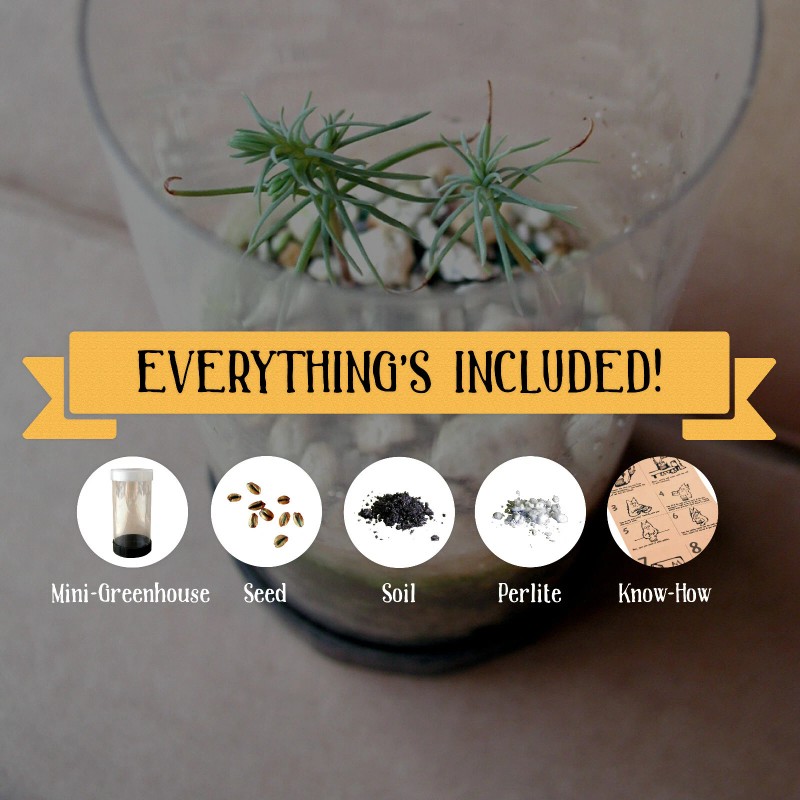
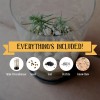
- Includes absolutely everything you need to grow a Ginkgo Tree (Ginkgo biloba) from seed: seeds, growing medium, a mini-greenhouse, and detailed instructions
- 100% guaranteed: If your seed fails to germinate or your seedling perishes, we are happy to provide free replacement seed
- Great for kids and adults, amateurs to experts!
- A universal symbol of life, regrowth and recovery, enduring friendships and new beginnings, a tree is a wonderful gift that will only grow in value, meaning, and beauty
About this Grow Kit
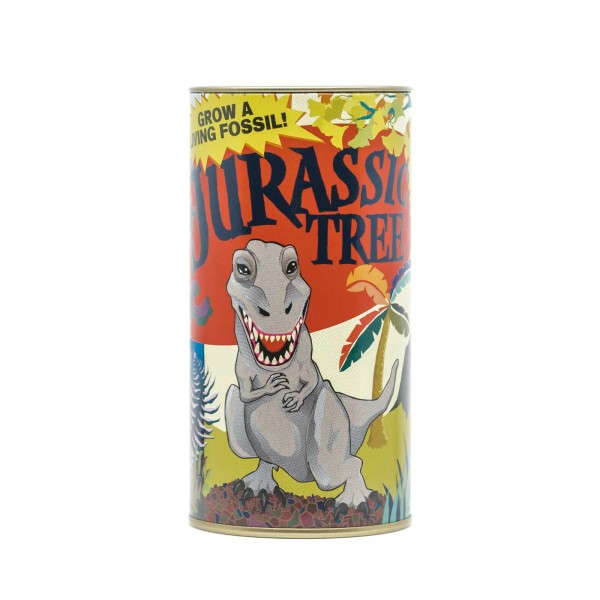
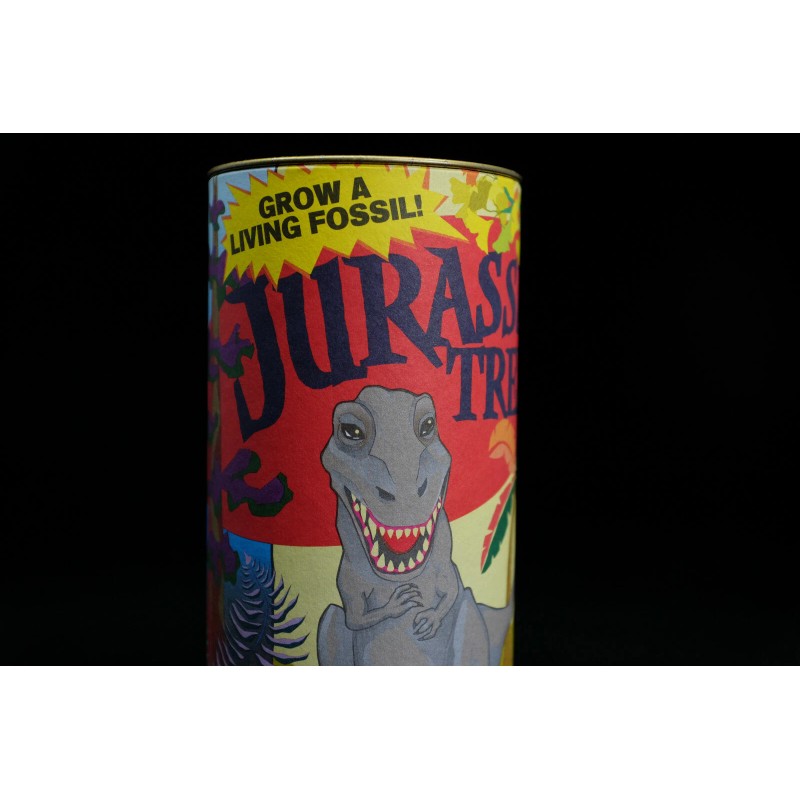
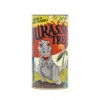
This fanciful grow kit, with its charming dinosaur-themed packaging, brings a smile as well as everything needed to germinate a tree that has existed on our planet for millions of years — what Darwin has called a "living fossil." Growing these ancient organisms is like taking a ride in a time machine!
About Ginkgo biloba
Once widely scattered across the face of the globe, the amazing Ginkgo biloba, commonly known as Ginkgo Tree, Golden Fossil Tree, or Maidenhair Tree, is not only a physically beautiful, strikingly-unique, and tenaciously-hardy tree, it is a living link to the remote, prehistoric past.
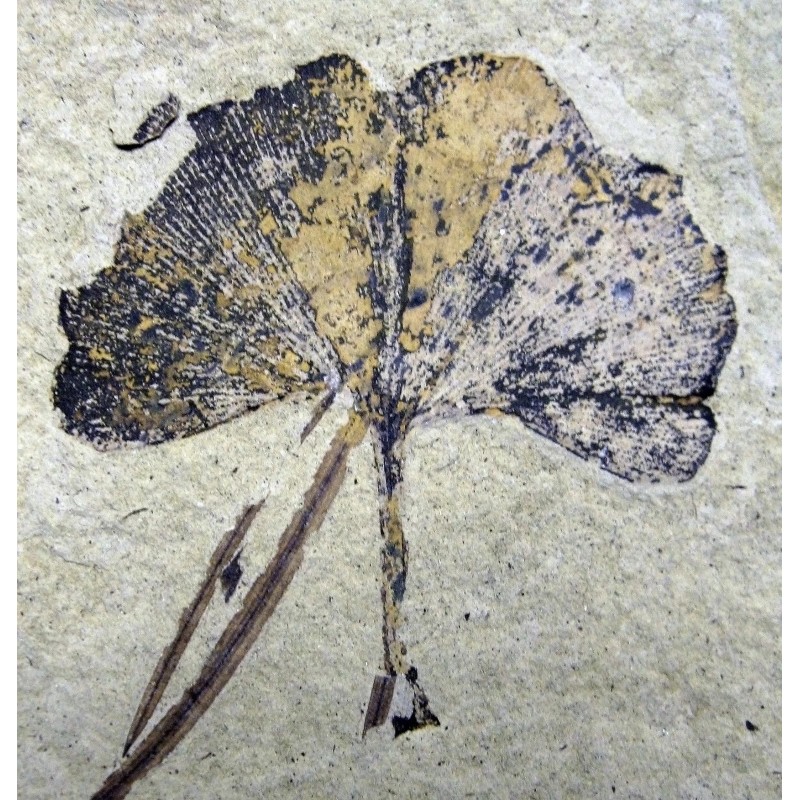
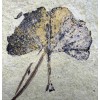
Of all earth’s plants and creatures, Ginkgo Trees are perhaps the best example of what Charles Darwin called a “Living Fossil.” According to paleobotanists examining the fossil record, Ginkgo Trees have existed on earth for some 270 million years, and Ginkgo bilobamay well be the oldest still-living seed plant on our planet. Today’s “modern” Ginkgo Tree is the sole living representative of a classification of trees (order Ginkgoales, family Ginkgoaceae, genus Ginkgo) that once dominated the planet’s vegetation on all continents. About 7 million years ago the Ginkgo disappeared from the fossil record of North America. It was gone from Europe by about 2.5 million years ago, and remained indigenous only in a small area of central China, wherefrom most of the Ginkgo Trees growing today originated. Europeans became aware of the Ginkgo Tree in the late 1600’s, when it was “discovered” by German botanist Engelbert Kaempfer in the gardens of a Japanese temple.
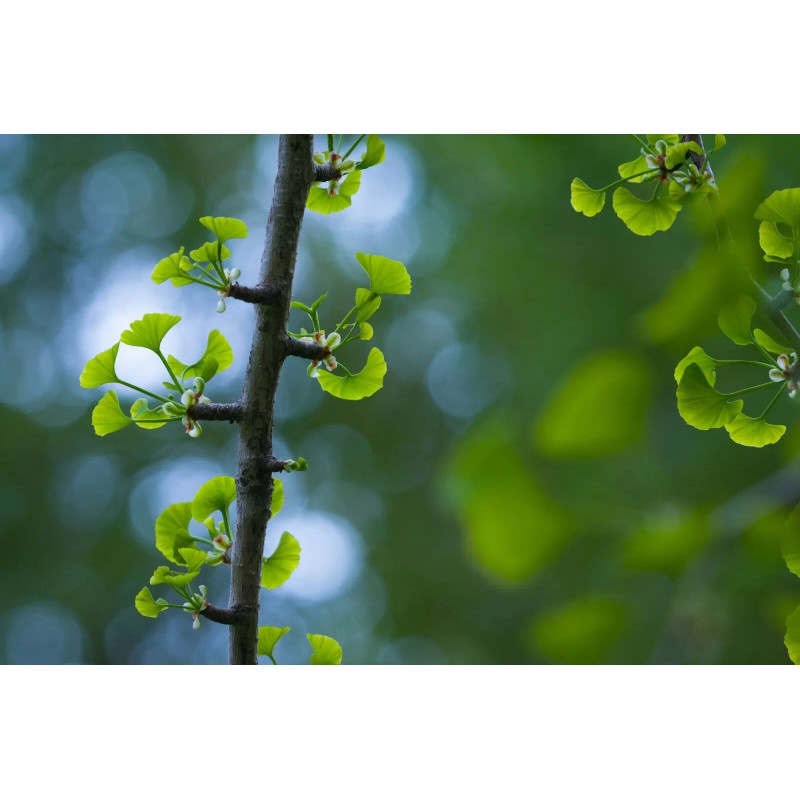
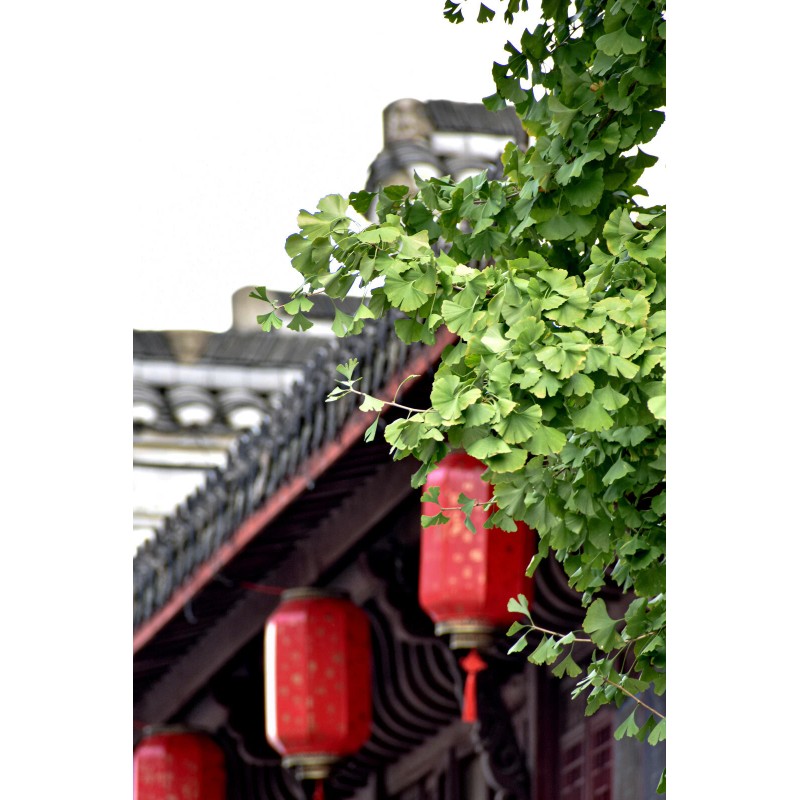
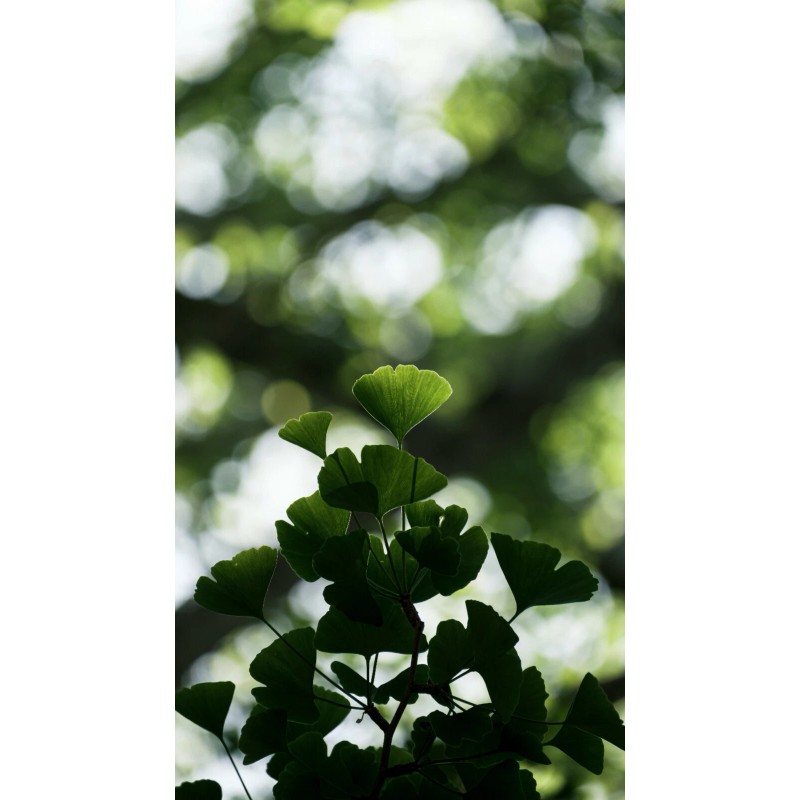
Ginkgo Trees are considered conifers, and their closest relatives in the tree world are members of the yew family. Even so, Ginkgos up-close are so curious-looking that no other trees really come close to resembling their singular appearance. In fact, no other seed-grown plant at all has leaves that look anything like the Ginkgo’s trademark fans. The tree’s common name, “Maidenhair Tree,” likens its appearance to a graceful fern.
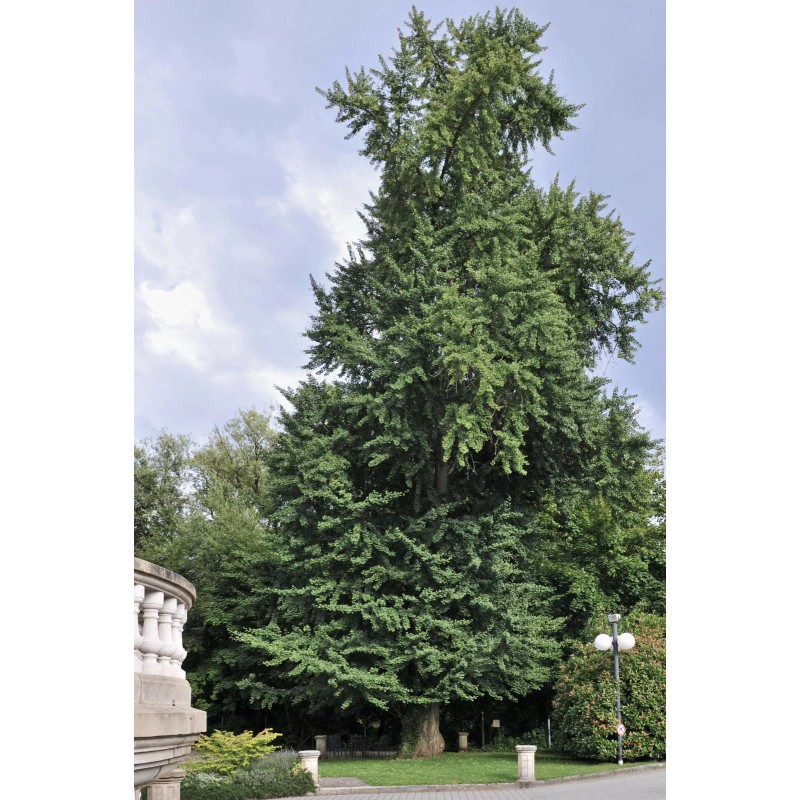
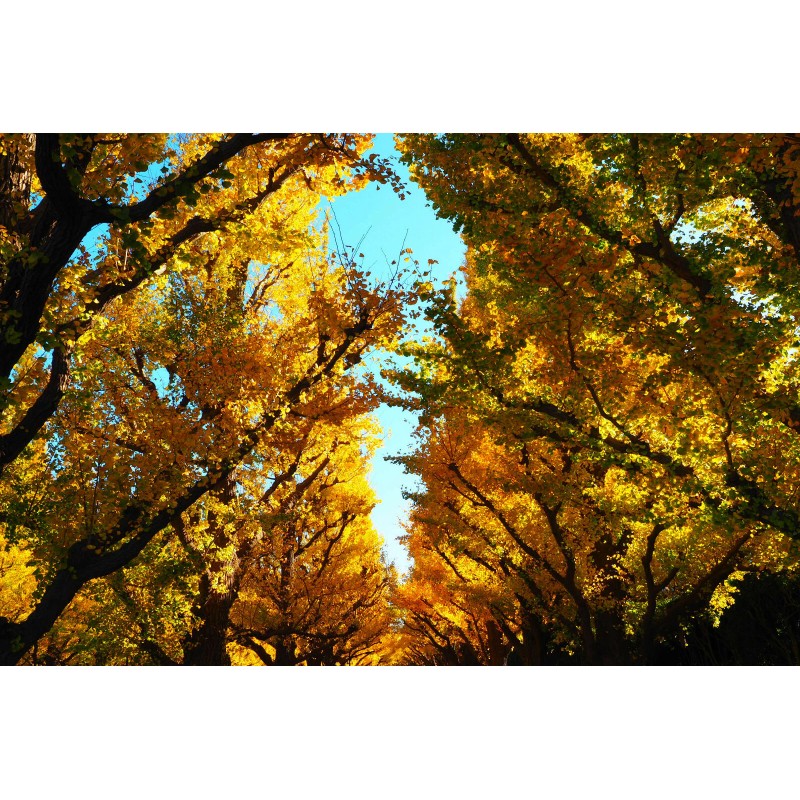
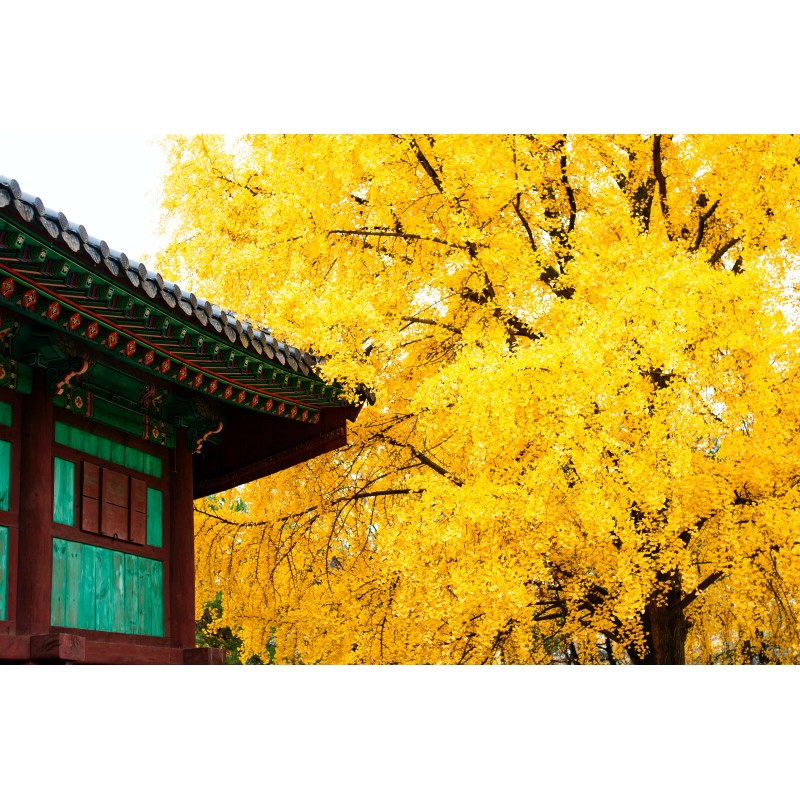
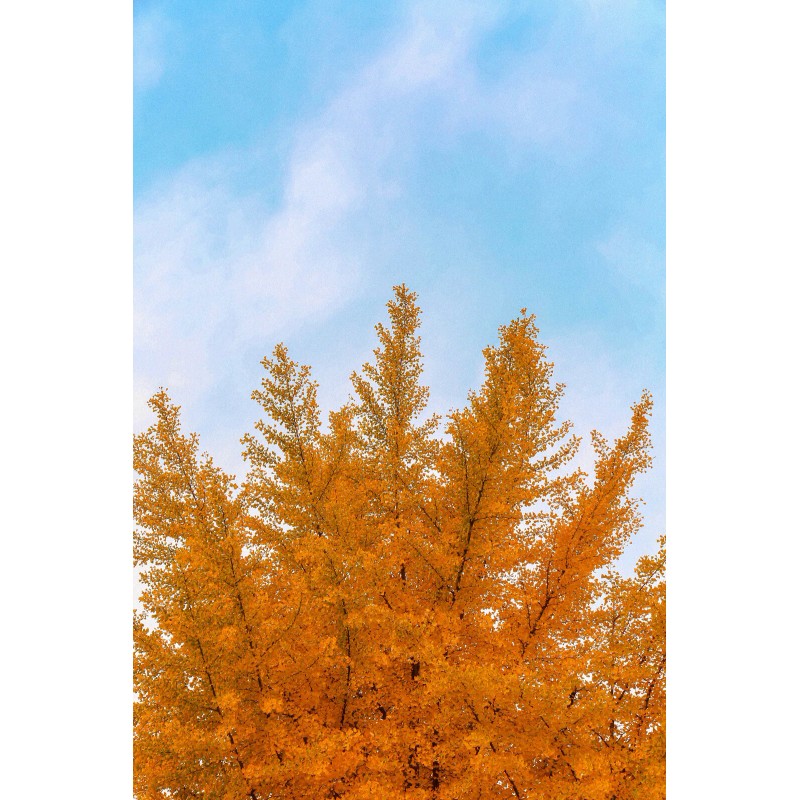
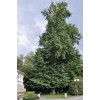
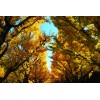
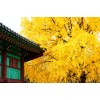
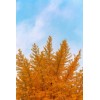
Starting with their leathery, fan-shaped leaves, Ginkgo Trees have an ancient, otherworldly aspect to them. Ginkgos can grow quite large, with some reported to be over 160 feet tall in forests in China. Despite its propensity for prodigious growth, this tree also does well in containers and is quite amenable to pruning. Hence, it can be easily kept smaller for use in a small garden or as a deck or patio tree. Likewise, Ginkgos are also wonderful candidates for bonsai. Left to grow naturally in the landscape, Ginkgos typically reach a mature height of 60 to 100 feet with a stout, silvery trunk, and a branch spread of around 30-50 feet. It is an ideal and well-proportioned street or shade tree, with deep roots and a great resistance to damage from the elements, including wind, snow, pests, and urban pollution. In Autumn, the Ginkgo’s unmistakable leaves burnish to a deep saffron yellow. When backlit by the sun, a golden-leaved Ginkgo appears to almost glow. Fall foliage tends to linger on the tree into late Autumn before somewhat suddenly dropping, leaving the tree’s statuesque winter silhouette nude except for the ornaments of its small woody cone-like seeds.
Ginkgo Trees are dioecious, meaning each individual tree has a gender — either male or female. When a Ginkgo becomes reproductively mature (approx. 10 yrs.), males begin producing graceful cascading clusters of tassel-like greenish-yellow male flower catkins, while females produce attractive orange, fruit-like seeds with a shimmering silver bloom. The name Ginkgo actually refers to these seeds — from the Chinese word, Ginkyo, meaning “silver apricot.” While the female Ginkgo’s seeds are visually appealing and have been highly sought after for centuries for use as both food and medicine, their smell is anything but pleasant. The pulpy material surrounding the seeds contains butyric acid, which, as it breaks down, smells like rancid butter or, well, vomit. Despite their potential to become small stink bombs, Ginkgo seeds are highly esteemed throughout Asia, and have been a traditional Chinese food across the ages. Ginkgo nuts are often reserved for menus celebrating special occasions such as weddings and the Chinese New Year.
In both historical cultures and modern times, the seeds of Ginkgo bilobaare believed to have various health benefits and curative qualities. Ginkgo supplement companies make broad claims that Ginkgo does everything from enhancing memory and improving cognitive function to helping digestion and boosting libido.
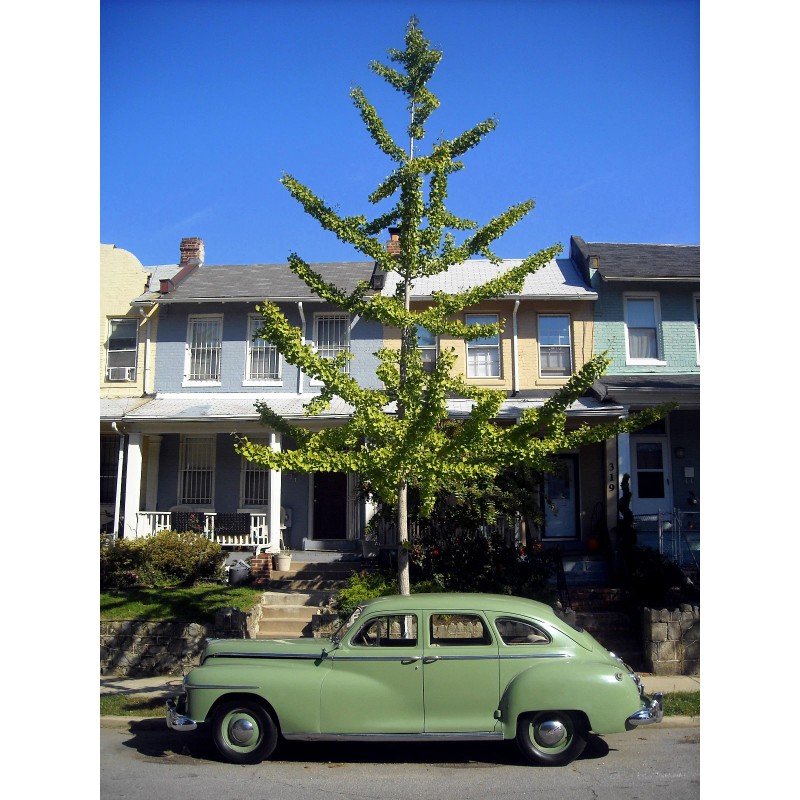
Ginkgo Trees are long-lived, with some specimens reported to be nearly 3,000 years old, and many trees — often those cultivated by monks around temples, monestaries, and palace grounds in Japan, Korea, and China — are thought to be at least 1,000-1,500 years old. Ginkgo Trees have been a widely-planted and popular tree in North America for over 200 years and in Europe for close to three centuries. They tolerate a huge range of climates, soil types, and growing situations. Incredibly, this tree can grow equally well along a street in Los Angeles or Chicago, Manhattan or Miami. There is a magnificent Ginkgo-lined avenue on the grounds of the US Department of Agriculture in Washington, D.C., and this scene is no doubt reflected to various extents on many boulevards and thoroughfares around the world.
The astounding tenacity and life-force of Ginkgo Trees is well showcased in Hiroshima, Japan, where Ginkgo Trees growing within a mile of the 1945 atom bomb explosion were among the few living things to survive the blast. Although almost all plants and animals near the blast epicenter were completely obliterated, the Ginkgos, though charred, survived. Today, six atomic bombed Ginkgo Trees are still alive and growing in Hiroshima. This kind of staying power demonstrates well the amazing toughness of Ginkgo biloba, and hints at the many qualities that have enabled this species exist on our planet for millions of years.
Here’s your chance to plant a living fossil, and a truly beautiful tree!
About Jonsteen's Grow Kits
Growing a tree from seed is a magical and fascinating experience for people of all ages. Our 100% guaranteed Grow Kits provide everything you need to germinate some of the world's largest and most interesting tree species from seed — seeds, growing medium, a mini-greenhouse, and detailed instructions, which lead you through the whole process, from cold-stratifying your seeds to germination and transplanting.
About Jonsteen's 100% Guarantee
If your seed fails to germinate or your seedling perishes, we are happy to provide free replacement seed. We encourage all customers experiencing difficulties growing their trees to contact us through our toll-free Tree Help Line (1-888-387-3379).
- Free 30-Day Returns
- Full Refund for Damaged or Incorrect Items
- Guaranteed Delivery or Money Back
- Secure Checkout & Fast Support

- Grow a living fossil from seed!
- Includes absolutely everything you need to grow a Ginkgo Tree (Ginkgo biloba) from seed: seeds, growing medium, a mini-greenhouse, and detailed instructions
- 100% guaranteed: If your seed fails to germinate or your seedling perishes, we are happy to provide free replacement seed
- Great for kids and adults, amateurs to experts!
- A universal symbol of life, regrowth and recovery, enduring friendships and new beginnings, a tree is a wonderful gift that will only grow in value, meaning, and beauty
About this Grow Kit
This fanciful grow kit, with its charming dinosaur-themed packaging, brings a smile as well as everything needed to germinate a tree that has existed on our planet for millions of years — what Darwin has called a "living fossil." Growing these ancient organisms is like taking a ride in a time machine!
About Ginkgo biloba
Once widely scattered across the face of the globe, the amazing Ginkgo biloba, commonly known as Ginkgo Tree, Golden Fossil Tree, or Maidenhair Tree, is not only a physically beautiful, strikingly-unique, and tenaciously-hardy tree, it is a living link to the remote, prehistoric past.
Of all earth’s plants and creatures, Ginkgo Trees are perhaps the best example of what Charles Darwin called a “Living Fossil.” According to paleobotanists examining the fossil record, Ginkgo Trees have existed on earth for some 270 million years, and Ginkgo bilobamay well be the oldest still-living seed plant on our planet. Today’s “modern” Ginkgo Tree is the sole living representative of a classification of trees (order Ginkgoales, family Ginkgoaceae, genus Ginkgo) that once dominated the planet’s vegetation on all continents. About 7 million years ago the Ginkgo disappeared from the fossil record of North America. It was gone from Europe by about 2.5 million years ago, and remained indigenous only in a small area of central China, wherefrom most of the Ginkgo Trees growing today originated. Europeans became aware of the Ginkgo Tree in the late 1600’s, when it was “discovered” by German botanist Engelbert Kaempfer in the gardens of a Japanese temple.
Ginkgo Trees are considered conifers, and their closest relatives in the tree world are members of the yew family. Even so, Ginkgos up-close are so curious-looking that no other trees really come close to resembling their singular appearance. In fact, no other seed-grown plant at all has leaves that look anything like the Ginkgo’s trademark fans. The tree’s common name, “Maidenhair Tree,” likens its appearance to a graceful fern.
Starting with their leathery, fan-shaped leaves, Ginkgo Trees have an ancient, otherworldly aspect to them. Ginkgos can grow quite large, with some reported to be over 160 feet tall in forests in China. Despite its propensity for prodigious growth, this tree also does well in containers and is quite amenable to pruning. Hence, it can be easily kept smaller for use in a small garden or as a deck or patio tree. Likewise, Ginkgos are also wonderful candidates for bonsai. Left to grow naturally in the landscape, Ginkgos typically reach a mature height of 60 to 100 feet with a stout, silvery trunk, and a branch spread of around 30-50 feet. It is an ideal and well-proportioned street or shade tree, with deep roots and a great resistance to damage from the elements, including wind, snow, pests, and urban pollution. In Autumn, the Ginkgo’s unmistakable leaves burnish to a deep saffron yellow. When backlit by the sun, a golden-leaved Ginkgo appears to almost glow. Fall foliage tends to linger on the tree into late Autumn before somewhat suddenly dropping, leaving the tree’s statuesque winter silhouette nude except for the ornaments of its small woody cone-like seeds.
Ginkgo Trees are dioecious, meaning each individual tree has a gender — either male or female. When a Ginkgo becomes reproductively mature (approx. 10 yrs.), males begin producing graceful cascading clusters of tassel-like greenish-yellow male flower catkins, while females produce attractive orange, fruit-like seeds with a shimmering silver bloom. The name Ginkgo actually refers to these seeds — from the Chinese word, Ginkyo, meaning “silver apricot.” While the female Ginkgo’s seeds are visually appealing and have been highly sought after for centuries for use as both food and medicine, their smell is anything but pleasant. The pulpy material surrounding the seeds contains butyric acid, which, as it breaks down, smells like rancid butter or, well, vomit. Despite their potential to become small stink bombs, Ginkgo seeds are highly esteemed throughout Asia, and have been a traditional Chinese food across the ages. Ginkgo nuts are often reserved for menus celebrating special occasions such as weddings and the Chinese New Year.
In both historical cultures and modern times, the seeds of Ginkgo bilobaare believed to have various health benefits and curative qualities. Ginkgo supplement companies make broad claims that Ginkgo does everything from enhancing memory and improving cognitive function to helping digestion and boosting libido.
Ginkgo Trees are long-lived, with some specimens reported to be nearly 3,000 years old, and many trees — often those cultivated by monks around temples, monestaries, and palace grounds in Japan, Korea, and China — are thought to be at least 1,000-1,500 years old. Ginkgo Trees have been a widely-planted and popular tree in North America for over 200 years and in Europe for close to three centuries. They tolerate a huge range of climates, soil types, and growing situations. Incredibly, this tree can grow equally well along a street in Los Angeles or Chicago, Manhattan or Miami. There is a magnificent Ginkgo-lined avenue on the grounds of the US Department of Agriculture in Washington, D.C., and this scene is no doubt reflected to various extents on many boulevards and thoroughfares around the world.
The astounding tenacity and life-force of Ginkgo Trees is well showcased in Hiroshima, Japan, where Ginkgo Trees growing within a mile of the 1945 atom bomb explosion were among the few living things to survive the blast. Although almost all plants and animals near the blast epicenter were completely obliterated, the Ginkgos, though charred, survived. Today, six atomic bombed Ginkgo Trees are still alive and growing in Hiroshima. This kind of staying power demonstrates well the amazing toughness of Ginkgo biloba, and hints at the many qualities that have enabled this species exist on our planet for millions of years.
Here’s your chance to plant a living fossil, and a truly beautiful tree!
About Jonsteen's Grow Kits
Growing a tree from seed is a magical and fascinating experience for people of all ages. Our 100% guaranteed Grow Kits provide everything you need to germinate some of the world's largest and most interesting tree species from seed — seeds, growing medium, a mini-greenhouse, and detailed instructions, which lead you through the whole process, from cold-stratifying your seeds to germination and transplanting.
About Jonsteen's 100% Guarantee
If your seed fails to germinate or your seedling perishes, we are happy to provide free replacement seed. We encourage all customers experiencing difficulties growing their trees to contact us through our toll-free Tree Help Line (1-888-387-3379).
- Grow a living fossil from seed!
- Includes absolutely everything you need to grow a Ginkgo Tree (Ginkgo biloba) from seed: seeds, growing medium, a mini-greenhouse, and detailed instructions
- 100% guaranteed: If your seed fails to germinate or your seedling perishes, we are happy to provide free replacement seed
- Great for kids and adults, amateurs to experts!
- A universal symbol of life, regrowth and recovery, enduring friendships and new beginnings, a tree is a wonderful gift that will only grow in value, meaning, and beauty
About this Grow Kit
This fanciful grow kit, with its charming dinosaur-themed packaging, brings a smile as well as everything needed to germinate a tree that has existed on our planet for millions of years — what Darwin has called a "living fossil." Growing these ancient organisms is like taking a ride in a time machine!
About Ginkgo biloba
Once widely scattered across the face of the globe, the amazing Ginkgo biloba, commonly known as Ginkgo Tree, Golden Fossil Tree, or Maidenhair Tree, is not only a physically beautiful, strikingly-unique, and tenaciously-hardy tree, it is a living link to the remote, prehistoric past.
Of all earth’s plants and creatures, Ginkgo Trees are perhaps the best example of what Charles Darwin called a “Living Fossil.” According to paleobotanists examining the fossil record, Ginkgo Trees have existed on earth for some 270 million years, and Ginkgo bilobamay well be the oldest still-living seed plant on our planet. Today’s “modern” Ginkgo Tree is the sole living representative of a classification of trees (order Ginkgoales, family Ginkgoaceae, genus Ginkgo) that once dominated the planet’s vegetation on all continents. About 7 million years ago the Ginkgo disappeared from the fossil record of North America. It was gone from Europe by about 2.5 million years ago, and remained indigenous only in a small area of central China, wherefrom most of the Ginkgo Trees growing today originated. Europeans became aware of the Ginkgo Tree in the late 1600’s, when it was “discovered” by German botanist Engelbert Kaempfer in the gardens of a Japanese temple.
Ginkgo Trees are considered conifers, and their closest relatives in the tree world are members of the yew family. Even so, Ginkgos up-close are so curious-looking that no other trees really come close to resembling their singular appearance. In fact, no other seed-grown plant at all has leaves that look anything like the Ginkgo’s trademark fans. The tree’s common name, “Maidenhair Tree,” likens its appearance to a graceful fern.
Starting with their leathery, fan-shaped leaves, Ginkgo Trees have an ancient, otherworldly aspect to them. Ginkgos can grow quite large, with some reported to be over 160 feet tall in forests in China. Despite its propensity for prodigious growth, this tree also does well in containers and is quite amenable to pruning. Hence, it can be easily kept smaller for use in a small garden or as a deck or patio tree. Likewise, Ginkgos are also wonderful candidates for bonsai. Left to grow naturally in the landscape, Ginkgos typically reach a mature height of 60 to 100 feet with a stout, silvery trunk, and a branch spread of around 30-50 feet. It is an ideal and well-proportioned street or shade tree, with deep roots and a great resistance to damage from the elements, including wind, snow, pests, and urban pollution. In Autumn, the Ginkgo’s unmistakable leaves burnish to a deep saffron yellow. When backlit by the sun, a golden-leaved Ginkgo appears to almost glow. Fall foliage tends to linger on the tree into late Autumn before somewhat suddenly dropping, leaving the tree’s statuesque winter silhouette nude except for the ornaments of its small woody cone-like seeds.
Ginkgo Trees are dioecious, meaning each individual tree has a gender — either male or female. When a Ginkgo becomes reproductively mature (approx. 10 yrs.), males begin producing graceful cascading clusters of tassel-like greenish-yellow male flower catkins, while females produce attractive orange, fruit-like seeds with a shimmering silver bloom. The name Ginkgo actually refers to these seeds — from the Chinese word, Ginkyo, meaning “silver apricot.” While the female Ginkgo’s seeds are visually appealing and have been highly sought after for centuries for use as both food and medicine, their smell is anything but pleasant. The pulpy material surrounding the seeds contains butyric acid, which, as it breaks down, smells like rancid butter or, well, vomit. Despite their potential to become small stink bombs, Ginkgo seeds are highly esteemed throughout Asia, and have been a traditional Chinese food across the ages. Ginkgo nuts are often reserved for menus celebrating special occasions such as weddings and the Chinese New Year.
In both historical cultures and modern times, the seeds of Ginkgo bilobaare believed to have various health benefits and curative qualities. Ginkgo supplement companies make broad claims that Ginkgo does everything from enhancing memory and improving cognitive function to helping digestion and boosting libido.
Ginkgo Trees are long-lived, with some specimens reported to be nearly 3,000 years old, and many trees — often those cultivated by monks around temples, monestaries, and palace grounds in Japan, Korea, and China — are thought to be at least 1,000-1,500 years old. Ginkgo Trees have been a widely-planted and popular tree in North America for over 200 years and in Europe for close to three centuries. They tolerate a huge range of climates, soil types, and growing situations. Incredibly, this tree can grow equally well along a street in Los Angeles or Chicago, Manhattan or Miami. There is a magnificent Ginkgo-lined avenue on the grounds of the US Department of Agriculture in Washington, D.C., and this scene is no doubt reflected to various extents on many boulevards and thoroughfares around the world.
The astounding tenacity and life-force of Ginkgo Trees is well showcased in Hiroshima, Japan, where Ginkgo Trees growing within a mile of the 1945 atom bomb explosion were among the few living things to survive the blast. Although almost all plants and animals near the blast epicenter were completely obliterated, the Ginkgos, though charred, survived. Today, six atomic bombed Ginkgo Trees are still alive and growing in Hiroshima. This kind of staying power demonstrates well the amazing toughness of Ginkgo biloba, and hints at the many qualities that have enabled this species exist on our planet for millions of years.
Here’s your chance to plant a living fossil, and a truly beautiful tree!
About Jonsteen's Grow Kits
Growing a tree from seed is a magical and fascinating experience for people of all ages. Our 100% guaranteed Grow Kits provide everything you need to germinate some of the world's largest and most interesting tree species from seed — seeds, growing medium, a mini-greenhouse, and detailed instructions, which lead you through the whole process, from cold-stratifying your seeds to germination and transplanting.
About Jonsteen's 100% Guarantee
If your seed fails to germinate or your seedling perishes, we are happy to provide free replacement seed. We encourage all customers experiencing difficulties growing their trees to contact us through our toll-free Tree Help Line (1-888-387-3379).
Item Specifics
- Country/Region of Manufacture: United States
- Plant Form: Seed
- Type: Trees
- Genus: Ginkgo biloba
- Foliage: Deciduous
- Common Name: Ginkgo
- Set Includes: Growing Kit
- Brand: The Jonsteen Company
- USDA Hardiness Zone (°F): 3 (-40 to -30 °F)
- Tree Type: Ornamental
- UPC: 607526801342
Processing Time
- We process and ship orders Monday through Friday, excluding holidays.
- Most orders are processed within 1–3 business days, depending on product availability.
- Processing time does not include delivery time, which varies based on your location and the product’s shipping origin.
Shipping Coverage
We currently ship to addresses within the United States only.
Products may ship from:
- Our U.S. warehouses, or
- Our international fulfillment centers (including Korea, Japan, China, Australia, Mexico, Canada, the United Kingdom, and the EU).
Each product page clearly displays the “Ships From” location before checkout.
Shipping Methods & Estimated Delivery
| Shipping Method | Estimated Delivery | Cost |
|---|---|---|
| Free Shipping (US) | 5–10 business days | Free, available on eligible items |
| Standard Shipping (US to US by Item) | 5–10 business days | $5.95 for the first item, $3.00 each additional |
| Standard Shipping (From US Warehouse by Weight) | 3–7 business days | Starts at $5.95, increasing by $2 for every additional 4 oz (0.25 lb) up to 1 lb, then by $4 for each additional pound beyond 1 lb. |
| Extended Delivery (Ships from Overseas Warehouse) | 10–20 business days | $14.50 for the first item, $2.00 each additional |
Shipping costs vary by product weight, quantity and origin. Exact rates and delivery estimates are displayed on each product page and confirmed during checkout.
Free Shipping
We offer free standard shipping on select products or during promotional periods. Availability of free shipping will be displayed on the product page and at checkout.
Carriers
We primarily use USPS and UPS for U.S. deliveries. Items shipped from international warehouses may be handled by partner carriers depending on the country of origin.
Import Duties & Taxes
All import duties and taxes for goods imported into the United States are included in the product price. There are no hidden fees or additional charges at checkout.
Tracking & Notifications
Every order is fully trackable. You will receive a tracking number via email once your order ships. If your order ships in multiple packages, each package will have its own tracking number. If you don’t receive a shipping confirmation immediately, your order is still being processed and will arrive within the estimated timeframe shown at checkout.
You can track your shipment anytime using the Track Your Order page on our website.
Order Changes & Cancellations
If you need to modify or cancel an order, please contact our customer support team as soon as possible. Orders can only be canceled before they ship. Once shipped, cancellations are not possible, but you may request a return after the item is delivered.
Contact: support@ibspot.com
Item Not Received
If your tracking number shows “Delivered” but you haven’t received your package:
- Check with your local USPS or UPS office.
- Confirm that the shipping address provided was correct.
- If the issue remains unresolved, contact support@ibspot.com for assistance.
Damaged or Lost Parcels
If your package arrives damaged or fails to arrive, please contact us immediately. For deliveries to P.O. boxes, ibspot is not responsible for damage caused by weather, temperature, or theft.
Customer Support
For any questions about shipping, tracking, or delivery, our customer support team is here to help.
Email: support@ibspot.com
We’re always happy to help.
Please read our policy carefully before making a purchase.
We aim to ensure every customer has a smooth and transparent experience with ibspot.com.
Order Cancellation Policy
Customers may request to cancel an order before it has been shipped.
Once the package has been shipped, cancellations are no longer possible; however, you may still request a return after receiving your order.
How to Request a Cancellation
You can contact us through:
- Email: support@ibspot.com
- Contact Form: Submit a request through our Contact Us page
Please submit your cancellation request as soon as possible after placing the order to allow us to process it before shipment.
Return Policy
We accept returns for most items within 30 days of delivery for a full refund.
To be eligible for a return:
- The item must be unused, in the same condition as received, and in its original packaging.
- A tracking number must be provided to confirm the return shipment.
Non-Returnable Items
Certain products cannot be returned, including:
- Perishable goods (for example, food, flowers, newspapers, magazines)
- Intimate or sanitary goods
- Hazardous materials or flammable liquids/gases
- Gift cards
- Downloadable software
- Some health and personal care items
Partial Refunds (If Applicable)
Partial refunds may be granted in specific situations, such as:
- Books with obvious signs of use
- Opened CDs, DVDs, software, or vinyl records
- Items not in their original condition, damaged, or missing parts not due to our error
- Items returned more than 30 days after delivery
How to Return an Item
To initiate a return, please contact us at support@ibspot.com with your order number and details about the product you wish to return.
Our team will provide you with return instructions and a prepaid return label.
Shipping Cost for Returns
Please contact us before returning any item.
We will provide a free return shipping label.
If a return is sent back without prior contact or without our provided label, we cannot be held responsible for return shipping costs.
For items valued over $75, we recommend using a trackable shipping service or purchasing shipping insurance.
We cannot guarantee that we will receive your returned item if shipped independently.
Refund Processing
Once your return is received and inspected:
- In-store returns are refunded to the original form of payment or issued as a gift card.
- Mail-in returns using our prepaid label are refunded to the original payment method within 3–5 business days after we receive your return.
Please allow:
- 5–7 business days for the return to reach our Returns Center.
- An additional 3–10 business days for your bank to post the refund to your account.
Damages, Issues & Claims
Please inspect your order immediately upon receipt.
If you receive a defective, damaged, or incorrect item, contact us right away at support@ibspot.com.
We’ll evaluate the issue promptly and make it right.
Product Claims
Before purchasing, please review product details carefully.
If there is a problem with your order upon arrival, visit our Support Center or contact us directly to arrange return shipping or replacement.
Exchanges
We do not process direct exchanges.
The fastest way to get what you need is to return the original item and place a new order once your return is accepted.
Return Address
IBSPOT Return Center
15 Sawmill Ln
Dover Plains, NY 12522
United States
Customer Support
Our support team is available 24/7 to assist with cancellations, returns, or general inquiries.
Email: support@ibspot.com
Contact Form: Contact Us page
Oops!
Sorry, it looks like some products are not available in selected quantity.