

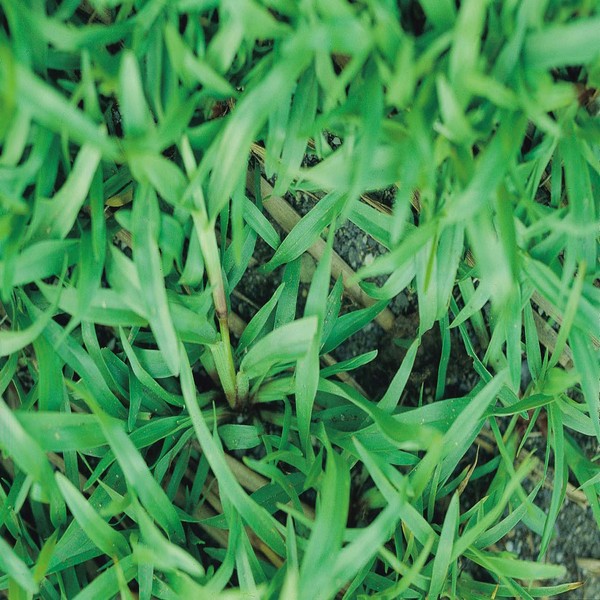


Seed Ranch Carpetgrass Seeds "Premium Grade Coated" 5 Lb.
$202.82
- Free US shipping
-
Arrives
Description. Carpetgrass (Axonopus affinis) is a creeping, stoloniferous, perennial warm season grass. It is characterized by flat, two-edged runners or stolons; by wide leaves with blunt, rounded tips and by long, slender seedstalks that terminate with two branches, very similar to crabgrass. Stolons are flat, widely branched and root at each node.
Leaf sheaths are strongly compressed with fine hairs along the outer margin and densely pubescent around the nodes. The ligule is very short with a fringe of short hairs. The leaf blade is wide, flat, broadly rounded at the base, blunt at the tip and often fringed with hairs.
The seedstalk is tall, slender and often drooping. It branches at the apex into two slender, one-sided spikes, sometimes with a third spike below. Spikelets are oblong, acute, 2 to 25 mm long, pale green or tinged with purple, solitary on alternate sides of the rachis and forming two rows. The lower glume is absent, the upper as long as the spikelet. The anthers are yellowish white or slightly tinged with purple. Seed are yellowish brown and about 1.25 mm long.
The ability of carpetgrass to thrive under low fertility makes it suitable for use on low maintenance areas such as parks, roadsides, airports and golf course roughs. Its most objectionable characteristic, frequent and prolonged production of seedstalks, limits its use on lawns. Frequent mowing with a rotary mower is required to maintain a nice looking carpetgrass lawn.
Establishment. Carpetgrass, like all small seeded grasses, requires a loose, smooth and firm seedbed. In heavier soils, disking or rototilling, dragging and rolling may be necessary to develop a good seedbed.
Carpetgrass can be established from seed or sprigs. Seeding is often easier and less expensive. For a quick cover broadcast two pounds of carpetgrass seed per 1,000 sq. ft. of lawn. Rake the lawn lightly after seeding to help cover the seed. A grass drill can also be used effectively for planting carpetgrass seed. For large plantings, where a quick cover is not critical, plant 15 to 20 pounds of carpetgrass seed per acre. Again, a grass drill is the most effective means of seeding carpetgrass.
Seed carpetgrass after the last expected frost in the spring. Mid-April to May are ideal months for seeding carpetgrass. Do not seed after September 15.
Keep the soil moist, but not wet, for about two weeks after seeding. Continue light, frequent watering until the seedlings are rooted and beginning to spread. After the lawn is established, usually 8 to 10 weeks after seeding, water only as needed to prevent severe drought stress.
Carpetgrass does well on acid soils and on soils with a low fertility. However, establishment is hastened by light applications of a complete fertilizer. Apply a complete fertilizer at one pound of nitrogen per 1000 sq. ft. at planting time and at monthly intervals thereafter until the lawn is covered with carpetgrass. Lime is not necessary unless the soil pH is below 5.0
Management. Carpetgrass lawns need frequent mowing during summer months to keep the seedstalks cut. During the growing season, new seedstalks are produced about every five days. If allowed to grow, the seedstalks grow to about 12 inches tall and produce an unsightly lawn.
Carpetgrass should be mowed to a height of 3/4 inch to 2 inches, depending on its use. The grass will tolerate the shorter mowing heights for use on golf course fairways with a 5-day mowing schedule. Where mowing is less frequent, the taller mowing height produces the best results. A rotary or flail mower is necessary to remove the tall seedstalks that develop with less frequent mowing.
Carpetgrass will thrive on moderately acid, low fertility soils. Under these conditions, it will crowd out bermudagrass. On roadsides, golf course roughs, parks and other low maintenance sites, carpetgrass will survive without fertilization. But, on more frequently mowed sites such as lawns, fairways, etc., occasional applications of nitrogen are needed. Late spring and early fall applications of nitrogen at 30 to 40 pounds per acre (1 pound per 1000 sq. ft.) are adequate to meet nitrogen requirements. Soil test recommendations relative to phosphorus and potassium should be followed.
Carpetgrass is not as drought tolerant as bermudagrass. On droughty soils or during periods of drought stress, occasional watering is needed to maintain carpetgrass. On moist sites where bermudagrass is not adapted, carpetgrass will thrive without supplemental water.
Pest Management. Carpetgrass is susceptible to common soilborne diseases such as brownpatch and Pythium and to most leaf spot diseases, but rarely do these diseases justify fungicide applications on carpetgrass. The grass usually recovers with little injury when environmental conditions change. The exception might be brownpatch in the fall which can produce unsightly turf for several months.
White grub and, in the southeastern states, mole crickets can cause serious injury to carpetgrass turf. Again, where infestations of these insects can cause a problem, insecticides are available to effectively control them.
Where weeds are a problem in carpetgrass turf, the hormone-type herbicides can be used for broadleaf weed control. Also, most preemerge herbicides are safe on carpetgrass and can be used for crabgrass control
- Free 30-Day Returns
- Full Refund for Damaged or Incorrect Items
- Guaranteed Delivery or Money Back
- Secure Checkout & Fast Support

Description. Carpetgrass (Axonopus affinis) is a creeping, stoloniferous, perennial warm season grass. It is characterized by flat, two-edged runners or stolons; by wide leaves with blunt, rounded tips and by long, slender seedstalks that terminate with two branches, very similar to crabgrass. Stolons are flat, widely branched and root at each node.
Leaf sheaths are strongly compressed with fine hairs along the outer margin and densely pubescent around the nodes. The ligule is very short with a fringe of short hairs. The leaf blade is wide, flat, broadly rounded at the base, blunt at the tip and often fringed with hairs.
The seedstalk is tall, slender and often drooping. It branches at the apex into two slender, one-sided spikes, sometimes with a third spike below. Spikelets are oblong, acute, 2 to 25 mm long, pale green or tinged with purple, solitary on alternate sides of the rachis and forming two rows. The lower glume is absent, the upper as long as the spikelet. The anthers are yellowish white or slightly tinged with purple. Seed are yellowish brown and about 1.25 mm long.
The ability of carpetgrass to thrive under low fertility makes it suitable for use on low maintenance areas such as parks, roadsides, airports and golf course roughs. Its most objectionable characteristic, frequent and prolonged production of seedstalks, limits its use on lawns. Frequent mowing with a rotary mower is required to maintain a nice looking carpetgrass lawn.
Establishment. Carpetgrass, like all small seeded grasses, requires a loose, smooth and firm seedbed. In heavier soils, disking or rototilling, dragging and rolling may be necessary to develop a good seedbed.
Carpetgrass can be established from seed or sprigs. Seeding is often easier and less expensive. For a quick cover broadcast two pounds of carpetgrass seed per 1,000 sq. ft. of lawn. Rake the lawn lightly after seeding to help cover the seed. A grass drill can also be used effectively for planting carpetgrass seed. For large plantings, where a quick cover is not critical, plant 15 to 20 pounds of carpetgrass seed per acre. Again, a grass drill is the most effective means of seeding carpetgrass.
Seed carpetgrass after the last expected frost in the spring. Mid-April to May are ideal months for seeding carpetgrass. Do not seed after September 15.
Keep the soil moist, but not wet, for about two weeks after seeding. Continue light, frequent watering until the seedlings are rooted and beginning to spread. After the lawn is established, usually 8 to 10 weeks after seeding, water only as needed to prevent severe drought stress.
Carpetgrass does well on acid soils and on soils with a low fertility. However, establishment is hastened by light applications of a complete fertilizer. Apply a complete fertilizer at one pound of nitrogen per 1000 sq. ft. at planting time and at monthly intervals thereafter until the lawn is covered with carpetgrass. Lime is not necessary unless the soil pH is below 5.0
Management. Carpetgrass lawns need frequent mowing during summer months to keep the seedstalks cut. During the growing season, new seedstalks are produced about every five days. If allowed to grow, the seedstalks grow to about 12 inches tall and produce an unsightly lawn.
Carpetgrass should be mowed to a height of 3/4 inch to 2 inches, depending on its use. The grass will tolerate the shorter mowing heights for use on golf course fairways with a 5-day mowing schedule. Where mowing is less frequent, the taller mowing height produces the best results. A rotary or flail mower is necessary to remove the tall seedstalks that develop with less frequent mowing.
Carpetgrass will thrive on moderately acid, low fertility soils. Under these conditions, it will crowd out bermudagrass. On roadsides, golf course roughs, parks and other low maintenance sites, carpetgrass will survive without fertilization. But, on more frequently mowed sites such as lawns, fairways, etc., occasional applications of nitrogen are needed. Late spring and early fall applications of nitrogen at 30 to 40 pounds per acre (1 pound per 1000 sq. ft.) are adequate to meet nitrogen requirements. Soil test recommendations relative to phosphorus and potassium should be followed.
Carpetgrass is not as drought tolerant as bermudagrass. On droughty soils or during periods of drought stress, occasional watering is needed to maintain carpetgrass. On moist sites where bermudagrass is not adapted, carpetgrass will thrive without supplemental water.
Pest Management. Carpetgrass is susceptible to common soilborne diseases such as brownpatch and Pythium and to most leaf spot diseases, but rarely do these diseases justify fungicide applications on carpetgrass. The grass usually recovers with little injury when environmental conditions change. The exception might be brownpatch in the fall which can produce unsightly turf for several months.
White grub and, in the southeastern states, mole crickets can cause serious injury to carpetgrass turf. Again, where infestations of these insects can cause a problem, insecticides are available to effectively control them.
Where weeds are a problem in carpetgrass turf, the hormone-type herbicides can be used for broadleaf weed control. Also, most preemerge herbicides are safe on carpetgrass and can be used for crabgrass control
Description. Carpetgrass (Axonopus affinis) is a creeping, stoloniferous, perennial warm season grass. It is characterized by flat, two-edged runners or stolons; by wide leaves with blunt, rounded tips and by long, slender seedstalks that terminate with two branches, very similar to crabgrass. Stolons are flat, widely branched and root at each node.
Leaf sheaths are strongly compressed with fine hairs along the outer margin and densely pubescent around the nodes. The ligule is very short with a fringe of short hairs. The leaf blade is wide, flat, broadly rounded at the base, blunt at the tip and often fringed with hairs.
The seedstalk is tall, slender and often drooping. It branches at the apex into two slender, one-sided spikes, sometimes with a third spike below. Spikelets are oblong, acute, 2 to 25 mm long, pale green or tinged with purple, solitary on alternate sides of the rachis and forming two rows. The lower glume is absent, the upper as long as the spikelet. The anthers are yellowish white or slightly tinged with purple. Seed are yellowish brown and about 1.25 mm long.
The ability of carpetgrass to thrive under low fertility makes it suitable for use on low maintenance areas such as parks, roadsides, airports and golf course roughs. Its most objectionable characteristic, frequent and prolonged production of seedstalks, limits its use on lawns. Frequent mowing with a rotary mower is required to maintain a nice looking carpetgrass lawn.
Establishment. Carpetgrass, like all small seeded grasses, requires a loose, smooth and firm seedbed. In heavier soils, disking or rototilling, dragging and rolling may be necessary to develop a good seedbed.
Carpetgrass can be established from seed or sprigs. Seeding is often easier and less expensive. For a quick cover broadcast two pounds of carpetgrass seed per 1,000 sq. ft. of lawn. Rake the lawn lightly after seeding to help cover the seed. A grass drill can also be used effectively for planting carpetgrass seed. For large plantings, where a quick cover is not critical, plant 15 to 20 pounds of carpetgrass seed per acre. Again, a grass drill is the most effective means of seeding carpetgrass.
Seed carpetgrass after the last expected frost in the spring. Mid-April to May are ideal months for seeding carpetgrass. Do not seed after September 15.
Keep the soil moist, but not wet, for about two weeks after seeding. Continue light, frequent watering until the seedlings are rooted and beginning to spread. After the lawn is established, usually 8 to 10 weeks after seeding, water only as needed to prevent severe drought stress.
Carpetgrass does well on acid soils and on soils with a low fertility. However, establishment is hastened by light applications of a complete fertilizer. Apply a complete fertilizer at one pound of nitrogen per 1000 sq. ft. at planting time and at monthly intervals thereafter until the lawn is covered with carpetgrass. Lime is not necessary unless the soil pH is below 5.0
Management. Carpetgrass lawns need frequent mowing during summer months to keep the seedstalks cut. During the growing season, new seedstalks are produced about every five days. If allowed to grow, the seedstalks grow to about 12 inches tall and produce an unsightly lawn.
Carpetgrass should be mowed to a height of 3/4 inch to 2 inches, depending on its use. The grass will tolerate the shorter mowing heights for use on golf course fairways with a 5-day mowing schedule. Where mowing is less frequent, the taller mowing height produces the best results. A rotary or flail mower is necessary to remove the tall seedstalks that develop with less frequent mowing.
Carpetgrass will thrive on moderately acid, low fertility soils. Under these conditions, it will crowd out bermudagrass. On roadsides, golf course roughs, parks and other low maintenance sites, carpetgrass will survive without fertilization. But, on more frequently mowed sites such as lawns, fairways, etc., occasional applications of nitrogen are needed. Late spring and early fall applications of nitrogen at 30 to 40 pounds per acre (1 pound per 1000 sq. ft.) are adequate to meet nitrogen requirements. Soil test recommendations relative to phosphorus and potassium should be followed.
Carpetgrass is not as drought tolerant as bermudagrass. On droughty soils or during periods of drought stress, occasional watering is needed to maintain carpetgrass. On moist sites where bermudagrass is not adapted, carpetgrass will thrive without supplemental water.
Pest Management. Carpetgrass is susceptible to common soilborne diseases such as brownpatch and Pythium and to most leaf spot diseases, but rarely do these diseases justify fungicide applications on carpetgrass. The grass usually recovers with little injury when environmental conditions change. The exception might be brownpatch in the fall which can produce unsightly turf for several months.
White grub and, in the southeastern states, mole crickets can cause serious injury to carpetgrass turf. Again, where infestations of these insects can cause a problem, insecticides are available to effectively control them.
Where weeds are a problem in carpetgrass turf, the hormone-type herbicides can be used for broadleaf weed control. Also, most preemerge herbicides are safe on carpetgrass and can be used for crabgrass control
- Seller Notes: “Freshly Harvested and Tested for this Season.”
- Type: Seeds
- Brand: Seed Ranch
- UPC: Does not apply
Processing Time
- We process and ship orders Monday through Friday, excluding holidays.
- Most orders are processed within 1–3 business days, depending on product availability.
- Processing time does not include delivery time, which varies based on your location and the product’s shipping origin.
Shipping Coverage
We currently ship to addresses within the United States only.
Products may ship from:
- Our U.S. warehouses, or
- Our international fulfillment centers (including Korea, Japan, China, Australia, Mexico, Canada, the United Kingdom, and the EU).
Each product page clearly displays the “Ships From” location before checkout.
Shipping Methods & Estimated Delivery
| Shipping Method | Estimated Delivery | Cost |
|---|---|---|
| Free Shipping (US) | 5–10 business days | Free, available on eligible items |
| Standard Shipping (US to US by Item) | 5–10 business days | $5.95 for the first item, $3.00 each additional |
| Standard Shipping (From US Warehouse by Weight) | 3–7 business days | Starts at $5.95, increasing by $2 for every additional 4 oz (0.25 lb) up to 1 lb, then by $4 for each additional pound beyond 1 lb. |
| Extended Delivery (Ships from Overseas Warehouse) | 10–20 business days | $14.99 for the first item, $2.00 each additional |
Shipping costs vary by product weight, quantity and origin. Exact rates and delivery estimates are displayed on each product page and confirmed during checkout.
Free Shipping
We offer free standard shipping on select products or during promotional periods. Availability of free shipping will be displayed on the product page and at checkout.
Carriers
We primarily use USPS and UPS for U.S. deliveries. Items shipped from international warehouses may be handled by partner carriers depending on the country of origin.
Import Duties & Taxes
All import duties and taxes for goods imported into the United States are included in the product price. There are no hidden fees or additional charges at checkout.
Tracking & Notifications
Every order is fully trackable. You will receive a tracking number via email once your order ships. If your order ships in multiple packages, each package will have its own tracking number. If you don’t receive a shipping confirmation immediately, your order is still being processed and will arrive within the estimated timeframe shown at checkout.
You can track your shipment anytime using the Track Your Order page on our website.
Order Changes & Cancellations
If you need to modify or cancel an order, please contact our customer support team as soon as possible. Orders can only be canceled before they ship. Once shipped, cancellations are not possible, but you may request a return after the item is delivered.
Contact: support@ibspot.com
Item Not Received
If your tracking number shows “Delivered” but you haven’t received your package:
- Check with your local USPS or UPS office.
- Confirm that the shipping address provided was correct.
- If the issue remains unresolved, contact support@ibspot.com for assistance.
Damaged or Lost Parcels
If your package arrives damaged or fails to arrive, please contact us immediately. For deliveries to P.O. boxes, ibspot is not responsible for damage caused by weather, temperature, or theft.
Customer Support
For any questions about shipping, tracking, or delivery, our customer support team is here to help.
Email: support@ibspot.com
We’re always happy to help.
Please read our policy carefully before making a purchase.
We aim to ensure every customer has a smooth and transparent experience with ibspot.com.
Order Cancellation Policy
Customers may request to cancel an order before it has been shipped.
Once the package has been shipped, cancellations are no longer possible; however, you may still request a return after receiving your order.
How to Request a Cancellation
You can contact us through:
- Email: support@ibspot.com
- Contact Form: Submit a request through our Contact Us page
Please submit your cancellation request as soon as possible after placing the order to allow us to process it before shipment.
Return Policy
We accept returns for most items within 30 days of delivery for a full refund.
To be eligible for a return:
- The item must be unused, in the same condition as received, and in its original packaging.
- A tracking number must be provided to confirm the return shipment.
Non-Returnable Items
Certain products cannot be returned, including:
- Perishable goods (for example, food, flowers, newspapers, magazines)
- Intimate or sanitary goods
- Hazardous materials or flammable liquids/gases
- Gift cards
- Downloadable software
- Some health and personal care items
Partial Refunds (If Applicable)
Partial refunds may be granted in specific situations, such as:
- Books with obvious signs of use
- Opened CDs, DVDs, software, or vinyl records
- Items not in their original condition, damaged, or missing parts not due to our error
- Items returned more than 30 days after delivery
How to Return an Item
To initiate a return, please contact us at support@ibspot.com with your order number and details about the product you wish to return.
Our team will provide you with return instructions and a prepaid return label.
Shipping Cost for Returns
Please contact us before returning any item.
We may provide a return shipping label for your return. If the return is due to our error, such as receiving the wrong item, a damaged item, or a defective product, we will cover the return shipping cost.
If the return is due to the customer’s reason, such as ordering the wrong item, changing your mind, or no longer needing the item, the original shipping fee and the return label fee will be deducted from your refund amount.
If a return is sent back without prior contact or without using our provided label, we cannot be held responsible for any return shipping costs or delivery issues.
For items valued over $75, we recommend using a trackable shipping service or purchasing shipping insurance.
We cannot guarantee that we will receive your returned item if shipped independently.
Refund Processing
Once your return is received and inspected:
- In-store returns are refunded to the original form of payment or issued as a gift card.
- Mail-in returns using our prepaid label are refunded to the original payment method within 3–5 business days after we receive your return.
Please allow:
- 5–7 business days for the return to reach our Returns Center.
- An additional 3–10 business days for your bank to post the refund to your account.
Damages, Issues & Claims
Please inspect your order immediately upon receipt.
If you receive a defective, damaged, or incorrect item, contact us right away at support@ibspot.com.
We’ll evaluate the issue promptly and make it right.
Product Claims
Before purchasing, please review product details carefully.
If there is a problem with your order upon arrival, visit our Support Center or contact us directly to arrange return shipping or replacement.
Exchanges
We do not process direct exchanges.
The fastest way to get what you need is to return the original item and place a new order once your return is accepted.
Return Address
IBSPOT Return Center
15 Sawmill Ln
Dover Plains, NY 12522
United States
Customer Support
Our support team is available 24/7 to assist with cancellations, returns, or general inquiries.
Email: support@ibspot.com
Contact Form: Contact Us page
Oops!
Sorry, it looks like some products are not available in selected quantity.