

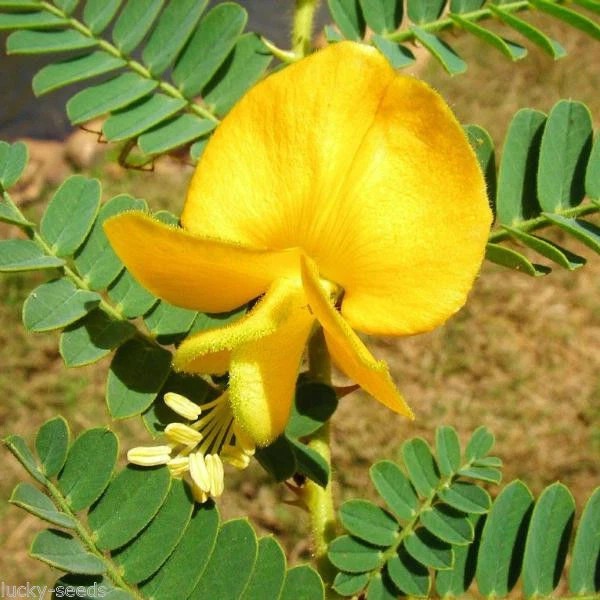
Seed Ranch Aeschynomene Americana Vetch Seeds 1/4 Lbs Deer Food Plot

$22.03

  • Free US shipping
  • Arrives

Aeschynomene
C. G. Chambliss, R. S. Kalmbacher and M. B. Adjei2
Aeschynomene is a warm-season annual legume adapted to moist sites throughout the state, but it is mainly grown in South Florida. Seed of two species are commercially available to producers: Aeschynomene americana, also known as common aeschynomene, joint vetch or deer vetch, and a newly available species Aeschynomene evenia, which has no common name.

Common aeschynomene growing with Limpograss (Hemarthria).

Aeschynomene americana, or common aeschynomene, is a true annual that flowers and produces seed in the early fall. Plants usually die after seed has matured, but the stand can be managed to re-seed and maintain itself in good production for several years after first establishement. Common aeschynomene has a high nutritive value and is very palatable to cattle and deer. It has been used in the cattle industry and for wildlife plantings for many years.

Aeschynomene evenia is a short-lived perennial. Plants stay green during the fall until frost. In South Florida during a mild winter, plants will live through the winter and put out new growth in the spring. It flowers and makes seed throughout the year.Aeschynomene evenia has a characteristic smell. The nutritive value of Aeschynomene evenia is similar to common aeschynomene, but unlike common aeschynomene (deer vetch), it is not immediately palatable to cattle. Cattle need time to adapt to this legume and they will only graze small plants. Do not let evenia plants become large and stemmy, because cattle will not graze them and they simply become weeds. It has been observed that in a mixture of common aeschynomene andAeschynomene evenia, deer grazed the common aeschynomene but did not graze the Aeschynomene evenia. Additional experience with growing and utilizing Aeschynomene evenia is needed. The cultural practices recommended in this publication apply to common aeschynomene, but are believed to be approximately the same for Aeschynomene evenia.

CULTURAL PRACTICES
Site Selection
Aeschynomene grows best on moist, fertile soils. It is more tolerant of extremely wet conditions than of drought. Surface drainage is needed especially during establishment. Although well-established plants can withstand short periods of flooding, young plants (seedlings) can be injured or killed if plants are completely submerged in water. In general, aeschynomene is adapted to the moist flatwood areas throughout the state.

Liming and Fertilization
If the soil pH is below 5.0, the site should be limed to raise the pH to between 5.5 and 6.0. Plant nutrients should be applied after a successful stand of seedlings has emerged. After the seedlings are 2 weeks old, fertilize with 30 lbs/A of P2O5 and 60 lbs/A of K2O if the soil tests are low or medium in these plant nutrients. Micronutrients are not generally recommended on land that has been fertilized for several years, unless poor plant growth and appropriate symptoms indicate a deficiency.

Seeding Rate and Date
Seed of common aeschynomene may be bought with the hull removed (naked) or intact. There are approximately twice as many seed per pound when the hull has been removed compared to when the hull is attached. Seed with the hull removed may be planted at 5 to 8 lbs/A. If seeded with a precision planter on a clean-tilled seedbed, the lower seeding rate may be used. Broadcast seeding requires the higher seeding rate, especially when seed are broadcast on established pasture sod. Seed with the hull attached should be planted at the rate of 20 to 25 lbs/A. Aeschynomene evenia seed is also available with or without hulls.

Seeding date can be critical to successful establishment. Aeschynomene is usually planted in June when the summer rains start. It has been planted successfully in April and May when spring rainfall has been above normal. Try to plant to establish new stands or lightly disk old stands to encourage seed germination when the chances are greatest for continued good soil moisture. Stand failure of aeschynomene is mainly caused by inadequate soil moisture at or shortly after seeding.

The greatest chance for successful establishment occurs when plantings are made in June after a spring when rainfall has been greater than normal and the soil profile is saturated. When seedings are made prior to June 1 or the start of the summer rainy period, use seed with the hulls attached at the rate of 25 lbs/A. Immediate germination will range from 5 to 10%. If these seedlings die due to drought, there will be plenty of seed to germinate when the next rain comes. When planting after June 1, use seed with the hull removed, which may have an immediate germination as high as 90 to 95%. Use 5 lbs/A on a clean-tilled seedbed and 8 lbs/A on sod. A 50/50 mixture of seed with and without hulls can be used at all times of planting to provide security against establishment failures due to drought or short periods of excessive moisture.

Inoculation
Inoculate seed with the proper bacteria (cowpea group) when aeschynomene is seeded into new land or into fields where a summer legume has never been grown. Inoculation of the seed is not required if aeschynomene or some other summer legume that requires the cowpea inoculant has been grown in the area to be planted.

Overseeding Bahiagrass Pastures
Certain management practices should be followed to minimize competition of the bahiagrass with the aeschynomene seedlings and allow for successful establishment. These practices include: 1) burning excess bahiagrass in late winter if there is enough fuel to carry a fire; 2) no application of nitrogen during the spring preceding planting of the aeschynomene; 3) removal of excess bahiagrass before seeding by grazing close (2 to 4 inches); 4) close grazing and chopping or disking are useful to reduce bahiagrass competition when soil moisture is plentiful; and 5) continued grazing after seeding until the aeschynomene seedlings are about 2 inches tall. Remove cattle before they graze the tops of the seedlings. Allow the aeschynomene plants to reach a height of 12 to 18 inches before grazing. If self re-seeding of the stand or seed production of common aeschynomene is contemplated, then cattle must be removed from pasture from mid- August through November of the year of establishment to allow the crop to flower and set seed. This kind of spelling is not required for evenia which flowers and seeds throughout the year. Chopping or light-disking of pasture in spring every couple of years promotes regeneration of aeschynomene from soil seed-bank reserve.

Various seeding methods and types of seeders can be used. Sod-seeding drills are useful and result in less soil moisture loss from the soil surface as compared to broadcast methods where light disking or chopping, seeding and rolling are used to obtain seed-to-soil contact. Regardless of the method used, seed should be placed at 1/2 to 3/4 inch deep.

GRAZING MANAGEMENT
Rotational grazing is recommended when plants reach a height of 18 inches. A stocking rate of 2 to 5 animal units per acre has been suggested. Graze the plants back to about 8 to 14 inches and move to the next pasture. Maintaining a 14-inch stubble will allow for maximum regrowth and good seed production.

Aeschynomene provides much needed protein in July, August and September when perennial grasses are usually deficient in protein. Protein in leaves and young stems of aeschynomene will exceed 20%. Nursing calves that have common aeschynomene available will gain an extra 30 to 50 lbs compared to calves that have only perennial grass.

MANAGEMENT OF AESCHYNOMENE EVENIA
Aeschynomene evenia must be grazed heavily so that it does not become the dominant plant in the pasture. Graze it hard early in the year once it is 18 to 24 inches tall. If left ungrazed, it will become woody and unpalatable and will shade the bahiagrass. Do not graze pure stands of Aeschynomene evenia; allow cattle to have access to grass as well as the A. evenia.

HARVESTED FORAGE
Aeschynomene is best suited for grazing in a mixture with grass. Although some hay and silage have been made, neither process works very well. The plants are high in moisture and mucilaginous (sticky) which causes problems in handling fresh material. When dried, the leaves and small stems become very brittle, causing high losses in hay making.

Isin:
IFMUEKHF601T

$22.03

  • Free US shipping
  • Arrives

In Stock

Sold by , Fulfilled by IBSPOT • Ships from US

IBSPOT Buyer Protection
  • Free 30-Day Returns
  • Full Refund for Damaged or Incorrect Items
  • Guaranteed Delivery or Money Back
  • Secure Checkout & Fast Support
scroll to top arrow
Seed Ranch Aeschynomene Americana Vetch Seeds 1/4 Lbs Deer Food Plot

Seed Ranch Aeschynomene Americana Vetch Seeds 1/4 Lbs Deer Food Plot

$22.03

Aeschynomene
C. G. Chambliss, R. S. Kalmbacher and M. B. Adjei2
Aeschynomene is a warm-season annual legume adapted to moist sites throughout the state, but it is mainly grown in South Florida. Seed of two species are commercially available to producers: Aeschynomene americana, also known as common aeschynomene, joint vetch or deer vetch, and a newly available species Aeschynomene evenia, which has no common name.

Common aeschynomene growing with Limpograss (Hemarthria).

Aeschynomene americana, or common aeschynomene, is a true annual that flowers and produces seed in the early fall. Plants usually die after seed has matured, but the stand can be managed to re-seed and maintain itself in good production for several years after first establishement. Common aeschynomene has a high nutritive value and is very palatable to cattle and deer. It has been used in the cattle industry and for wildlife plantings for many years.

Aeschynomene evenia is a short-lived perennial. Plants stay green during the fall until frost. In South Florida during a mild winter, plants will live through the winter and put out new growth in the spring. It flowers and makes seed throughout the year.Aeschynomene evenia has a characteristic smell. The nutritive value of Aeschynomene evenia is similar to common aeschynomene, but unlike common aeschynomene (deer vetch), it is not immediately palatable to cattle. Cattle need time to adapt to this legume and they will only graze small plants. Do not let evenia plants become large and stemmy, because cattle will not graze them and they simply become weeds. It has been observed that in a mixture of common aeschynomene andAeschynomene evenia, deer grazed the common aeschynomene but did not graze the Aeschynomene evenia. Additional experience with growing and utilizing Aeschynomene evenia is needed. The cultural practices recommended in this publication apply to common aeschynomene, but are believed to be approximately the same for Aeschynomene evenia.

CULTURAL PRACTICES
Site Selection
Aeschynomene grows best on moist, fertile soils. It is more tolerant of extremely wet conditions than of drought. Surface drainage is needed especially during establishment. Although well-established plants can withstand short periods of flooding, young plants (seedlings) can be injured or killed if plants are completely submerged in water. In general, aeschynomene is adapted to the moist flatwood areas throughout the state.

Liming and Fertilization
If the soil pH is below 5.0, the site should be limed to raise the pH to between 5.5 and 6.0. Plant nutrients should be applied after a successful stand of seedlings has emerged. After the seedlings are 2 weeks old, fertilize with 30 lbs/A of P2O5 and 60 lbs/A of K2O if the soil tests are low or medium in these plant nutrients. Micronutrients are not generally recommended on land that has been fertilized for several years, unless poor plant growth and appropriate symptoms indicate a deficiency.

Seeding Rate and Date
Seed of common aeschynomene may be bought with the hull removed (naked) or intact. There are approximately twice as many seed per pound when the hull has been removed compared to when the hull is attached. Seed with the hull removed may be planted at 5 to 8 lbs/A. If seeded with a precision planter on a clean-tilled seedbed, the lower seeding rate may be used. Broadcast seeding requires the higher seeding rate, especially when seed are broadcast on established pasture sod. Seed with the hull attached should be planted at the rate of 20 to 25 lbs/A. Aeschynomene evenia seed is also available with or without hulls.

Seeding date can be critical to successful establishment. Aeschynomene is usually planted in June when the summer rains start. It has been planted successfully in April and May when spring rainfall has been above normal. Try to plant to establish new stands or lightly disk old stands to encourage seed germination when the chances are greatest for continued good soil moisture. Stand failure of aeschynomene is mainly caused by inadequate soil moisture at or shortly after seeding.

The greatest chance for successful establishment occurs when plantings are made in June after a spring when rainfall has been greater than normal and the soil profile is saturated. When seedings are made prior to June 1 or the start of the summer rainy period, use seed with the hulls attached at the rate of 25 lbs/A. Immediate germination will range from 5 to 10%. If these seedlings die due to drought, there will be plenty of seed to germinate when the next rain comes. When planting after June 1, use seed with the hull removed, which may have an immediate germination as high as 90 to 95%. Use 5 lbs/A on a clean-tilled seedbed and 8 lbs/A on sod. A 50/50 mixture of seed with and without hulls can be used at all times of planting to provide security against establishment failures due to drought or short periods of excessive moisture.

Inoculation
Inoculate seed with the proper bacteria (cowpea group) when aeschynomene is seeded into new land or into fields where a summer legume has never been grown. Inoculation of the seed is not required if aeschynomene or some other summer legume that requires the cowpea inoculant has been grown in the area to be planted.

Overseeding Bahiagrass Pastures
Certain management practices should be followed to minimize competition of the bahiagrass with the aeschynomene seedlings and allow for successful establishment. These practices include: 1) burning excess bahiagrass in late winter if there is enough fuel to carry a fire; 2) no application of nitrogen during the spring preceding planting of the aeschynomene; 3) removal of excess bahiagrass before seeding by grazing close (2 to 4 inches); 4) close grazing and chopping or disking are useful to reduce bahiagrass competition when soil moisture is plentiful; and 5) continued grazing after seeding until the aeschynomene seedlings are about 2 inches tall. Remove cattle before they graze the tops of the seedlings. Allow the aeschynomene plants to reach a height of 12 to 18 inches before grazing. If self re-seeding of the stand or seed production of common aeschynomene is contemplated, then cattle must be removed from pasture from mid- August through November of the year of establishment to allow the crop to flower and set seed. This kind of spelling is not required for evenia which flowers and seeds throughout the year. Chopping or light-disking of pasture in spring every couple of years promotes regeneration of aeschynomene from soil seed-bank reserve.

Various seeding methods and types of seeders can be used. Sod-seeding drills are useful and result in less soil moisture loss from the soil surface as compared to broadcast methods where light disking or chopping, seeding and rolling are used to obtain seed-to-soil contact. Regardless of the method used, seed should be placed at 1/2 to 3/4 inch deep.

GRAZING MANAGEMENT
Rotational grazing is recommended when plants reach a height of 18 inches. A stocking rate of 2 to 5 animal units per acre has been suggested. Graze the plants back to about 8 to 14 inches and move to the next pasture. Maintaining a 14-inch stubble will allow for maximum regrowth and good seed production.

Aeschynomene provides much needed protein in July, August and September when perennial grasses are usually deficient in protein. Protein in leaves and young stems of aeschynomene will exceed 20%. Nursing calves that have common aeschynomene available will gain an extra 30 to 50 lbs compared to calves that have only perennial grass.

MANAGEMENT OF AESCHYNOMENE EVENIA
Aeschynomene evenia must be grazed heavily so that it does not become the dominant plant in the pasture. Graze it hard early in the year once it is 18 to 24 inches tall. If left ungrazed, it will become woody and unpalatable and will shade the bahiagrass. Do not graze pure stands of Aeschynomene evenia; allow cattle to have access to grass as well as the A. evenia.

HARVESTED FORAGE
Aeschynomene is best suited for grazing in a mixture with grass. Although some hay and silage have been made, neither process works very well. The plants are high in moisture and mucilaginous (sticky) which causes problems in handling fresh material. When dried, the leaves and small stems become very brittle, causing high losses in hay making.

Isin:
IFMUEKHF601T

Aeschynomene
C. G. Chambliss, R. S. Kalmbacher and M. B. Adjei2
Aeschynomene is a warm-season annual legume adapted to moist sites throughout the state, but it is mainly grown in South Florida. Seed of two species are commercially available to producers: Aeschynomene americana, also known as common aeschynomene, joint vetch or deer vetch, and a newly available species Aeschynomene evenia, which has no common name.

Common aeschynomene growing with Limpograss (Hemarthria).

Aeschynomene americana, or common aeschynomene, is a true annual that flowers and produces seed in the early fall. Plants usually die after seed has matured, but the stand can be managed to re-seed and maintain itself in good production for several years after first establishement. Common aeschynomene has a high nutritive value and is very palatable to cattle and deer. It has been used in the cattle industry and for wildlife plantings for many years.

Aeschynomene evenia is a short-lived perennial. Plants stay green during the fall until frost. In South Florida during a mild winter, plants will live through the winter and put out new growth in the spring. It flowers and makes seed throughout the year.Aeschynomene evenia has a characteristic smell. The nutritive value of Aeschynomene evenia is similar to common aeschynomene, but unlike common aeschynomene (deer vetch), it is not immediately palatable to cattle. Cattle need time to adapt to this legume and they will only graze small plants. Do not let evenia plants become large and stemmy, because cattle will not graze them and they simply become weeds. It has been observed that in a mixture of common aeschynomene andAeschynomene evenia, deer grazed the common aeschynomene but did not graze the Aeschynomene evenia. Additional experience with growing and utilizing Aeschynomene evenia is needed. The cultural practices recommended in this publication apply to common aeschynomene, but are believed to be approximately the same for Aeschynomene evenia.

CULTURAL PRACTICES
Site Selection
Aeschynomene grows best on moist, fertile soils. It is more tolerant of extremely wet conditions than of drought. Surface drainage is needed especially during establishment. Although well-established plants can withstand short periods of flooding, young plants (seedlings) can be injured or killed if plants are completely submerged in water. In general, aeschynomene is adapted to the moist flatwood areas throughout the state.

Liming and Fertilization
If the soil pH is below 5.0, the site should be limed to raise the pH to between 5.5 and 6.0. Plant nutrients should be applied after a successful stand of seedlings has emerged. After the seedlings are 2 weeks old, fertilize with 30 lbs/A of P2O5 and 60 lbs/A of K2O if the soil tests are low or medium in these plant nutrients. Micronutrients are not generally recommended on land that has been fertilized for several years, unless poor plant growth and appropriate symptoms indicate a deficiency.

Seeding Rate and Date
Seed of common aeschynomene may be bought with the hull removed (naked) or intact. There are approximately twice as many seed per pound when the hull has been removed compared to when the hull is attached. Seed with the hull removed may be planted at 5 to 8 lbs/A. If seeded with a precision planter on a clean-tilled seedbed, the lower seeding rate may be used. Broadcast seeding requires the higher seeding rate, especially when seed are broadcast on established pasture sod. Seed with the hull attached should be planted at the rate of 20 to 25 lbs/A. Aeschynomene evenia seed is also available with or without hulls.

Seeding date can be critical to successful establishment. Aeschynomene is usually planted in June when the summer rains start. It has been planted successfully in April and May when spring rainfall has been above normal. Try to plant to establish new stands or lightly disk old stands to encourage seed germination when the chances are greatest for continued good soil moisture. Stand failure of aeschynomene is mainly caused by inadequate soil moisture at or shortly after seeding.

The greatest chance for successful establishment occurs when plantings are made in June after a spring when rainfall has been greater than normal and the soil profile is saturated. When seedings are made prior to June 1 or the start of the summer rainy period, use seed with the hulls attached at the rate of 25 lbs/A. Immediate germination will range from 5 to 10%. If these seedlings die due to drought, there will be plenty of seed to germinate when the next rain comes. When planting after June 1, use seed with the hull removed, which may have an immediate germination as high as 90 to 95%. Use 5 lbs/A on a clean-tilled seedbed and 8 lbs/A on sod. A 50/50 mixture of seed with and without hulls can be used at all times of planting to provide security against establishment failures due to drought or short periods of excessive moisture.

Inoculation
Inoculate seed with the proper bacteria (cowpea group) when aeschynomene is seeded into new land or into fields where a summer legume has never been grown. Inoculation of the seed is not required if aeschynomene or some other summer legume that requires the cowpea inoculant has been grown in the area to be planted.

Overseeding Bahiagrass Pastures
Certain management practices should be followed to minimize competition of the bahiagrass with the aeschynomene seedlings and allow for successful establishment. These practices include: 1) burning excess bahiagrass in late winter if there is enough fuel to carry a fire; 2) no application of nitrogen during the spring preceding planting of the aeschynomene; 3) removal of excess bahiagrass before seeding by grazing close (2 to 4 inches); 4) close grazing and chopping or disking are useful to reduce bahiagrass competition when soil moisture is plentiful; and 5) continued grazing after seeding until the aeschynomene seedlings are about 2 inches tall. Remove cattle before they graze the tops of the seedlings. Allow the aeschynomene plants to reach a height of 12 to 18 inches before grazing. If self re-seeding of the stand or seed production of common aeschynomene is contemplated, then cattle must be removed from pasture from mid- August through November of the year of establishment to allow the crop to flower and set seed. This kind of spelling is not required for evenia which flowers and seeds throughout the year. Chopping or light-disking of pasture in spring every couple of years promotes regeneration of aeschynomene from soil seed-bank reserve.

Various seeding methods and types of seeders can be used. Sod-seeding drills are useful and result in less soil moisture loss from the soil surface as compared to broadcast methods where light disking or chopping, seeding and rolling are used to obtain seed-to-soil contact. Regardless of the method used, seed should be placed at 1/2 to 3/4 inch deep.

GRAZING MANAGEMENT
Rotational grazing is recommended when plants reach a height of 18 inches. A stocking rate of 2 to 5 animal units per acre has been suggested. Graze the plants back to about 8 to 14 inches and move to the next pasture. Maintaining a 14-inch stubble will allow for maximum regrowth and good seed production.

Aeschynomene provides much needed protein in July, August and September when perennial grasses are usually deficient in protein. Protein in leaves and young stems of aeschynomene will exceed 20%. Nursing calves that have common aeschynomene available will gain an extra 30 to 50 lbs compared to calves that have only perennial grass.

MANAGEMENT OF AESCHYNOMENE EVENIA
Aeschynomene evenia must be grazed heavily so that it does not become the dominant plant in the pasture. Graze it hard early in the year once it is 18 to 24 inches tall. If left ungrazed, it will become woody and unpalatable and will shade the bahiagrass. Do not graze pure stands of Aeschynomene evenia; allow cattle to have access to grass as well as the A. evenia.

HARVESTED FORAGE
Aeschynomene is best suited for grazing in a mixture with grass. Although some hay and silage have been made, neither process works very well. The plants are high in moisture and mucilaginous (sticky) which causes problems in handling fresh material. When dried, the leaves and small stems become very brittle, causing high losses in hay making.
  • Brand: Seed Ranch
  • Type: Aeschynomene Americana Vetch Seeds
  • Country/Region of Manufacture: United States

Processing Time

  • We process and ship orders Monday through Friday, excluding holidays.
  • Most orders are processed within 1–3 business days, depending on product availability.
  • Processing time does not include delivery time, which varies based on your location and the product’s shipping origin.

Shipping Coverage

We currently ship to addresses within the United States only.

Products may ship from:

  • Our U.S. warehouses, or
  • Our international fulfillment centers (including Korea, Japan, China, Australia, Mexico, Canada, the United Kingdom, and the EU).

Each product page clearly displays the “Ships From” location before checkout.


Shipping Methods & Estimated Delivery

Shipping Method Estimated Delivery Cost
Free Shipping (US) 5–10 business days Free, available on eligible items
Standard Shipping (US to US by Item) 5–10 business days $5.95 for the first item, $3.00 each additional
Standard Shipping (From US Warehouse by Weight) 3–7 business days Starts at $5.95, increasing by $2 for every additional 4 oz (0.25 lb) up to 1 lb, then by $4 for each additional pound beyond 1 lb.
Extended Delivery (Ships from Overseas Warehouse) 10–20 business days $14.50 for the first item, $2.00 each additional

Shipping costs vary by product weight, quantity and origin. Exact rates and delivery estimates are displayed on each product page and confirmed during checkout.

Free Shipping

We offer free standard shipping on select products or during promotional periods. Availability of free shipping will be displayed on the product page and at checkout. 


Carriers

We primarily use USPS and UPS for U.S. deliveries. Items shipped from international warehouses may be handled by partner carriers depending on the country of origin.


Import Duties & Taxes

All import duties and taxes for goods imported into the United States are included in the product price. There are no hidden fees or additional charges at checkout.


Tracking & Notifications

Every order is fully trackable. You will receive a tracking number via email once your order ships. If your order ships in multiple packages, each package will have its own tracking number. If you don’t receive a shipping confirmation immediately, your order is still being processed and will arrive within the estimated timeframe shown at checkout.

You can track your shipment anytime using the Track Your Order page on our website.


Order Changes & Cancellations

If you need to modify or cancel an order, please contact our customer support team as soon as possible. Orders can only be canceled before they ship. Once shipped, cancellations are not possible, but you may request a return after the item is delivered.

Contact: support@ibspot.com


Item Not Received

If your tracking number shows “Delivered” but you haven’t received your package:

  1. Check with your local USPS or UPS office.
  2. Confirm that the shipping address provided was correct.
  3. If the issue remains unresolved, contact support@ibspot.com for assistance.

Damaged or Lost Parcels

If your package arrives damaged or fails to arrive, please contact us immediately. For deliveries to P.O. boxes, ibspot is not responsible for damage caused by weather, temperature, or theft.


Customer Support

For any questions about shipping, tracking, or delivery, our customer support team is here to help.

Email: support@ibspot.com

We’re always happy to help.

Please read our policy carefully before making a purchase.
We aim to ensure every customer has a smooth and transparent experience with ibspot.com.


Order Cancellation Policy

Customers may request to cancel an order before it has been shipped.
Once the package has been shipped, cancellations are no longer possible; however, you may still request a return after receiving your order.

How to Request a Cancellation

You can contact us through:

Please submit your cancellation request as soon as possible after placing the order to allow us to process it before shipment.


Return Policy

We accept returns for most items within 30 days of delivery for a full refund.

To be eligible for a return:

  • The item must be unused, in the same condition as received, and in its original packaging.
  • A tracking number must be provided to confirm the return shipment.

Non-Returnable Items

Certain products cannot be returned, including:

  • Perishable goods (for example, food, flowers, newspapers, magazines)
  • Intimate or sanitary goods
  • Hazardous materials or flammable liquids/gases
  • Gift cards
  • Downloadable software
  • Some health and personal care items

Partial Refunds (If Applicable)

Partial refunds may be granted in specific situations, such as:

  • Books with obvious signs of use
  • Opened CDs, DVDs, software, or vinyl records
  • Items not in their original condition, damaged, or missing parts not due to our error
  • Items returned more than 30 days after delivery

How to Return an Item

To initiate a return, please contact us at support@ibspot.com with your order number and details about the product you wish to return.
Our team will provide you with return instructions and a prepaid return label.


Shipping Cost for Returns

Please contact us before returning any item.
We will provide a free return shipping label.

If a return is sent back without prior contact or without our provided label, we cannot be held responsible for return shipping costs.

For items valued over $75, we recommend using a trackable shipping service or purchasing shipping insurance.
We cannot guarantee that we will receive your returned item if shipped independently.


Refund Processing

Once your return is received and inspected:

  • In-store returns are refunded to the original form of payment or issued as a gift card.
  • Mail-in returns using our prepaid label are refunded to the original payment method within 3–5 business days after we receive your return.

Please allow:

  • 5–7 business days for the return to reach our Returns Center.
  • An additional 3–10 business days for your bank to post the refund to your account.

Damages, Issues & Claims

Please inspect your order immediately upon receipt.
If you receive a defective, damaged, or incorrect item, contact us right away at support@ibspot.com.
We’ll evaluate the issue promptly and make it right.

Product Claims

Before purchasing, please review product details carefully.
If there is a problem with your order upon arrival, visit our Support Center or contact us directly to arrange return shipping or replacement.


Exchanges

We do not process direct exchanges.
The fastest way to get what you need is to return the original item and place a new order once your return is accepted.


Return Address

IBSPOT Return Center
15 Sawmill Ln
Dover Plains, NY 12522
United States


Customer Support

Our support team is available 24/7 to assist with cancellations, returns, or general inquiries.

Email: support@ibspot.com
Contact Form: Contact Us page

Oops!

Sorry, it looks like some products are not available in selected quantity.

OK

Subscribe To Our Newsletter

Disclaimer: Statements made, or products sold through this website, have not been evaluated by the United States Food and Drug Administration. Products are not intended to diagnose, treat, cure or prevent any disease.