



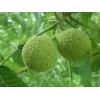
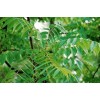
Nature's Potions Ltd WALNUT TREE BLACK SEEDS, (3) Seeds, Juglans nigra, Organic, Nut Tree
$24.09
- Free US shipping
-
Arrives
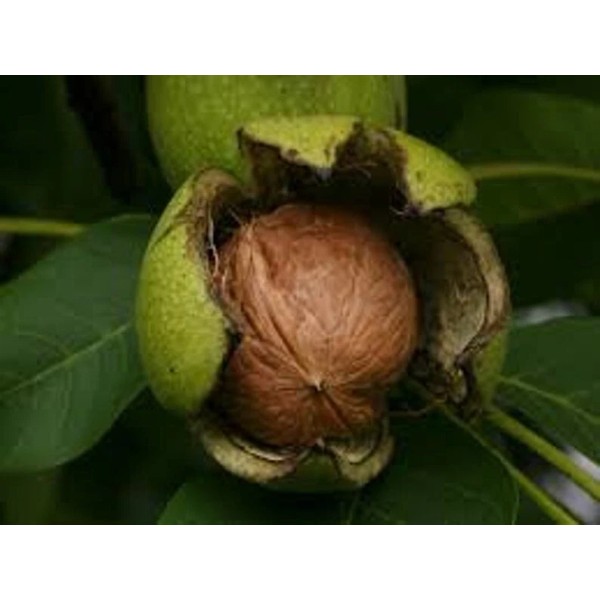
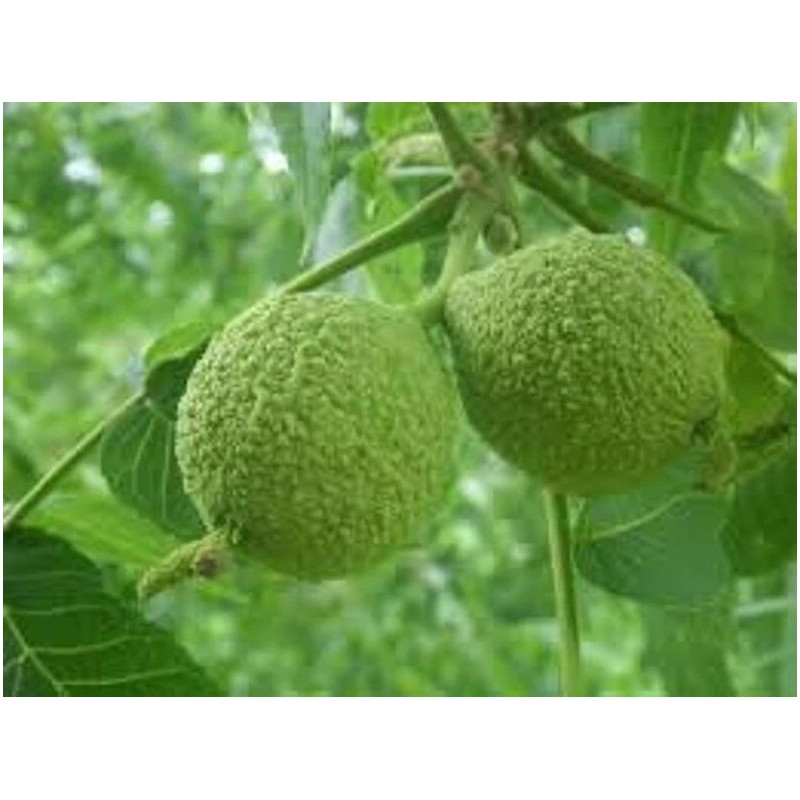
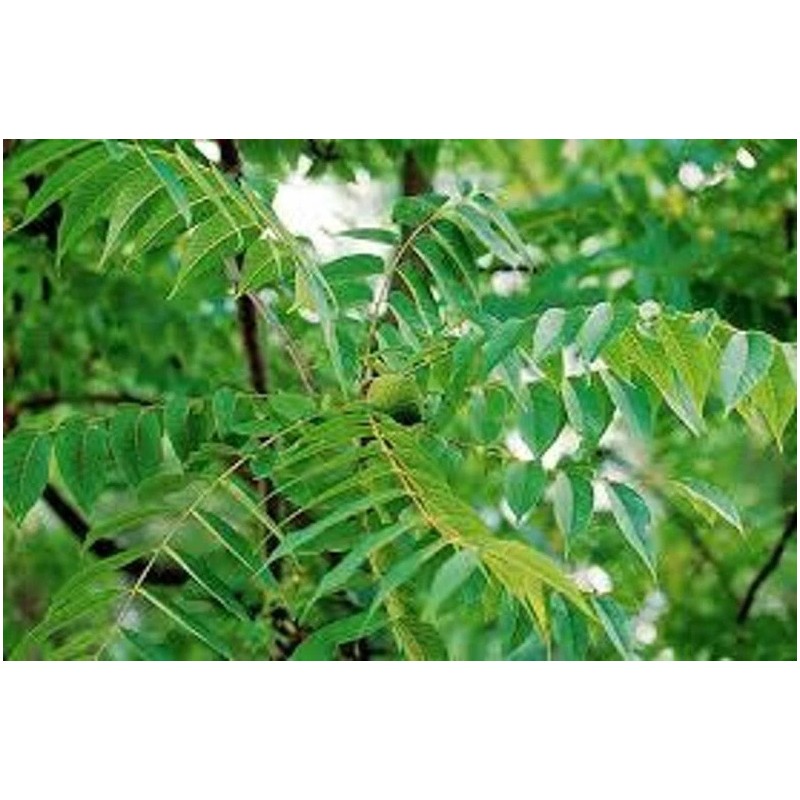
Walnut Tree Black Seeds, Three (3) Seeds, Fresh, Ready To Plant, Juglans nigra, Nut Tree,
Used to make ink and wood stain, used to treat parasites
Just came off the trees, ready to plant for spring germination, we treat humans and our animal friends with the tincture.
Black walnut (Juglans nigra ) has been among the most desirable hardwoods — particularly for furniture- and cabinetmaking — ever since it was discovered in virgin stands on North America's shores over three centuries ago. It has a deep, unique, lustrous color and is dimensionally stable. It resists checking (that is, splitting ... either as it dries or as the result of changes in humidity). The heartwood (from the center of the tree) seldom decays. And walnut is actually stronger than white oak!
The earth at your chosen planting site should be high-grade topsoil with good loam, and a near-neutral pH of 6.0 to 6.5. The subsoil should be the same, but a little clay won't matter. Good drainage is important, though, and the only way to be sure your location can provide it is to dig right down to a depth of at least 48 inches. If you hit gravel less than 40 inches down, you're on a spot where walnut trees will grow twice as slowly as will those whose roots can go 40 inches or more into unobstructed soil. Worse yet, if you hit rock or hard clay, or if the soil is mottled (spots or blotches of different colors indicate that it doesn't drain well), look elsewhere.
Planting Them
To start your woodlot from seed, you'll first have to husk the nuts. Some people drive back and forth over them with their cars. A corn huller will also do the job. And I know of one old-timer who husks walnuts by setting a board with a 1 1/2" opening over a bucket and forcing each nut through the wood's "hulling hole".
Because nuts must endure a cold period and be kept moist if they're to germinate when warm weather comes, it's best to plant them in the fall and let Old Man Winter take care of the rest.
If the nuts are allowed to dry, they'll keep almost indefinitely for eating purposes ... but will never germinate. You'll need to pick them up off the ground and plant them in the ground without letting them dry out. (The average germination rate of fresh wild walnuts is about 30 to 50%. So, by starting three nuts at each site, you'll probably get at least one seedling per spot.)
Spacing Your Trees
Each of your "young'uns" will need 100 to 150 square feet of growing room. This means you can plant on 10' X 10' or 12' X 12' grids. Even though a random stand may simulate nature, it can result in fierce crown competition (which is capable of slowing growth by 50%) and make proper thinning difficult. Also, if you're planning to disk or till to keep down weeds, planting in rows will make the task a whole lot easier.
Should you plan to monocrop black walnuts, you'll want to plant on the small grid system. However, you should at least consider intercropping. When doubling up the hardwoods with another crop, it's best to plant seedlings — so you won't have to worry about germination — on a 35' X 35' or 40' X 40' grid. Then, once the trees are a few years old, you can sow orchard grass, bluegrass, hay, fescue, or red clover between the rows. Cattle can even be grazed right in your woodlot, once the trees become too large to be browsed or trampled.
Uses for walnut
Top-quality logs are sliced into veneer, which then is glued to wall panels, doors, furniture, and cabinets. Standards for veneer trees vary with market demand, but veneer most often is cut from the first log on trees at least 16 inches in diameter and 8 1/2 feet long with very few defects (e.g., small limbs, knots, bird peck).
diagram depicted tree trunk defects
Figure 1a. Tree defects influence wood use and value.
diagram depicting tree trunk defects
Figure 1b. Defects that reduce wood quality.
Logs with more significant defects (e.g., large limbs, knots, decay, crook, sweep) often can be sawn into lumber and gunstock blanks. Sawlogs usually are at least 12 inches in diameter* and 8 1/2 feet long.
*All tree diameters in this publication are measured at 4 1/2 feet above ground, following standard practice.
Portions of trees that are not suitable for lumber may be cut for novelty items. Figured wood from the stump, large branch crotches, and burls is especially desirable. However, specialty markets are limited.
Prices for standing timber vary greatly depending on log quality and size. The size at which a walnut tree should be harvested depends on its log quality and growing site quality. A high-quality tree on a good site may be left to grow larger than 24 inches in diameter. A low-quality tree or one on a poor-quality site may be harvested when it's less than 16 inches in diameter. Contact a forester for advice before harvesting or marketing walnut trees!
Rich nut meats of the black walnut are used primarily in commercial baking, ice cream, candy, and retail sale. Shells are ground and used as a polishing abrasive, as an additive to well-drilling mud, and in dozens of other products.
Walnuts are an important food for squirrels, white-tailed deer, and woodpeckers.
As a landscape tree, walnut provides light shade and bright yellow fall foliage, although its nuts can be a nuisance in some landscape settings. A chemical found in the tree's roots, leaves, trunk, and nut husks can inhibit the growth of tomatoes, potatoes, alfalfa, blackberry, domestic grape, lilac, hydrangea, chrysanthemum, paper birch, red (Norway) pine, Scotch pine, hackberry, basswood, apple, and other plants grown too close to a walnut tree. This effect remains long after a walnut tree has been removed.
Where walnut grows
Black walnut is a long-lived tree, sometimes exceeding 200 years in age. Trees 3 to 4 feet in diameter were fairly common at the turn of the century in the Upper Midwest.
Black walnut (Juglans nigra) is one of six walnut species found in the United States; about 15 species are found worldwide. While black walnut grows throughout the United States and southern Canada, its natural range is in the central and eastern states (Figure 2).
USA map
Figure 2. Natural range of black walnut.
In Minnesota its primary commercial range is in the southeast. Here on the northern edge of its range, walnut grows more slowly, but is often worth more because of its closely spaced annual growth rings, rich color, and figure.
Although walnut trees grow in yards in almost every Minnesota county, large-scale plantings for timber production are discouraged beyond the recognized commercial range.
In natural woodlands, walnut trees grow primarily in small groups or as scattered specimens mixed with American elm, hackberry, boxelder, sugar maple, green and white ash, basswood, red oak, and hickory.
Walnut requires at least 25 inches of precipitation (35+ inches is optimum) and 140 frost-free days (170+ days is optimum) per year.
It grows best in soil that is deep, fertile, and moist but well-drained. Soil should be at least 30 inches deep before bedrock, gravel, or hardpan restricts root growth. Soil texture should be sandy loam, loam, silt loam, or silty clay loam. Avoid shallow, dry, sandy, gravelly, or rocky soils. Walnuts are often found along streams where periodic flooding occurs in the dormant season. Do not try to grow walnut where soils are poorly drained or wet during the growing season or where flooding or ice damage is frequent. Examine soil survey maps and written soil descriptions to identify soil types suitable for walnut. When walnut or other trees are not present to allow you to judge site quality, dig several pits or cores to evaluate soil depth, texture, drainage, and fertility.
Walnut grows well on river terraces and hillside benches, and in coves in hilly terrain facing north or east. It will not grow well on steep slopes facing south or west – such sites are too hot and dry.
- Free 30-Day Returns
- Full Refund for Damaged or Incorrect Items
- Guaranteed Delivery or Money Back
- Secure Checkout & Fast Support

Walnut Tree Black Seeds, Three (3) Seeds, Fresh, Ready To Plant, Juglans nigra, Nut Tree,
Used to make ink and wood stain, used to treat parasites
Just came off the trees, ready to plant for spring germination, we treat humans and our animal friends with the tincture.
Black walnut (Juglans nigra ) has been among the most desirable hardwoods — particularly for furniture- and cabinetmaking — ever since it was discovered in virgin stands on North America's shores over three centuries ago. It has a deep, unique, lustrous color and is dimensionally stable. It resists checking (that is, splitting ... either as it dries or as the result of changes in humidity). The heartwood (from the center of the tree) seldom decays. And walnut is actually stronger than white oak!
The earth at your chosen planting site should be high-grade topsoil with good loam, and a near-neutral pH of 6.0 to 6.5. The subsoil should be the same, but a little clay won't matter. Good drainage is important, though, and the only way to be sure your location can provide it is to dig right down to a depth of at least 48 inches. If you hit gravel less than 40 inches down, you're on a spot where walnut trees will grow twice as slowly as will those whose roots can go 40 inches or more into unobstructed soil. Worse yet, if you hit rock or hard clay, or if the soil is mottled (spots or blotches of different colors indicate that it doesn't drain well), look elsewhere.
Planting Them
To start your woodlot from seed, you'll first have to husk the nuts. Some people drive back and forth over them with their cars. A corn huller will also do the job. And I know of one old-timer who husks walnuts by setting a board with a 1 1/2" opening over a bucket and forcing each nut through the wood's "hulling hole".
Because nuts must endure a cold period and be kept moist if they're to germinate when warm weather comes, it's best to plant them in the fall and let Old Man Winter take care of the rest.
If the nuts are allowed to dry, they'll keep almost indefinitely for eating purposes ... but will never germinate. You'll need to pick them up off the ground and plant them in the ground without letting them dry out. (The average germination rate of fresh wild walnuts is about 30 to 50%. So, by starting three nuts at each site, you'll probably get at least one seedling per spot.)
Spacing Your Trees
Each of your "young'uns" will need 100 to 150 square feet of growing room. This means you can plant on 10' X 10' or 12' X 12' grids. Even though a random stand may simulate nature, it can result in fierce crown competition (which is capable of slowing growth by 50%) and make proper thinning difficult. Also, if you're planning to disk or till to keep down weeds, planting in rows will make the task a whole lot easier.
Should you plan to monocrop black walnuts, you'll want to plant on the small grid system. However, you should at least consider intercropping. When doubling up the hardwoods with another crop, it's best to plant seedlings — so you won't have to worry about germination — on a 35' X 35' or 40' X 40' grid. Then, once the trees are a few years old, you can sow orchard grass, bluegrass, hay, fescue, or red clover between the rows. Cattle can even be grazed right in your woodlot, once the trees become too large to be browsed or trampled.
Uses for walnut
Top-quality logs are sliced into veneer, which then is glued to wall panels, doors, furniture, and cabinets. Standards for veneer trees vary with market demand, but veneer most often is cut from the first log on trees at least 16 inches in diameter and 8 1/2 feet long with very few defects (e.g., small limbs, knots, bird peck).
diagram depicted tree trunk defects
Figure 1a. Tree defects influence wood use and value.
diagram depicting tree trunk defects
Figure 1b. Defects that reduce wood quality.
Logs with more significant defects (e.g., large limbs, knots, decay, crook, sweep) often can be sawn into lumber and gunstock blanks. Sawlogs usually are at least 12 inches in diameter* and 8 1/2 feet long.
*All tree diameters in this publication are measured at 4 1/2 feet above ground, following standard practice.
Portions of trees that are not suitable for lumber may be cut for novelty items. Figured wood from the stump, large branch crotches, and burls is especially desirable. However, specialty markets are limited.
Prices for standing timber vary greatly depending on log quality and size. The size at which a walnut tree should be harvested depends on its log quality and growing site quality. A high-quality tree on a good site may be left to grow larger than 24 inches in diameter. A low-quality tree or one on a poor-quality site may be harvested when it's less than 16 inches in diameter. Contact a forester for advice before harvesting or marketing walnut trees!
Rich nut meats of the black walnut are used primarily in commercial baking, ice cream, candy, and retail sale. Shells are ground and used as a polishing abrasive, as an additive to well-drilling mud, and in dozens of other products.
Walnuts are an important food for squirrels, white-tailed deer, and woodpeckers.
As a landscape tree, walnut provides light shade and bright yellow fall foliage, although its nuts can be a nuisance in some landscape settings. A chemical found in the tree's roots, leaves, trunk, and nut husks can inhibit the growth of tomatoes, potatoes, alfalfa, blackberry, domestic grape, lilac, hydrangea, chrysanthemum, paper birch, red (Norway) pine, Scotch pine, hackberry, basswood, apple, and other plants grown too close to a walnut tree. This effect remains long after a walnut tree has been removed.
Where walnut grows
Black walnut is a long-lived tree, sometimes exceeding 200 years in age. Trees 3 to 4 feet in diameter were fairly common at the turn of the century in the Upper Midwest.
Black walnut (Juglans nigra) is one of six walnut species found in the United States; about 15 species are found worldwide. While black walnut grows throughout the United States and southern Canada, its natural range is in the central and eastern states (Figure 2).
USA map
Figure 2. Natural range of black walnut.
In Minnesota its primary commercial range is in the southeast. Here on the northern edge of its range, walnut grows more slowly, but is often worth more because of its closely spaced annual growth rings, rich color, and figure.
Although walnut trees grow in yards in almost every Minnesota county, large-scale plantings for timber production are discouraged beyond the recognized commercial range.
In natural woodlands, walnut trees grow primarily in small groups or as scattered specimens mixed with American elm, hackberry, boxelder, sugar maple, green and white ash, basswood, red oak, and hickory.
Walnut requires at least 25 inches of precipitation (35+ inches is optimum) and 140 frost-free days (170+ days is optimum) per year.
It grows best in soil that is deep, fertile, and moist but well-drained. Soil should be at least 30 inches deep before bedrock, gravel, or hardpan restricts root growth. Soil texture should be sandy loam, loam, silt loam, or silty clay loam. Avoid shallow, dry, sandy, gravelly, or rocky soils. Walnuts are often found along streams where periodic flooding occurs in the dormant season. Do not try to grow walnut where soils are poorly drained or wet during the growing season or where flooding or ice damage is frequent. Examine soil survey maps and written soil descriptions to identify soil types suitable for walnut. When walnut or other trees are not present to allow you to judge site quality, dig several pits or cores to evaluate soil depth, texture, drainage, and fertility.
Walnut grows well on river terraces and hillside benches, and in coves in hilly terrain facing north or east. It will not grow well on steep slopes facing south or west – such sites are too hot and dry.
Walnut Tree Black Seeds, Three (3) Seeds, Fresh, Ready To Plant, Juglans nigra, Nut Tree,
Used to make ink and wood stain, used to treat parasites
Just came off the trees, ready to plant for spring germination, we treat humans and our animal friends with the tincture.
Black walnut (Juglans nigra ) has been among the most desirable hardwoods — particularly for furniture- and cabinetmaking — ever since it was discovered in virgin stands on North America's shores over three centuries ago. It has a deep, unique, lustrous color and is dimensionally stable. It resists checking (that is, splitting ... either as it dries or as the result of changes in humidity). The heartwood (from the center of the tree) seldom decays. And walnut is actually stronger than white oak!
The earth at your chosen planting site should be high-grade topsoil with good loam, and a near-neutral pH of 6.0 to 6.5. The subsoil should be the same, but a little clay won't matter. Good drainage is important, though, and the only way to be sure your location can provide it is to dig right down to a depth of at least 48 inches. If you hit gravel less than 40 inches down, you're on a spot where walnut trees will grow twice as slowly as will those whose roots can go 40 inches or more into unobstructed soil. Worse yet, if you hit rock or hard clay, or if the soil is mottled (spots or blotches of different colors indicate that it doesn't drain well), look elsewhere.
Planting Them
To start your woodlot from seed, you'll first have to husk the nuts. Some people drive back and forth over them with their cars. A corn huller will also do the job. And I know of one old-timer who husks walnuts by setting a board with a 1 1/2" opening over a bucket and forcing each nut through the wood's "hulling hole".
Because nuts must endure a cold period and be kept moist if they're to germinate when warm weather comes, it's best to plant them in the fall and let Old Man Winter take care of the rest.
If the nuts are allowed to dry, they'll keep almost indefinitely for eating purposes ... but will never germinate. You'll need to pick them up off the ground and plant them in the ground without letting them dry out. (The average germination rate of fresh wild walnuts is about 30 to 50%. So, by starting three nuts at each site, you'll probably get at least one seedling per spot.)
Spacing Your Trees
Each of your "young'uns" will need 100 to 150 square feet of growing room. This means you can plant on 10' X 10' or 12' X 12' grids. Even though a random stand may simulate nature, it can result in fierce crown competition (which is capable of slowing growth by 50%) and make proper thinning difficult. Also, if you're planning to disk or till to keep down weeds, planting in rows will make the task a whole lot easier.
Should you plan to monocrop black walnuts, you'll want to plant on the small grid system. However, you should at least consider intercropping. When doubling up the hardwoods with another crop, it's best to plant seedlings — so you won't have to worry about germination — on a 35' X 35' or 40' X 40' grid. Then, once the trees are a few years old, you can sow orchard grass, bluegrass, hay, fescue, or red clover between the rows. Cattle can even be grazed right in your woodlot, once the trees become too large to be browsed or trampled.
Uses for walnut
Top-quality logs are sliced into veneer, which then is glued to wall panels, doors, furniture, and cabinets. Standards for veneer trees vary with market demand, but veneer most often is cut from the first log on trees at least 16 inches in diameter and 8 1/2 feet long with very few defects (e.g., small limbs, knots, bird peck).
diagram depicted tree trunk defects
Figure 1a. Tree defects influence wood use and value.
diagram depicting tree trunk defects
Figure 1b. Defects that reduce wood quality.
Logs with more significant defects (e.g., large limbs, knots, decay, crook, sweep) often can be sawn into lumber and gunstock blanks. Sawlogs usually are at least 12 inches in diameter* and 8 1/2 feet long.
*All tree diameters in this publication are measured at 4 1/2 feet above ground, following standard practice.
Portions of trees that are not suitable for lumber may be cut for novelty items. Figured wood from the stump, large branch crotches, and burls is especially desirable. However, specialty markets are limited.
Prices for standing timber vary greatly depending on log quality and size. The size at which a walnut tree should be harvested depends on its log quality and growing site quality. A high-quality tree on a good site may be left to grow larger than 24 inches in diameter. A low-quality tree or one on a poor-quality site may be harvested when it's less than 16 inches in diameter. Contact a forester for advice before harvesting or marketing walnut trees!
Rich nut meats of the black walnut are used primarily in commercial baking, ice cream, candy, and retail sale. Shells are ground and used as a polishing abrasive, as an additive to well-drilling mud, and in dozens of other products.
Walnuts are an important food for squirrels, white-tailed deer, and woodpeckers.
As a landscape tree, walnut provides light shade and bright yellow fall foliage, although its nuts can be a nuisance in some landscape settings. A chemical found in the tree's roots, leaves, trunk, and nut husks can inhibit the growth of tomatoes, potatoes, alfalfa, blackberry, domestic grape, lilac, hydrangea, chrysanthemum, paper birch, red (Norway) pine, Scotch pine, hackberry, basswood, apple, and other plants grown too close to a walnut tree. This effect remains long after a walnut tree has been removed.
Where walnut grows
Black walnut is a long-lived tree, sometimes exceeding 200 years in age. Trees 3 to 4 feet in diameter were fairly common at the turn of the century in the Upper Midwest.
Black walnut (Juglans nigra) is one of six walnut species found in the United States; about 15 species are found worldwide. While black walnut grows throughout the United States and southern Canada, its natural range is in the central and eastern states (Figure 2).
USA map
Figure 2. Natural range of black walnut.
In Minnesota its primary commercial range is in the southeast. Here on the northern edge of its range, walnut grows more slowly, but is often worth more because of its closely spaced annual growth rings, rich color, and figure.
Although walnut trees grow in yards in almost every Minnesota county, large-scale plantings for timber production are discouraged beyond the recognized commercial range.
In natural woodlands, walnut trees grow primarily in small groups or as scattered specimens mixed with American elm, hackberry, boxelder, sugar maple, green and white ash, basswood, red oak, and hickory.
Walnut requires at least 25 inches of precipitation (35+ inches is optimum) and 140 frost-free days (170+ days is optimum) per year.
It grows best in soil that is deep, fertile, and moist but well-drained. Soil should be at least 30 inches deep before bedrock, gravel, or hardpan restricts root growth. Soil texture should be sandy loam, loam, silt loam, or silty clay loam. Avoid shallow, dry, sandy, gravelly, or rocky soils. Walnuts are often found along streams where periodic flooding occurs in the dormant season. Do not try to grow walnut where soils are poorly drained or wet during the growing season or where flooding or ice damage is frequent. Examine soil survey maps and written soil descriptions to identify soil types suitable for walnut. When walnut or other trees are not present to allow you to judge site quality, dig several pits or cores to evaluate soil depth, texture, drainage, and fertility.
Walnut grows well on river terraces and hillside benches, and in coves in hilly terrain facing north or east. It will not grow well on steep slopes facing south or west – such sites are too hot and dry.
- Brand: Nature's Potions Ltd
- Type: Tree Seeds
- Life Cycle: Perennial
- Common Name: Walnut Tree
- Genus: Juglans nigra
- Color: Black
- Features: Cold Resistant, Edible, Fast Growing
Processing Time
- We process and ship orders Monday through Friday, excluding holidays.
- Most orders are processed within 1–3 business days, depending on product availability.
- Processing time does not include delivery time, which varies based on your location and the product’s shipping origin.
Shipping Coverage
We currently ship to addresses within the United States only.
Products may ship from:
- Our U.S. warehouses, or
- Our international fulfillment centers (including Korea, Japan, China, Australia, Mexico, Canada, the United Kingdom, and the EU).
Each product page clearly displays the “Ships From” location before checkout.
Shipping Methods & Estimated Delivery
| Shipping Method | Estimated Delivery | Cost |
|---|---|---|
| Free Shipping (US) | 5–10 business days | Free, available on eligible items |
| Standard Shipping (US to US by Item) | 5–10 business days | $5.95 for the first item, $3.00 each additional |
| Standard Shipping (From US Warehouse by Weight) | 3–7 business days | Starts at $5.95, increasing by $2 for every additional 4 oz (0.25 lb) up to 1 lb, then by $4 for each additional pound beyond 1 lb. |
| Extended Delivery (Ships from Overseas Warehouse) | 10–20 business days | $14.99 for the first item, $2.00 each additional |
Shipping costs vary by product weight, quantity and origin. Exact rates and delivery estimates are displayed on each product page and confirmed during checkout.
Free Shipping
We offer free standard shipping on select products or during promotional periods. Availability of free shipping will be displayed on the product page and at checkout.
Carriers
We primarily use USPS and UPS for U.S. deliveries. Items shipped from international warehouses may be handled by partner carriers depending on the country of origin.
Import Duties & Taxes
All import duties and taxes for goods imported into the United States are included in the product price. There are no hidden fees or additional charges at checkout.
Tracking & Notifications
Every order is fully trackable. You will receive a tracking number via email once your order ships. If your order ships in multiple packages, each package will have its own tracking number. If you don’t receive a shipping confirmation immediately, your order is still being processed and will arrive within the estimated timeframe shown at checkout.
You can track your shipment anytime using the Track Your Order page on our website.
Order Changes & Cancellations
If you need to modify or cancel an order, please contact our customer support team as soon as possible. Orders can only be canceled before they ship. Once shipped, cancellations are not possible, but you may request a return after the item is delivered.
Contact: support@ibspot.com
Item Not Received
If your tracking number shows “Delivered” but you haven’t received your package:
- Check with your local USPS or UPS office.
- Confirm that the shipping address provided was correct.
- If the issue remains unresolved, contact support@ibspot.com for assistance.
Damaged or Lost Parcels
If your package arrives damaged or fails to arrive, please contact us immediately. For deliveries to P.O. boxes, ibspot is not responsible for damage caused by weather, temperature, or theft.
Customer Support
For any questions about shipping, tracking, or delivery, our customer support team is here to help.
Email: support@ibspot.com
We’re always happy to help.
Please read our policy carefully before making a purchase.
We aim to ensure every customer has a smooth and transparent experience with ibspot.com.
Order Cancellation Policy
Customers may request to cancel an order before it has been shipped.
Once the package has been shipped, cancellations are no longer possible; however, you may still request a return after receiving your order.
How to Request a Cancellation
You can contact us through:
- Email: support@ibspot.com
- Contact Form: Submit a request through our Contact Us page
Please submit your cancellation request as soon as possible after placing the order to allow us to process it before shipment.
Return Policy
We accept returns for most items within 30 days of delivery for a full refund.
To be eligible for a return:
- The item must be unused, in the same condition as received, and in its original packaging.
- A tracking number must be provided to confirm the return shipment.
Non-Returnable Items
Certain products cannot be returned, including:
- Perishable goods (for example, food, flowers, newspapers, magazines)
- Intimate or sanitary goods
- Hazardous materials or flammable liquids/gases
- Gift cards
- Downloadable software
- Some health and personal care items
Partial Refunds (If Applicable)
Partial refunds may be granted in specific situations, such as:
- Books with obvious signs of use
- Opened CDs, DVDs, software, or vinyl records
- Items not in their original condition, damaged, or missing parts not due to our error
- Items returned more than 30 days after delivery
How to Return an Item
To initiate a return, please contact us at support@ibspot.com with your order number and details about the product you wish to return.
Our team will provide you with return instructions and a prepaid return label.
Shipping Cost for Returns
Please contact us before returning any item.
We may provide a return shipping label for your return. If the return is due to our error, such as receiving the wrong item, a damaged item, or a defective product, we will cover the return shipping cost.
If the return is due to the customer’s reason, such as ordering the wrong item, changing your mind, or no longer needing the item, the original shipping fee and the return label fee will be deducted from your refund amount.
If a return is sent back without prior contact or without using our provided label, we cannot be held responsible for any return shipping costs or delivery issues.
For items valued over $75, we recommend using a trackable shipping service or purchasing shipping insurance.
We cannot guarantee that we will receive your returned item if shipped independently.
Refund Processing
Once your return is received and inspected:
- In-store returns are refunded to the original form of payment or issued as a gift card.
- Mail-in returns using our prepaid label are refunded to the original payment method within 3–5 business days after we receive your return.
Please allow:
- 5–7 business days for the return to reach our Returns Center.
- An additional 3–10 business days for your bank to post the refund to your account.
Damages, Issues & Claims
Please inspect your order immediately upon receipt.
If you receive a defective, damaged, or incorrect item, contact us right away at support@ibspot.com.
We’ll evaluate the issue promptly and make it right.
Product Claims
Before purchasing, please review product details carefully.
If there is a problem with your order upon arrival, visit our Support Center or contact us directly to arrange return shipping or replacement.
Exchanges
We do not process direct exchanges.
The fastest way to get what you need is to return the original item and place a new order once your return is accepted.
Return Address
IBSPOT Return Center
15 Sawmill Ln
Dover Plains, NY 12522
United States
Customer Support
Our support team is available 24/7 to assist with cancellations, returns, or general inquiries.
Email: support@ibspot.com
Contact Form: Contact Us page
Oops!
Sorry, it looks like some products are not available in selected quantity.