





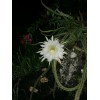

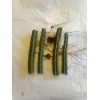

Cactus 20 Night Blooming Cereus Cactus Bulk Cacti Easy to Grow Queen of the Night LIVE
$174.29
- Free US shipping
-
Arrives
Florida Night Blooming Cereus Queen of the night
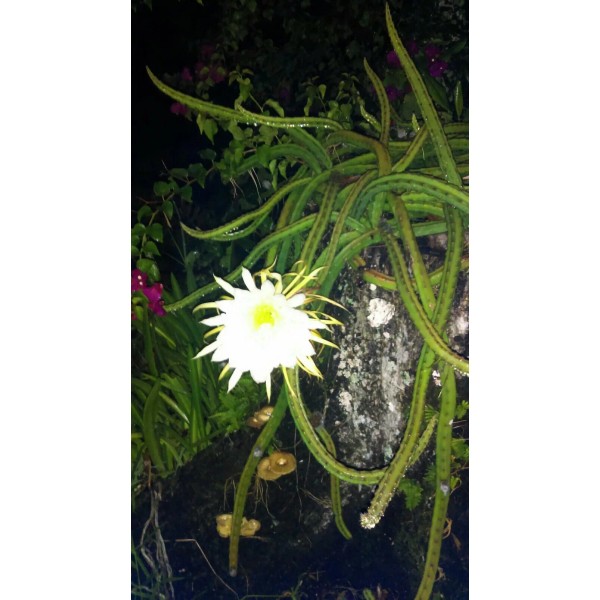
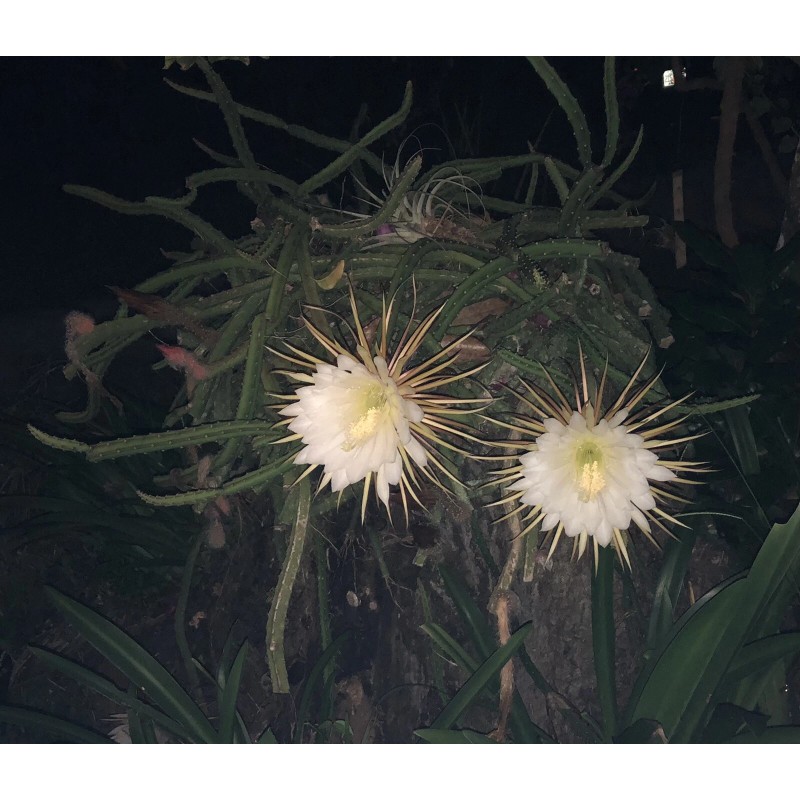
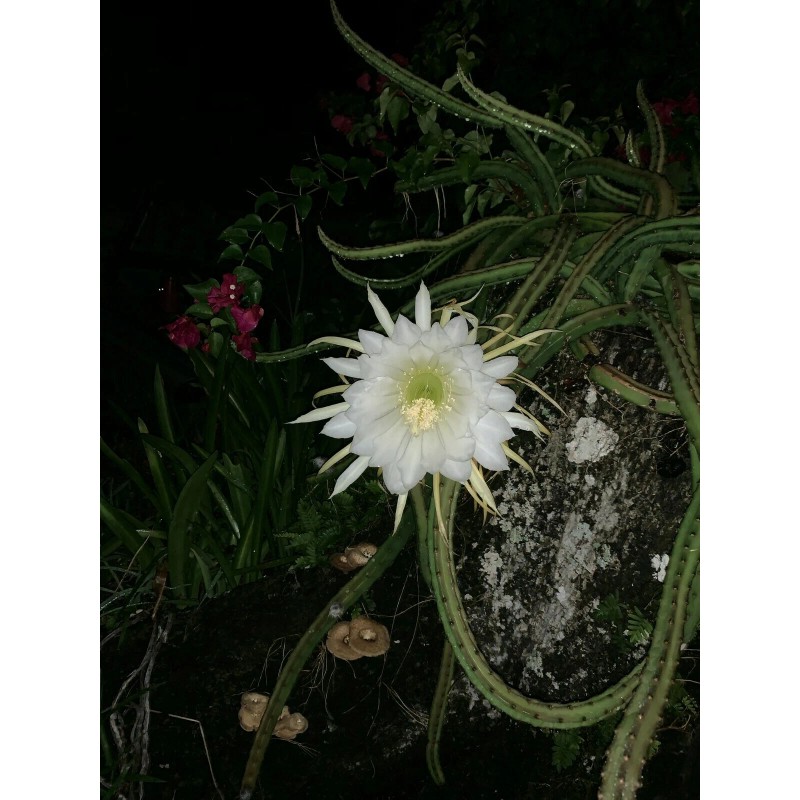
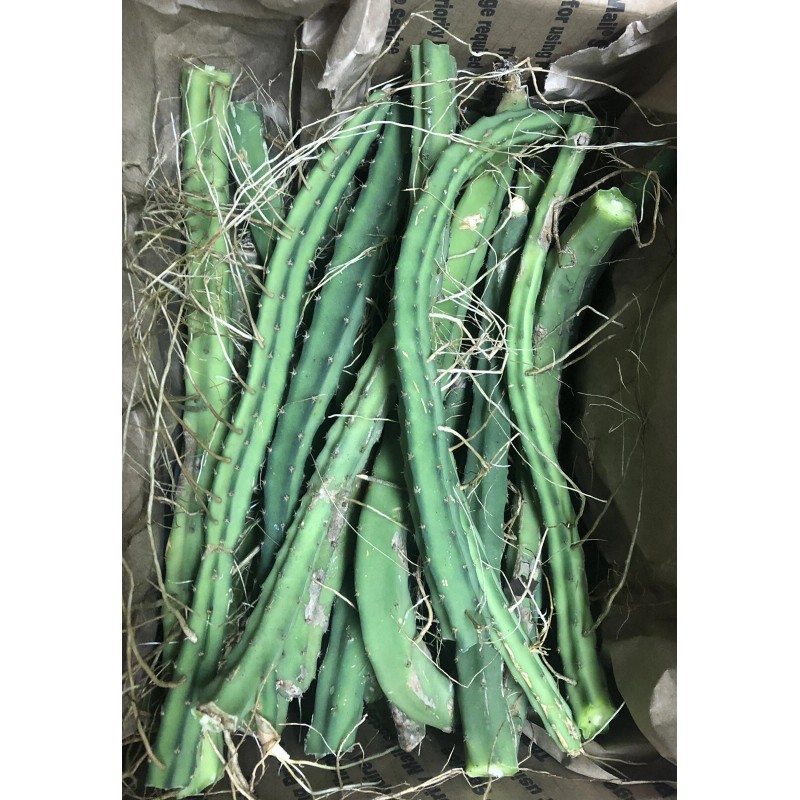
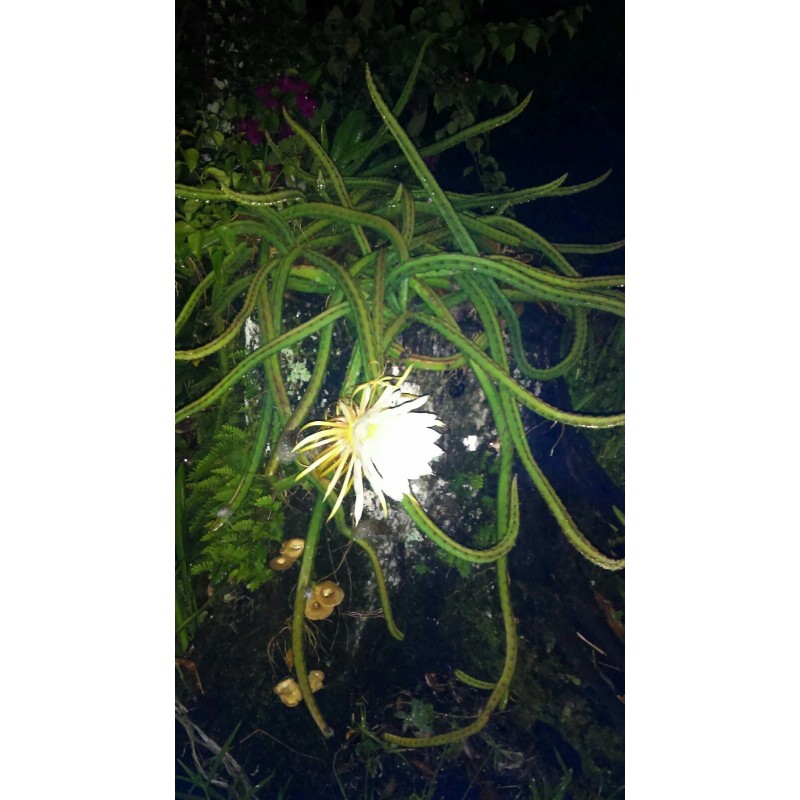
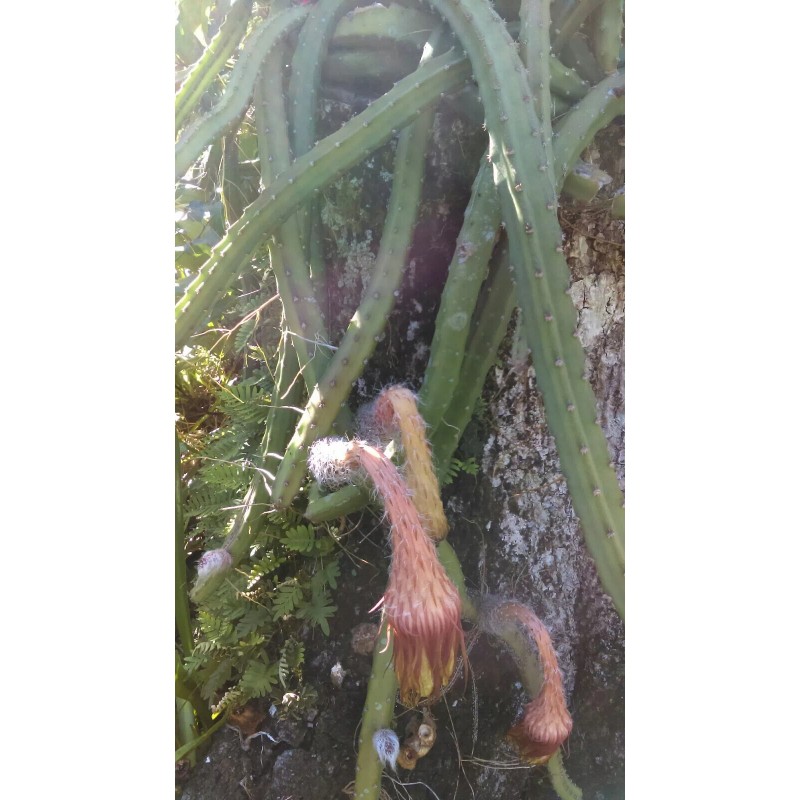
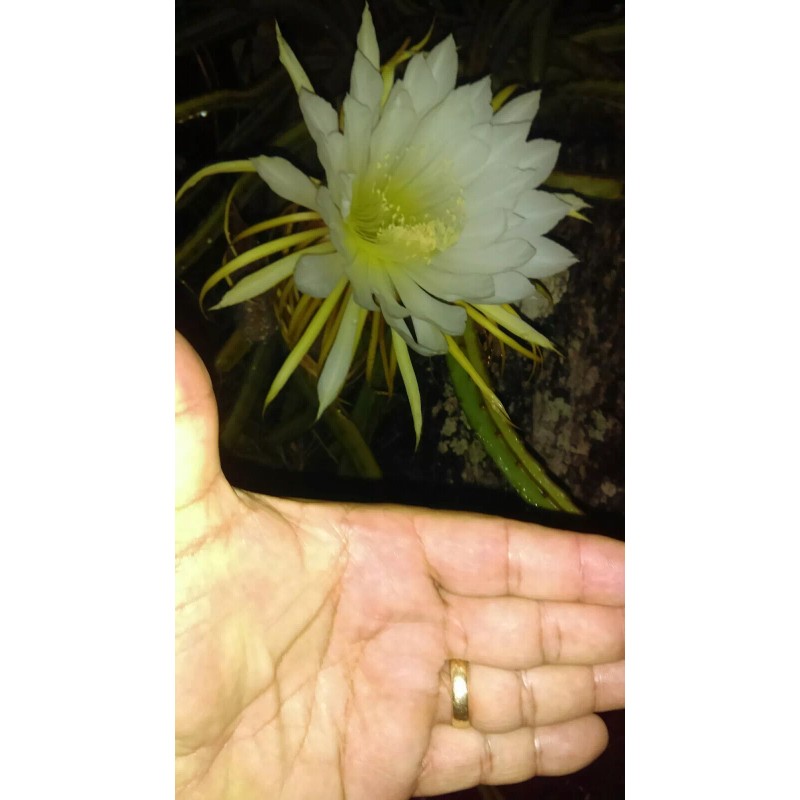
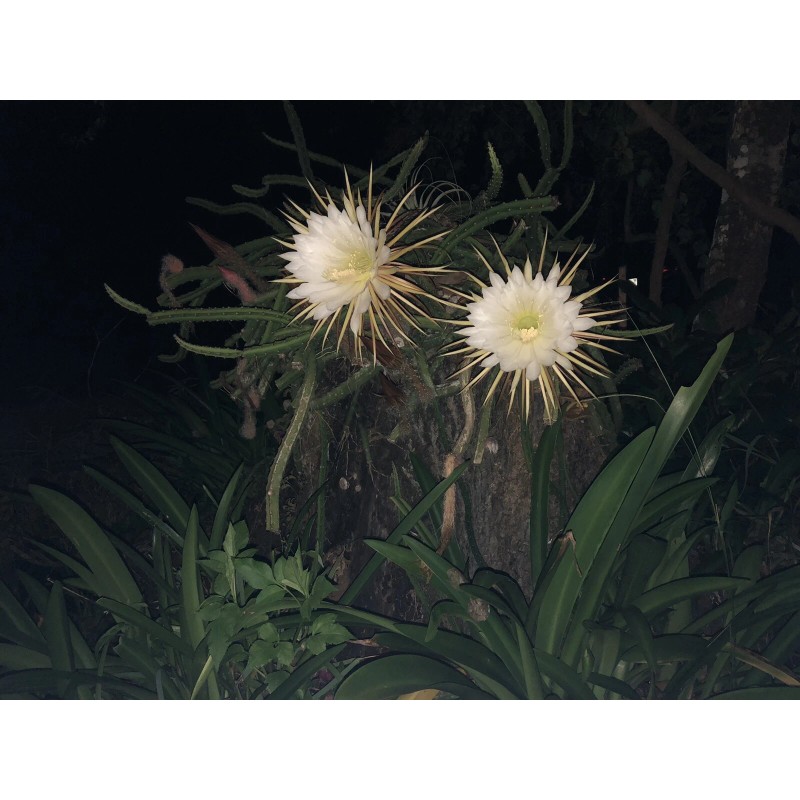
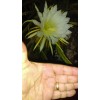
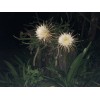
Selenicereus grandiflorus is a member of the cactus family and is a vigorous vining plant. For one night each year, its exquisitely scented flower opens as night falls, then closes forever with the first rays of the morning sun. The term "night blooming cereus" or "Queen of the Night" is often used for this night blooming cactus.
These plants
usually begins to set flower buds in June. It grows very quickly, splits off
into many separate vines, and continues on an upward path toward the top of the
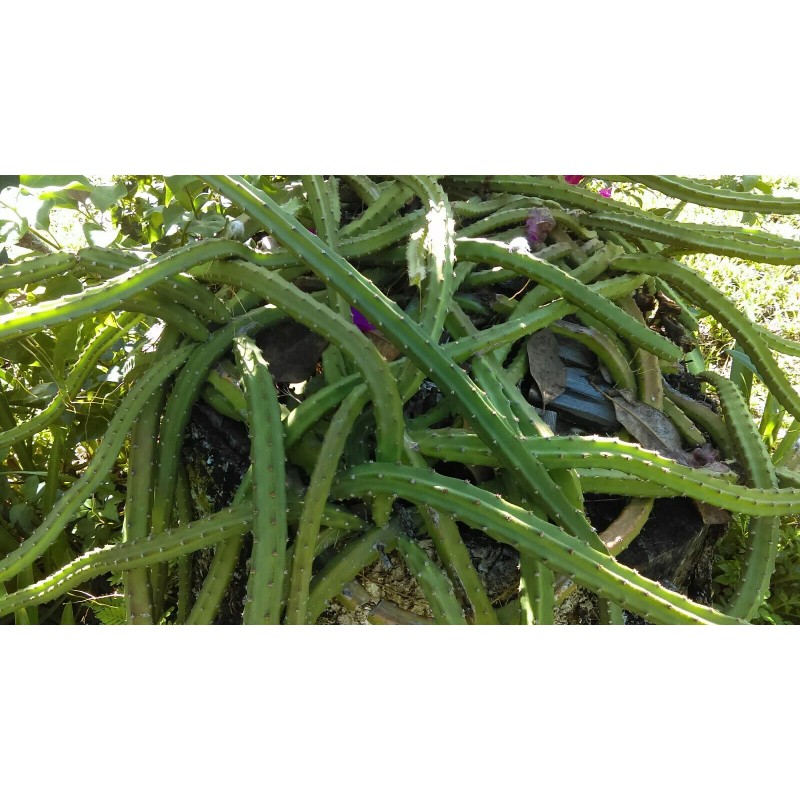
trees or posts. For three hundred and sixty-four days, the vines have a snake-like appearance and is somewhat sinister. Then, when
it blooms, it takes your breath away.
Remember that this is a tropical plant. Avoid keeping out during freezing temperatures. It has thorns so handle it with extreme care. Although we ship only healthy, it is important to remember that they are not perfect (nor is any other living thing).
The Medicinal Benefits of Night-Blooming Cereus Cactus
Use night-blooming cereus
cactus for health and you will discover why discerning herbalists use it
I want to tell you more about the medicinal benefits of Selenicereus
grandiflorus, the night-blooming cereus cactus.
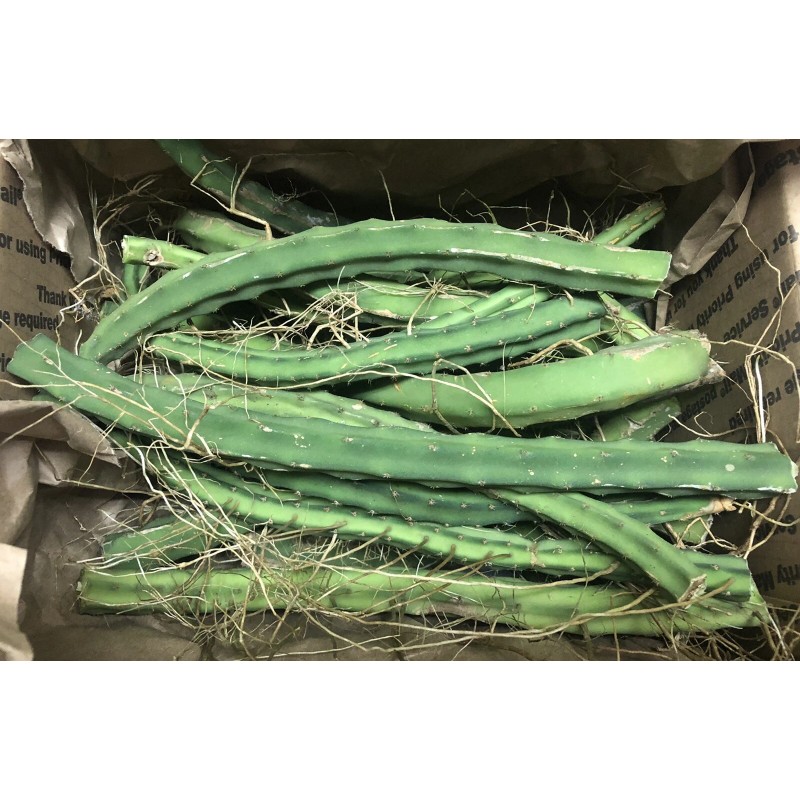
Although it is also called large-flowered cactus, sweet-scented cactus, queen of the night, and vanilla cactus, it is most commonly known as night-blooming cereus cactus. The Latin name also speaks to this: ‘seleni‘ means moon, ‘cereus’ means waxy, and “grandiflorus” means large-flowered. As I said, this is a very common cactus. It likes to sprawl and branch and climb across rocks and around trees and fences. The green succulent stems are jointed, fleshy, columnar, a half to one inch or so across, scant to mildly covered in spines, each joint of the stem being up to several inches in length. The flowers are large, waxy, splendorously showy. They do not flower often, and when they do, there may be as few as one. The flowers develop, unfurled, for quite a long time, and they too, are quite impressive in appearance. Like the name says, the flowers bloom at night, and it is a spectacular, one-night-only event. The flower may open with a loud pop, and it emits a sublime, hypnotic aroma that can bowl over a human, and which will hopefully attract a single pollinator during that night, because by the next day the flower will have already wilted.
The fleshy stems of night-blooming cereus cactus are the medicine, and if the cactus happens to be in the immature flowering stage, even better, as the unfurled flower is also medicinal. The taste of the fresh fleshy stem is sweet (sweet by an herbalist’s standards, not by a sugarholic’s standards) and bitter; its texture is mucilaginous; and its energetics are cooling and moistening to the organ tissues and systems that it influences. The tissues and systems that night-blooming cereus cactus most and best influence are the heart-cardiovascular system and the nervous system. It also exerts good influence on the lungs-respiratory system and the female reproductive cycle, especially during menopausal and premenstrual times.
Cereus cactus is most renowned for its ability to strengthen heart muscle and action, and to alleviate heart pain. In my practice it is an essential and central ingredient – along with hawthorn and reishi — in formulas to strengthen a heart weakened by a cardiovascular event (MI, stroke), blockage of arteries, or from the strain from cardiac fever, over exertion, or chronic debilitation like tobacco heart. Its effects are noticeable and enduring. It is a superior antispasmodic, and has the ability to alleviate what people describe as the feeling of constricting bands of pain across their chests and hearts. I also use it with motherwort to help address arrhythmias and tachycardia, and in formulas to strengthen hearts weakened by Lyme Disease.
Its action on the nervous system is as powerful and positive as it is on the heart, and in fact, it is the very place where nervous system and heart action meet that cactus medicine seems to have its greatest affinity. Its tonifying and restorative effect on the nerves and central nervous system can be profound and enduring. I use it in formulas to treat a wide array of concerns, including nervousness, anxiety, panic, and especially gloom-and-doom depression. And I use it just as often as a strengthening nerve tonic to treat nerve weakness and nervous system fragility (neurasthenia), and also in protocols to help stroke victims recover neurological function.
I also use cereus cactus frequently in formulas to address nervous system concerns that are connected to the menstrual cycle. It is observably beneficial in addressing menopausal anxiety-nervousness, panic attacks with hyperventilation, melancholy and black-cloud depression, thoughts plagued by doom and a fear of death; and also to address hot flashes, numbness and weakness of the limbs, or feelings of heavy tightness in the chest.
And I will use this night-blooming cereus cactus in lung-respiratory formulas when the symptomatic picture bears resemblance to symptoms mentioned in the cardiovascular and nervous system section: respiratory conditions like asthma or bronchitis where symptoms might include a tight-banded feeling in the chest and labored breathing; respiratory symptoms that accompany cardiovascular deficiency diseases like congestive heart failure and cardiac edema; or the rapid, shallow, panic-inducing breathing that might accompany a nervous condition.
As a preparation, cereus cactus is best used as a fresh tincture. If you happen to be lucky enough to live where it grows, you could juice it, although I am not sure what that dosage would be. My experience is with the fresh tincture. I blend a one-to-two ratio (by volume) of cactus to fluid. Because cactus is so succulent – approximately 90-95% water content – it is safest and best (I would say essential) to use the highest-test alcohol available. That would be 95% alcohol concentration, or 190 proof. Cactus is fairly strong medicine, so the dosage does not need to be high. It is never the largest ratio amount in a formula even though it may sometimes be the most important herb in the mix. In formulas alongside hawthorn and reishi for instance, cactus would be one quarter to one third the ratio amount of these other herbs (example: for every 30 drops of hawthorn I would add 7-10 drops of cereus cactus). In small, tonic doses, cactus can be taken safely and without side effects for long periods. If consumed in large quantities or at too high and frequent a dose, it will produce the very symptoms it alleviates when taken at the correct dose, inducing shallow breathing, nervous anxiety and a tight feeling in the chest. So, if you are a general interest reader, don’t do that. And if you are a discerning herbalist, then remember that when using cactus, and you will enjoy it as an important medicine in your repertoire.
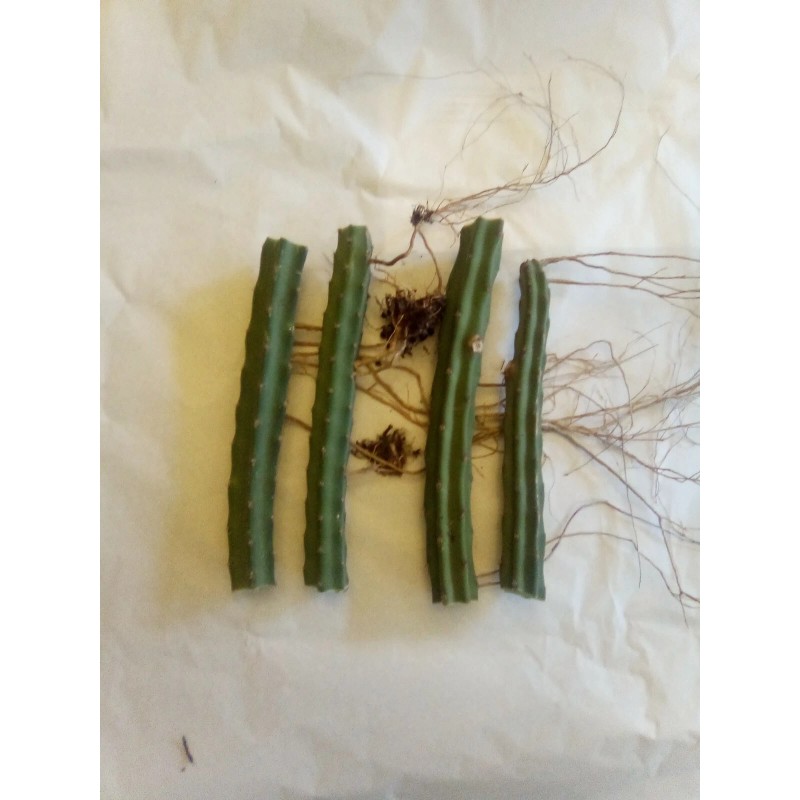
If you would like to grow cacti indoors or have a greenhouse or sun room, a segment of fresh night-blooming cereus cactus easily roots and grows.
- Free 30-Day Returns
- Full Refund for Damaged or Incorrect Items
- Guaranteed Delivery or Money Back
- Secure Checkout & Fast Support

Florida Night Blooming Cereus Queen of the night
Selenicereus grandiflorus is a member of the cactus family and is a vigorous vining plant. For one night each year, its exquisitely scented flower opens as night falls, then closes forever with the first rays of the morning sun. The term "night blooming cereus" or "Queen of the Night" is often used for this night blooming cactus.
These plants
usually begins to set flower buds in June. It grows very quickly, splits off
into many separate vines, and continues on an upward path toward the top of the
trees or posts. For three hundred and sixty-four days, the vines have a snake-like appearance and is somewhat sinister. Then, when
it blooms, it takes your breath away.
Remember that this is a tropical plant. Avoid keeping out during freezing temperatures. It has thorns so handle it with extreme care. Although we ship only healthy, it is important to remember that they are not perfect (nor is any other living thing).
The Medicinal Benefits of Night-Blooming Cereus Cactus
Use night-blooming cereus
cactus for health and you will discover why discerning herbalists use it
I want to tell you more about the medicinal benefits of Selenicereus
grandiflorus, the night-blooming cereus cactus.
Although it is also called large-flowered cactus, sweet-scented cactus, queen of the night, and vanilla cactus, it is most commonly known as night-blooming cereus cactus. The Latin name also speaks to this: ‘seleni‘ means moon, ‘cereus’ means waxy, and “grandiflorus” means large-flowered. As I said, this is a very common cactus. It likes to sprawl and branch and climb across rocks and around trees and fences. The green succulent stems are jointed, fleshy, columnar, a half to one inch or so across, scant to mildly covered in spines, each joint of the stem being up to several inches in length. The flowers are large, waxy, splendorously showy. They do not flower often, and when they do, there may be as few as one. The flowers develop, unfurled, for quite a long time, and they too, are quite impressive in appearance. Like the name says, the flowers bloom at night, and it is a spectacular, one-night-only event. The flower may open with a loud pop, and it emits a sublime, hypnotic aroma that can bowl over a human, and which will hopefully attract a single pollinator during that night, because by the next day the flower will have already wilted.
The fleshy stems of night-blooming cereus cactus are the medicine, and if the cactus happens to be in the immature flowering stage, even better, as the unfurled flower is also medicinal. The taste of the fresh fleshy stem is sweet (sweet by an herbalist’s standards, not by a sugarholic’s standards) and bitter; its texture is mucilaginous; and its energetics are cooling and moistening to the organ tissues and systems that it influences. The tissues and systems that night-blooming cereus cactus most and best influence are the heart-cardiovascular system and the nervous system. It also exerts good influence on the lungs-respiratory system and the female reproductive cycle, especially during menopausal and premenstrual times.
Cereus cactus is most renowned for its ability to strengthen heart muscle and action, and to alleviate heart pain. In my practice it is an essential and central ingredient – along with hawthorn and reishi — in formulas to strengthen a heart weakened by a cardiovascular event (MI, stroke), blockage of arteries, or from the strain from cardiac fever, over exertion, or chronic debilitation like tobacco heart. Its effects are noticeable and enduring. It is a superior antispasmodic, and has the ability to alleviate what people describe as the feeling of constricting bands of pain across their chests and hearts. I also use it with motherwort to help address arrhythmias and tachycardia, and in formulas to strengthen hearts weakened by Lyme Disease.
Its action on the nervous system is as powerful and positive as it is on the heart, and in fact, it is the very place where nervous system and heart action meet that cactus medicine seems to have its greatest affinity. Its tonifying and restorative effect on the nerves and central nervous system can be profound and enduring. I use it in formulas to treat a wide array of concerns, including nervousness, anxiety, panic, and especially gloom-and-doom depression. And I use it just as often as a strengthening nerve tonic to treat nerve weakness and nervous system fragility (neurasthenia), and also in protocols to help stroke victims recover neurological function.
I also use cereus cactus frequently in formulas to address nervous system concerns that are connected to the menstrual cycle. It is observably beneficial in addressing menopausal anxiety-nervousness, panic attacks with hyperventilation, melancholy and black-cloud depression, thoughts plagued by doom and a fear of death; and also to address hot flashes, numbness and weakness of the limbs, or feelings of heavy tightness in the chest.
And I will use this night-blooming cereus cactus in lung-respiratory formulas when the symptomatic picture bears resemblance to symptoms mentioned in the cardiovascular and nervous system section: respiratory conditions like asthma or bronchitis where symptoms might include a tight-banded feeling in the chest and labored breathing; respiratory symptoms that accompany cardiovascular deficiency diseases like congestive heart failure and cardiac edema; or the rapid, shallow, panic-inducing breathing that might accompany a nervous condition.
As a preparation, cereus cactus is best used as a fresh tincture. If you happen to be lucky enough to live where it grows, you could juice it, although I am not sure what that dosage would be. My experience is with the fresh tincture. I blend a one-to-two ratio (by volume) of cactus to fluid. Because cactus is so succulent – approximately 90-95% water content – it is safest and best (I would say essential) to use the highest-test alcohol available. That would be 95% alcohol concentration, or 190 proof. Cactus is fairly strong medicine, so the dosage does not need to be high. It is never the largest ratio amount in a formula even though it may sometimes be the most important herb in the mix. In formulas alongside hawthorn and reishi for instance, cactus would be one quarter to one third the ratio amount of these other herbs (example: for every 30 drops of hawthorn I would add 7-10 drops of cereus cactus). In small, tonic doses, cactus can be taken safely and without side effects for long periods. If consumed in large quantities or at too high and frequent a dose, it will produce the very symptoms it alleviates when taken at the correct dose, inducing shallow breathing, nervous anxiety and a tight feeling in the chest. So, if you are a general interest reader, don’t do that. And if you are a discerning herbalist, then remember that when using cactus, and you will enjoy it as an important medicine in your repertoire.
If you would like to grow cacti indoors or have a greenhouse or sun room, a segment of fresh night-blooming cereus cactus easily roots and grows.
Florida Night Blooming Cereus Queen of the night
Selenicereus grandiflorus is a member of the cactus family and is a vigorous vining plant. For one night each year, its exquisitely scented flower opens as night falls, then closes forever with the first rays of the morning sun. The term "night blooming cereus" or "Queen of the Night" is often used for this night blooming cactus.
These plants
usually begins to set flower buds in June. It grows very quickly, splits off
into many separate vines, and continues on an upward path toward the top of the
trees or posts. For three hundred and sixty-four days, the vines have a snake-like appearance and is somewhat sinister. Then, when
it blooms, it takes your breath away.
Remember that this is a tropical plant. Avoid keeping out during freezing temperatures. It has thorns so handle it with extreme care. Although we ship only healthy, it is important to remember that they are not perfect (nor is any other living thing).
The Medicinal Benefits of Night-Blooming Cereus Cactus
Use night-blooming cereus
cactus for health and you will discover why discerning herbalists use it
I want to tell you more about the medicinal benefits of Selenicereus
grandiflorus, the night-blooming cereus cactus.
Although it is also called large-flowered cactus, sweet-scented cactus, queen of the night, and vanilla cactus, it is most commonly known as night-blooming cereus cactus. The Latin name also speaks to this: ‘seleni‘ means moon, ‘cereus’ means waxy, and “grandiflorus” means large-flowered. As I said, this is a very common cactus. It likes to sprawl and branch and climb across rocks and around trees and fences. The green succulent stems are jointed, fleshy, columnar, a half to one inch or so across, scant to mildly covered in spines, each joint of the stem being up to several inches in length. The flowers are large, waxy, splendorously showy. They do not flower often, and when they do, there may be as few as one. The flowers develop, unfurled, for quite a long time, and they too, are quite impressive in appearance. Like the name says, the flowers bloom at night, and it is a spectacular, one-night-only event. The flower may open with a loud pop, and it emits a sublime, hypnotic aroma that can bowl over a human, and which will hopefully attract a single pollinator during that night, because by the next day the flower will have already wilted.
The fleshy stems of night-blooming cereus cactus are the medicine, and if the cactus happens to be in the immature flowering stage, even better, as the unfurled flower is also medicinal. The taste of the fresh fleshy stem is sweet (sweet by an herbalist’s standards, not by a sugarholic’s standards) and bitter; its texture is mucilaginous; and its energetics are cooling and moistening to the organ tissues and systems that it influences. The tissues and systems that night-blooming cereus cactus most and best influence are the heart-cardiovascular system and the nervous system. It also exerts good influence on the lungs-respiratory system and the female reproductive cycle, especially during menopausal and premenstrual times.
Cereus cactus is most renowned for its ability to strengthen heart muscle and action, and to alleviate heart pain. In my practice it is an essential and central ingredient – along with hawthorn and reishi — in formulas to strengthen a heart weakened by a cardiovascular event (MI, stroke), blockage of arteries, or from the strain from cardiac fever, over exertion, or chronic debilitation like tobacco heart. Its effects are noticeable and enduring. It is a superior antispasmodic, and has the ability to alleviate what people describe as the feeling of constricting bands of pain across their chests and hearts. I also use it with motherwort to help address arrhythmias and tachycardia, and in formulas to strengthen hearts weakened by Lyme Disease.
Its action on the nervous system is as powerful and positive as it is on the heart, and in fact, it is the very place where nervous system and heart action meet that cactus medicine seems to have its greatest affinity. Its tonifying and restorative effect on the nerves and central nervous system can be profound and enduring. I use it in formulas to treat a wide array of concerns, including nervousness, anxiety, panic, and especially gloom-and-doom depression. And I use it just as often as a strengthening nerve tonic to treat nerve weakness and nervous system fragility (neurasthenia), and also in protocols to help stroke victims recover neurological function.
I also use cereus cactus frequently in formulas to address nervous system concerns that are connected to the menstrual cycle. It is observably beneficial in addressing menopausal anxiety-nervousness, panic attacks with hyperventilation, melancholy and black-cloud depression, thoughts plagued by doom and a fear of death; and also to address hot flashes, numbness and weakness of the limbs, or feelings of heavy tightness in the chest.
And I will use this night-blooming cereus cactus in lung-respiratory formulas when the symptomatic picture bears resemblance to symptoms mentioned in the cardiovascular and nervous system section: respiratory conditions like asthma or bronchitis where symptoms might include a tight-banded feeling in the chest and labored breathing; respiratory symptoms that accompany cardiovascular deficiency diseases like congestive heart failure and cardiac edema; or the rapid, shallow, panic-inducing breathing that might accompany a nervous condition.
As a preparation, cereus cactus is best used as a fresh tincture. If you happen to be lucky enough to live where it grows, you could juice it, although I am not sure what that dosage would be. My experience is with the fresh tincture. I blend a one-to-two ratio (by volume) of cactus to fluid. Because cactus is so succulent – approximately 90-95% water content – it is safest and best (I would say essential) to use the highest-test alcohol available. That would be 95% alcohol concentration, or 190 proof. Cactus is fairly strong medicine, so the dosage does not need to be high. It is never the largest ratio amount in a formula even though it may sometimes be the most important herb in the mix. In formulas alongside hawthorn and reishi for instance, cactus would be one quarter to one third the ratio amount of these other herbs (example: for every 30 drops of hawthorn I would add 7-10 drops of cereus cactus). In small, tonic doses, cactus can be taken safely and without side effects for long periods. If consumed in large quantities or at too high and frequent a dose, it will produce the very symptoms it alleviates when taken at the correct dose, inducing shallow breathing, nervous anxiety and a tight feeling in the chest. So, if you are a general interest reader, don’t do that. And if you are a discerning herbalist, then remember that when using cactus, and you will enjoy it as an important medicine in your repertoire.
If you would like to grow cacti indoors or have a greenhouse or sun room, a segment of fresh night-blooming cereus cactus easily roots and grows.
Seller Notes
Plant Type
Climate
Common Name
Color
Growth Habit
Plant Characteristic
Item Length
Brand
Plant Form
Soil pH
Season of Interest
Type
Growth Stage
Watering
Growth Rate
Features
Safety
Room
Item Width
Processing Time
- We process and ship orders Monday through Friday, excluding holidays.
- Most orders are processed within 1–3 business days, depending on product availability.
- Processing time does not include delivery time, which varies based on your location and the product’s shipping origin.
Shipping Coverage
We currently ship to addresses within the United States only.
Products may ship from:
- Our U.S. warehouses, or
- Our international fulfillment centers (including Korea, Japan, China, Australia, Mexico, Canada, the United Kingdom, and the EU).
Each product page clearly displays the “Ships From” location before checkout.
Shipping Methods & Estimated Delivery
| Shipping Method | Estimated Delivery | Cost |
|---|---|---|
| Free Shipping (US) | 5–10 business days | Free, available on eligible items |
| Standard Shipping (US to US by Item) | 5–10 business days | $5.95 for the first item, $3.00 each additional |
| Standard Shipping (From US Warehouse by Weight) | 3–7 business days | Starts at $5.95, increasing by $2 for every additional 4 oz (0.25 lb) up to 1 lb, then by $4 for each additional pound beyond 1 lb. |
| Extended Delivery (Ships from Overseas Warehouse) | 10–20 business days | $14.99 for the first item, $2.00 each additional |
Shipping costs vary by product weight, quantity and origin. Exact rates and delivery estimates are displayed on each product page and confirmed during checkout.
Free Shipping
We offer free standard shipping on select products or during promotional periods. Availability of free shipping will be displayed on the product page and at checkout.
Carriers
We primarily use USPS and UPS for U.S. deliveries. Items shipped from international warehouses may be handled by partner carriers depending on the country of origin.
Import Duties & Taxes
All import duties and taxes for goods imported into the United States are included in the product price. There are no hidden fees or additional charges at checkout.
Tracking & Notifications
Every order is fully trackable. You will receive a tracking number via email once your order ships. If your order ships in multiple packages, each package will have its own tracking number. If you don’t receive a shipping confirmation immediately, your order is still being processed and will arrive within the estimated timeframe shown at checkout.
You can track your shipment anytime using the Track Your Order page on our website.
Order Changes & Cancellations
If you need to modify or cancel an order, please contact our customer support team as soon as possible. Orders can only be canceled before they ship. Once shipped, cancellations are not possible, but you may request a return after the item is delivered.
Contact: support@ibspot.com
Item Not Received
If your tracking number shows “Delivered” but you haven’t received your package:
- Check with your local USPS or UPS office.
- Confirm that the shipping address provided was correct.
- If the issue remains unresolved, contact support@ibspot.com for assistance.
Damaged or Lost Parcels
If your package arrives damaged or fails to arrive, please contact us immediately. For deliveries to P.O. boxes, ibspot is not responsible for damage caused by weather, temperature, or theft.
Customer Support
For any questions about shipping, tracking, or delivery, our customer support team is here to help.
Email: support@ibspot.com
We’re always happy to help.
Please read our policy carefully before making a purchase.
We aim to ensure every customer has a smooth and transparent experience with ibspot.com.
Order Cancellation Policy
Customers may request to cancel an order before it has been shipped.
Once the package has been shipped, cancellations are no longer possible; however, you may still request a return after receiving your order.
How to Request a Cancellation
You can contact us through:
- Email: support@ibspot.com
- Contact Form: Submit a request through our Contact Us page
Please submit your cancellation request as soon as possible after placing the order to allow us to process it before shipment.
Return Policy
We accept returns for most items within 30 days of delivery for a full refund.
To be eligible for a return:
- The item must be unused, in the same condition as received, and in its original packaging.
- A tracking number must be provided to confirm the return shipment.
Non-Returnable Items
Certain products cannot be returned, including:
- Perishable goods (for example, food, flowers, newspapers, magazines)
- Intimate or sanitary goods
- Hazardous materials or flammable liquids/gases
- Gift cards
- Downloadable software
- Some health and personal care items
Partial Refunds (If Applicable)
Partial refunds may be granted in specific situations, such as:
- Books with obvious signs of use
- Opened CDs, DVDs, software, or vinyl records
- Items not in their original condition, damaged, or missing parts not due to our error
- Items returned more than 30 days after delivery
How to Return an Item
To initiate a return, please contact us at support@ibspot.com with your order number and details about the product you wish to return.
Our team will provide you with return instructions and a prepaid return label.
Shipping Cost for Returns
Please contact us before returning any item.
We may provide a return shipping label for your return. If the return is due to our error, such as receiving the wrong item, a damaged item, or a defective product, we will cover the return shipping cost.
If the return is due to the customer’s reason, such as ordering the wrong item, changing your mind, or no longer needing the item, the original shipping fee and the return label fee will be deducted from your refund amount.
If a return is sent back without prior contact or without using our provided label, we cannot be held responsible for any return shipping costs or delivery issues.
For items valued over $75, we recommend using a trackable shipping service or purchasing shipping insurance.
We cannot guarantee that we will receive your returned item if shipped independently.
Refund Processing
Once your return is received and inspected:
- In-store returns are refunded to the original form of payment or issued as a gift card.
- Mail-in returns using our prepaid label are refunded to the original payment method within 3–5 business days after we receive your return.
Please allow:
- 5–7 business days for the return to reach our Returns Center.
- An additional 3–10 business days for your bank to post the refund to your account.
Damages, Issues & Claims
Please inspect your order immediately upon receipt.
If you receive a defective, damaged, or incorrect item, contact us right away at support@ibspot.com.
We’ll evaluate the issue promptly and make it right.
Product Claims
Before purchasing, please review product details carefully.
If there is a problem with your order upon arrival, visit our Support Center or contact us directly to arrange return shipping or replacement.
Exchanges
We do not process direct exchanges.
The fastest way to get what you need is to return the original item and place a new order once your return is accepted.
Return Address
IBSPOT Return Center
15 Sawmill Ln
Dover Plains, NY 12522
United States
Customer Support
Our support team is available 24/7 to assist with cancellations, returns, or general inquiries.
Email: support@ibspot.com
Contact Form: Contact Us page
Oops!
Sorry, it looks like some products are not available in selected quantity.