



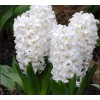
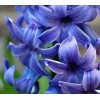
AWAD Hyacinth Absolute Pure Essential Oil - 30 ML + Free Carrier oil 10 ml
$107.79
- Free US shipping
-
Arrives
Free shipping. Contact for more details.
For wholesale orders, visit:
www.naturalperfumeblend.com
DANGER: Highly Concentrated - Do not use directly on skin without dilution.
For Therapeutic and External Use Only
Keep away from eyes or areas that may be infected.
Keep out of reach of children.
If swallowed, seek medical attention immediately.
Remember to always keep your oils away from direct sunlight and extreme heat.
Keep caps screwed tight and bottles in upright position to prevent leakage.
Always place some kind of protective pad (coaster) underneath the bottle to prevent damage on furniture, wood, flooring etcetera to prevent leakage or spillage.
Aromatherapy Hyacinth
Hyacinthus orientalis
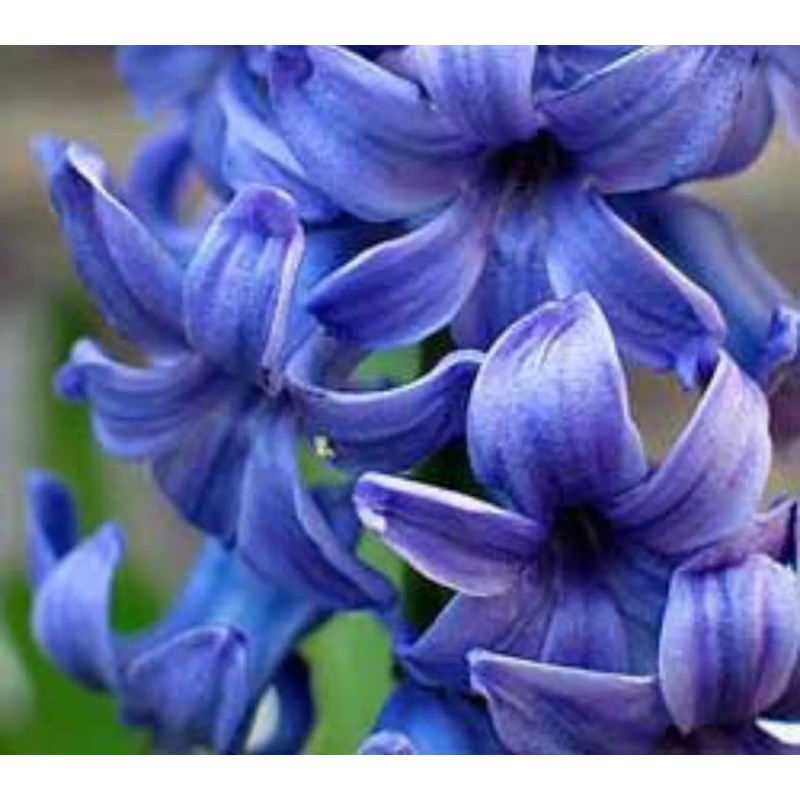
Hyacinth (scientific name Hyacinthus orientalis) is also known by other names such as garden hyacinth and Dutch hyacinth. This is an herbaceous flowering plant that grows perennially. Hyacinth has its origin in several places, including southwestern Asia, northwestern Syria, northern Israel, Lebanon and southern as well as central Turkey. This species is also indigenous to northern Iran, eastern Mediterranean region and Turkmenistan. Generally, most people around the globe use hyacinth in the form of an ornamental plant.
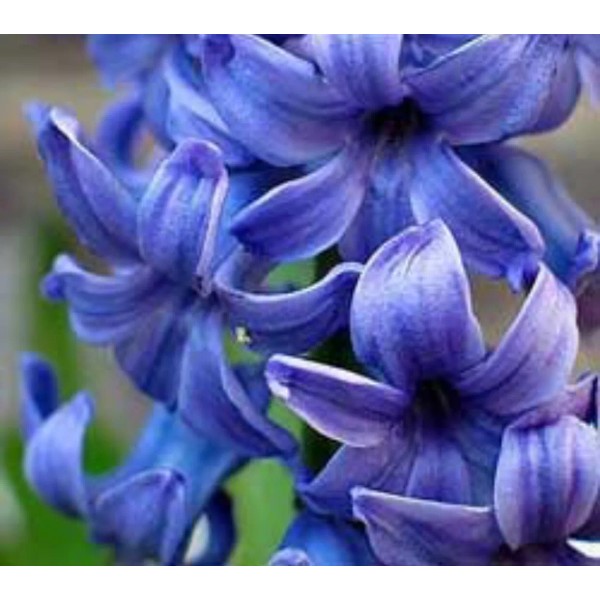
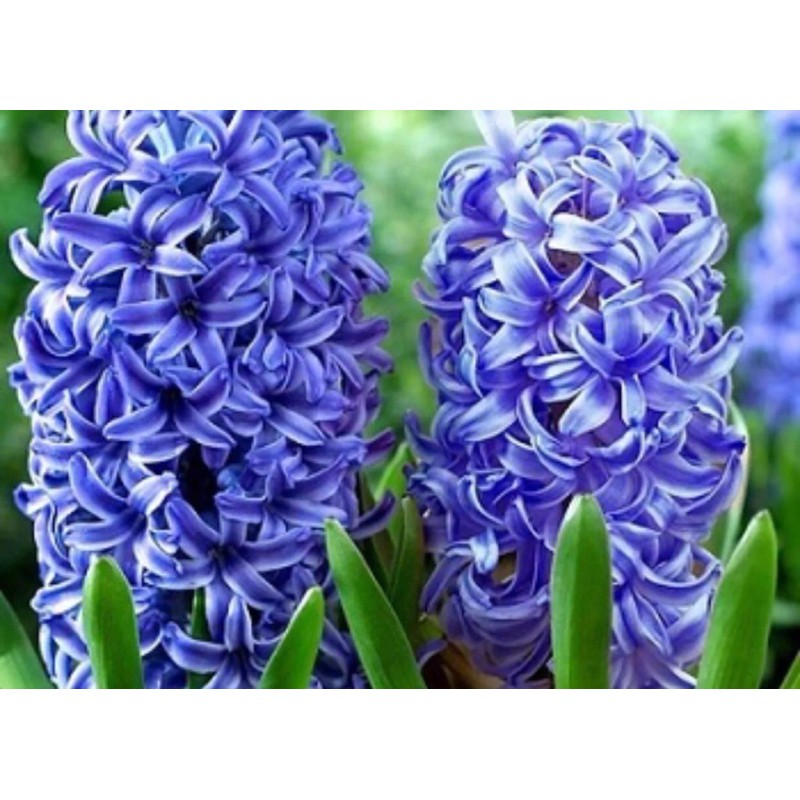
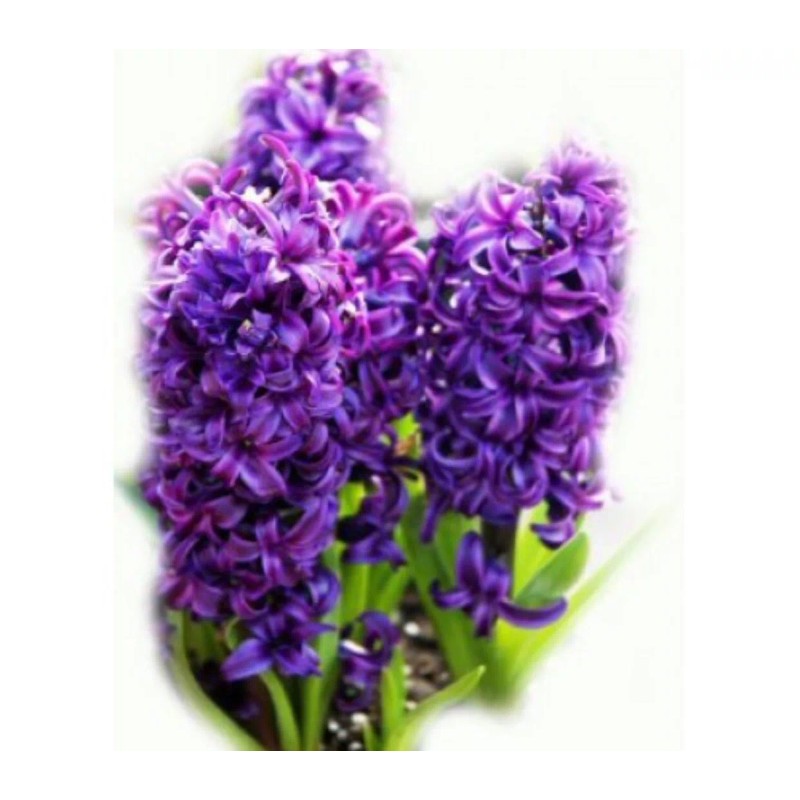
Hyacinthus orientalis is a bulbous plant having a bulb that measures 3 cm to 7 cm across. The leaves of this plant are strap-shaped, measuring anything between 15 cm and 35 cm in length and about 1 cm to 3 cm in width. The bulb has a soft, juicy texture and is generated inside a basal whorl. The flowering stem of hyacinth is basically a spike that grows up to a height of 20 cm to 35 cm and bears anything between two and 50 purple hued blooms. Each hyacinth flower has a tubular structure measuring 2 cm to 3.5 cm in length and comprises six perianths that are lobed.
For several centuries, people have cultivated hyacinth as an ornamental plant. Initially, this plant was grown throughout the Mediterranean region, but later it was introduced to France, the Netherlands and other places. In France, hyacinth is also grown for use in the perfumery industry, while it forms a major hub for cultivation. Hyacinthus orientalis grows best in full sunlight to semi-shaded areas. It has a preference for well-drained, but moist soil. This plant needs a dormancy period during the winter months and continues to persist even in regions having cold weather conditions. Hyacinth produces purple flowers during the beginning of spring.
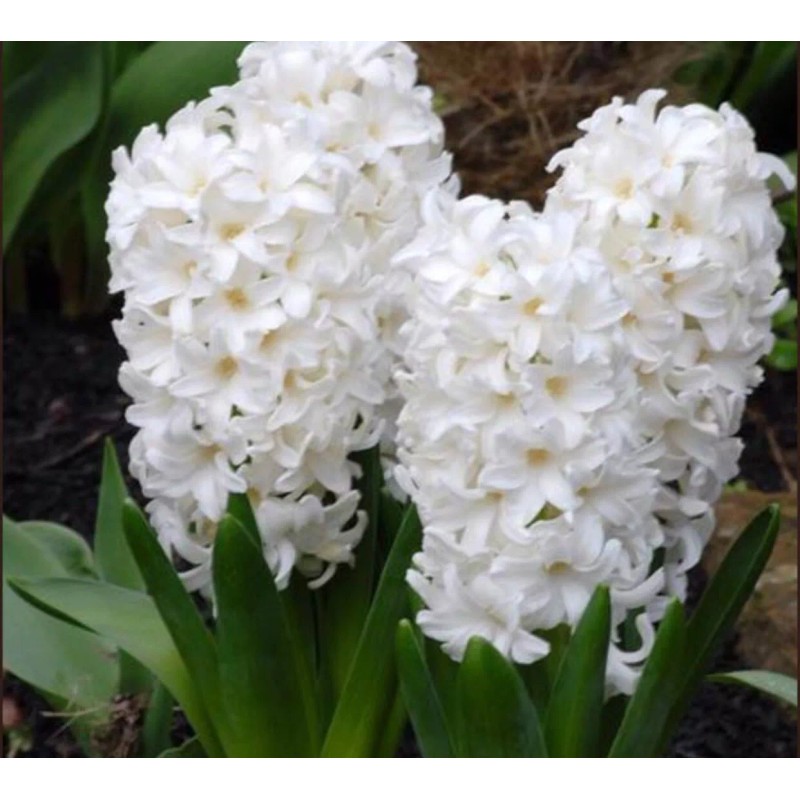
It is interesting to note that the different colors of flowers produced by different hyacinth plants have their individual aroma. At the beginning of their flowering season, hyacinths have a light floral fragrance, but their scent becomes very strong as well as powerful as the flowering stems begin to open up.
Hyacinth was brought into Europe during the 16th century.
The essential oil obtained from hyacinth flowers is very valuable as well as expensive. As much 6,000 kg hyacinth flowers are required to obtain just one litre of hyacinth essential oil, which is mainly used in premium perfumes. Hyacinth absolute oil is basically a solvent that is extracted from the flowers using ethanol.
Hyacinth essential oil is seldom used in aromatherapy, apart from creating customized fragrances. Nevertheless, this oil possesses the potential of being used as a remedy for addictions, depressions, burnout, exhaustion as well as conditions related to apathy and stress. This is because the use of this oil has psychological effects. At times, this essential oil may prove to be effective to alleviate loss and grieving and also help people to overcome anxieties and fear, especially at the beginning of any new chapter in their lives. It may also be helpful in soothing the emotional state when one is heart-broken following the end of any relationship.
It is worth mentioning here that by nature all absolutes are basically highly concentrated. You should never evaluate them in their concentrated state if you are not familiar with their undiluted aroma. It is, therefore, advised that you always use absolutes after diluting them by adding suitable carrier oils. If this is not done, the intricacy of their fragrance, especially the unusual as well as exotic notes, will be lost. Hence, it is recommended that you always dilute hyacinth absolute oil to 5 percent or even less by adding carrier oil and then apply it to your skin.
Hyacinth derived its name from a Greek word, which when translated to English literally denotes "flower of rain". In fact, it is also referred to as the "sorrow flower". Another name for hyacinth is "In memory of Hyacinthus", referring to a celestial hero from Greek mythology and symbolizes dying as well as bring back the beauty of Nature to life.
Absolute oil of hyacinth is a viscous liquid and its color varies from reddish to greenish-brown or dark brown. Its scent can be compared to that of powerful and floral cologne. Application of hyacinth essential oil to the skin helps to soothe and unwind the muscles of the neck and shoulder, in addition to the facial muscles. As this oil possesses numerous properties that are beneficial for the health of the skin, it is extensively used as an important ingredient in a variety of skin-care products.
Hyacinth essential oil is extensively used in a number of deodorants, exotic perfumes, room fresheners, aromatic candles, incense sticks as well as various other aromatic items owing to its extremely stimulating as well as floral fragrance nature.
Aromatherapists have a wide preference for hyacinth essential oil for treating a number of health conditions. They usually employ this intensely aromatic oil to alleviate mental fatigue, tension, stress, depression, ailments related to the nerves as well as many other related problems.
At the same time, applying this essential oil to your skin helps to do away with acne, blemishes, pimples as well as a number of other skin complaints. Therefore, hyacinth essential oil is a preferred ingredient in creams, gels and ointments.
Some of the popular uses of hyacinth essential oil are described briefly below.
If you wish to refresh the environ in your home, it is advisable that you add some drops of hyacinth essential oil to dryer sheet, laundry wash, potpourri, and vacuum filter. You can also put few drops of it inside the trash can, into the drain or on tissue papers and place them in closets and drawers. It will help to eliminate the stink and make the entire environment fragrant.
Diffusing is among the most excellent ways of imparting the curative aromas of an essential oil into the atmosphere. Diffusing oil can be very simple, for instance adding some drops of an essential oil on an erect light bulb, on the ring of the light bulb or in a candle that is lit. There are other methods of diffusing essential oil, for instance using the oil in a car diffuser or a plug-in room. A diffuser or pendant is among the most widespread means of using aromatherapy oil.
Just add a few drops of hyacinth essential oil to flowing bath water and blend it properly prior to getting into the bath tub. You can be sure that you will be enjoying an aromatic bath soak.
You can make your personal massage oil aroma just by adding some drops of an aromatic essential oil to one ounce of carrier oil like sweet almond oil base or grape seed oil. Be careful to protect your eyes and genital areas while massaging with this oil.
You can develop aromatic products by adding fragrant essential oils to any base product like body lotion, liquid soap base, shampoo, moisturizing body gel base and room spray base that are primarily unscented.
General properties
• antidepressant
• antiseptic
• hypnotic
• sedative
Blends well with
• bergamot
• cypress
• frankincense
• geranium
• grapefruit
• lemon
• neroli
• orange
• petitgrain
• rose
• sandalwood
• ylang ylang
General uses
• acne
• addictions
• anxiety
• apathy
• burnout
• depression
• fatigue
• fear
• muscle pains
• pimples
• stress
• tension
Precaution
Usually, hyacinth essential oil is safe for use by most people. However, it is essential for pregnant women to consult their physician or healthcare provider before they start using this essential oil.
Free Carrier oil of 10 ml for 100 ml, 60 ml and 30 ml purchases. Free Carrier Oil of 2 ml for 10 ml and 5 ml.
NOTE: FOR INTERNATIONAL ORDERS, FREE CARRIER OIL WILL NOT BE SHIPPED.
Returns will not be accepted if tamperproof bottle lid is opened. Request for small sample of the same oil with order. Test the sample oil before opening tamperproof bottle.
- Free 30-Day Returns
- Full Refund for Damaged or Incorrect Items
- Guaranteed Delivery or Money Back
- Secure Checkout & Fast Support

Free shipping. Contact for more details.
For wholesale orders, visit:
www.naturalperfumeblend.com
DANGER: Highly Concentrated - Do not use directly on skin without dilution.
For Therapeutic and External Use Only
Keep away from eyes or areas that may be infected.
Keep out of reach of children.
If swallowed, seek medical attention immediately.
Remember to always keep your oils away from direct sunlight and extreme heat.
Keep caps screwed tight and bottles in upright position to prevent leakage.
Always place some kind of protective pad (coaster) underneath the bottle to prevent damage on furniture, wood, flooring etcetera to prevent leakage or spillage.
Aromatherapy Hyacinth
Hyacinthus orientalis
Hyacinth (scientific name Hyacinthus orientalis) is also known by other names such as garden hyacinth and Dutch hyacinth. This is an herbaceous flowering plant that grows perennially. Hyacinth has its origin in several places, including southwestern Asia, northwestern Syria, northern Israel, Lebanon and southern as well as central Turkey. This species is also indigenous to northern Iran, eastern Mediterranean region and Turkmenistan. Generally, most people around the globe use hyacinth in the form of an ornamental plant.
Hyacinthus orientalis is a bulbous plant having a bulb that measures 3 cm to 7 cm across. The leaves of this plant are strap-shaped, measuring anything between 15 cm and 35 cm in length and about 1 cm to 3 cm in width. The bulb has a soft, juicy texture and is generated inside a basal whorl. The flowering stem of hyacinth is basically a spike that grows up to a height of 20 cm to 35 cm and bears anything between two and 50 purple hued blooms. Each hyacinth flower has a tubular structure measuring 2 cm to 3.5 cm in length and comprises six perianths that are lobed.
For several centuries, people have cultivated hyacinth as an ornamental plant. Initially, this plant was grown throughout the Mediterranean region, but later it was introduced to France, the Netherlands and other places. In France, hyacinth is also grown for use in the perfumery industry, while it forms a major hub for cultivation. Hyacinthus orientalis grows best in full sunlight to semi-shaded areas. It has a preference for well-drained, but moist soil. This plant needs a dormancy period during the winter months and continues to persist even in regions having cold weather conditions. Hyacinth produces purple flowers during the beginning of spring.
It is interesting to note that the different colors of flowers produced by different hyacinth plants have their individual aroma. At the beginning of their flowering season, hyacinths have a light floral fragrance, but their scent becomes very strong as well as powerful as the flowering stems begin to open up.
Hyacinth was brought into Europe during the 16th century.
The essential oil obtained from hyacinth flowers is very valuable as well as expensive. As much 6,000 kg hyacinth flowers are required to obtain just one litre of hyacinth essential oil, which is mainly used in premium perfumes. Hyacinth absolute oil is basically a solvent that is extracted from the flowers using ethanol.
Hyacinth essential oil is seldom used in aromatherapy, apart from creating customized fragrances. Nevertheless, this oil possesses the potential of being used as a remedy for addictions, depressions, burnout, exhaustion as well as conditions related to apathy and stress. This is because the use of this oil has psychological effects. At times, this essential oil may prove to be effective to alleviate loss and grieving and also help people to overcome anxieties and fear, especially at the beginning of any new chapter in their lives. It may also be helpful in soothing the emotional state when one is heart-broken following the end of any relationship.
It is worth mentioning here that by nature all absolutes are basically highly concentrated. You should never evaluate them in their concentrated state if you are not familiar with their undiluted aroma. It is, therefore, advised that you always use absolutes after diluting them by adding suitable carrier oils. If this is not done, the intricacy of their fragrance, especially the unusual as well as exotic notes, will be lost. Hence, it is recommended that you always dilute hyacinth absolute oil to 5 percent or even less by adding carrier oil and then apply it to your skin.
Hyacinth derived its name from a Greek word, which when translated to English literally denotes "flower of rain". In fact, it is also referred to as the "sorrow flower". Another name for hyacinth is "In memory of Hyacinthus", referring to a celestial hero from Greek mythology and symbolizes dying as well as bring back the beauty of Nature to life.
Absolute oil of hyacinth is a viscous liquid and its color varies from reddish to greenish-brown or dark brown. Its scent can be compared to that of powerful and floral cologne. Application of hyacinth essential oil to the skin helps to soothe and unwind the muscles of the neck and shoulder, in addition to the facial muscles. As this oil possesses numerous properties that are beneficial for the health of the skin, it is extensively used as an important ingredient in a variety of skin-care products.
Hyacinth essential oil is extensively used in a number of deodorants, exotic perfumes, room fresheners, aromatic candles, incense sticks as well as various other aromatic items owing to its extremely stimulating as well as floral fragrance nature.
Aromatherapists have a wide preference for hyacinth essential oil for treating a number of health conditions. They usually employ this intensely aromatic oil to alleviate mental fatigue, tension, stress, depression, ailments related to the nerves as well as many other related problems.
At the same time, applying this essential oil to your skin helps to do away with acne, blemishes, pimples as well as a number of other skin complaints. Therefore, hyacinth essential oil is a preferred ingredient in creams, gels and ointments.
Some of the popular uses of hyacinth essential oil are described briefly below.
If you wish to refresh the environ in your home, it is advisable that you add some drops of hyacinth essential oil to dryer sheet, laundry wash, potpourri, and vacuum filter. You can also put few drops of it inside the trash can, into the drain or on tissue papers and place them in closets and drawers. It will help to eliminate the stink and make the entire environment fragrant.
Diffusing is among the most excellent ways of imparting the curative aromas of an essential oil into the atmosphere. Diffusing oil can be very simple, for instance adding some drops of an essential oil on an erect light bulb, on the ring of the light bulb or in a candle that is lit. There are other methods of diffusing essential oil, for instance using the oil in a car diffuser or a plug-in room. A diffuser or pendant is among the most widespread means of using aromatherapy oil.
Just add a few drops of hyacinth essential oil to flowing bath water and blend it properly prior to getting into the bath tub. You can be sure that you will be enjoying an aromatic bath soak.
You can make your personal massage oil aroma just by adding some drops of an aromatic essential oil to one ounce of carrier oil like sweet almond oil base or grape seed oil. Be careful to protect your eyes and genital areas while massaging with this oil.
You can develop aromatic products by adding fragrant essential oils to any base product like body lotion, liquid soap base, shampoo, moisturizing body gel base and room spray base that are primarily unscented.
General properties
• antidepressant
• antiseptic
• hypnotic
• sedative
Blends well with
• bergamot
• cypress
• frankincense
• geranium
• grapefruit
• lemon
• neroli
• orange
• petitgrain
• rose
• sandalwood
• ylang ylang
General uses
• acne
• addictions
• anxiety
• apathy
• burnout
• depression
• fatigue
• fear
• muscle pains
• pimples
• stress
• tension
Precaution
Usually, hyacinth essential oil is safe for use by most people. However, it is essential for pregnant women to consult their physician or healthcare provider before they start using this essential oil.
Free Carrier oil of 10 ml for 100 ml, 60 ml and 30 ml purchases. Free Carrier Oil of 2 ml for 10 ml and 5 ml.
NOTE: FOR INTERNATIONAL ORDERS, FREE CARRIER OIL WILL NOT BE SHIPPED.
Returns will not be accepted if tamperproof bottle lid is opened. Request for small sample of the same oil with order. Test the sample oil before opening tamperproof bottle.
Free shipping. Contact for more details.
For wholesale orders, visit:
www.naturalperfumeblend.com
DANGER: Highly Concentrated - Do not use directly on skin without dilution.
For Therapeutic and External Use Only
Keep away from eyes or areas that may be infected.
Keep out of reach of children.
If swallowed, seek medical attention immediately.
Remember to always keep your oils away from direct sunlight and extreme heat.
Keep caps screwed tight and bottles in upright position to prevent leakage.
Always place some kind of protective pad (coaster) underneath the bottle to prevent damage on furniture, wood, flooring etcetera to prevent leakage or spillage.
Aromatherapy Hyacinth
Hyacinthus orientalis
Hyacinth (scientific name Hyacinthus orientalis) is also known by other names such as garden hyacinth and Dutch hyacinth. This is an herbaceous flowering plant that grows perennially. Hyacinth has its origin in several places, including southwestern Asia, northwestern Syria, northern Israel, Lebanon and southern as well as central Turkey. This species is also indigenous to northern Iran, eastern Mediterranean region and Turkmenistan. Generally, most people around the globe use hyacinth in the form of an ornamental plant.
Hyacinthus orientalis is a bulbous plant having a bulb that measures 3 cm to 7 cm across. The leaves of this plant are strap-shaped, measuring anything between 15 cm and 35 cm in length and about 1 cm to 3 cm in width. The bulb has a soft, juicy texture and is generated inside a basal whorl. The flowering stem of hyacinth is basically a spike that grows up to a height of 20 cm to 35 cm and bears anything between two and 50 purple hued blooms. Each hyacinth flower has a tubular structure measuring 2 cm to 3.5 cm in length and comprises six perianths that are lobed.
For several centuries, people have cultivated hyacinth as an ornamental plant. Initially, this plant was grown throughout the Mediterranean region, but later it was introduced to France, the Netherlands and other places. In France, hyacinth is also grown for use in the perfumery industry, while it forms a major hub for cultivation. Hyacinthus orientalis grows best in full sunlight to semi-shaded areas. It has a preference for well-drained, but moist soil. This plant needs a dormancy period during the winter months and continues to persist even in regions having cold weather conditions. Hyacinth produces purple flowers during the beginning of spring.
It is interesting to note that the different colors of flowers produced by different hyacinth plants have their individual aroma. At the beginning of their flowering season, hyacinths have a light floral fragrance, but their scent becomes very strong as well as powerful as the flowering stems begin to open up.
Hyacinth was brought into Europe during the 16th century.
The essential oil obtained from hyacinth flowers is very valuable as well as expensive. As much 6,000 kg hyacinth flowers are required to obtain just one litre of hyacinth essential oil, which is mainly used in premium perfumes. Hyacinth absolute oil is basically a solvent that is extracted from the flowers using ethanol.
Hyacinth essential oil is seldom used in aromatherapy, apart from creating customized fragrances. Nevertheless, this oil possesses the potential of being used as a remedy for addictions, depressions, burnout, exhaustion as well as conditions related to apathy and stress. This is because the use of this oil has psychological effects. At times, this essential oil may prove to be effective to alleviate loss and grieving and also help people to overcome anxieties and fear, especially at the beginning of any new chapter in their lives. It may also be helpful in soothing the emotional state when one is heart-broken following the end of any relationship.
It is worth mentioning here that by nature all absolutes are basically highly concentrated. You should never evaluate them in their concentrated state if you are not familiar with their undiluted aroma. It is, therefore, advised that you always use absolutes after diluting them by adding suitable carrier oils. If this is not done, the intricacy of their fragrance, especially the unusual as well as exotic notes, will be lost. Hence, it is recommended that you always dilute hyacinth absolute oil to 5 percent or even less by adding carrier oil and then apply it to your skin.
Hyacinth derived its name from a Greek word, which when translated to English literally denotes "flower of rain". In fact, it is also referred to as the "sorrow flower". Another name for hyacinth is "In memory of Hyacinthus", referring to a celestial hero from Greek mythology and symbolizes dying as well as bring back the beauty of Nature to life.
Absolute oil of hyacinth is a viscous liquid and its color varies from reddish to greenish-brown or dark brown. Its scent can be compared to that of powerful and floral cologne. Application of hyacinth essential oil to the skin helps to soothe and unwind the muscles of the neck and shoulder, in addition to the facial muscles. As this oil possesses numerous properties that are beneficial for the health of the skin, it is extensively used as an important ingredient in a variety of skin-care products.
Hyacinth essential oil is extensively used in a number of deodorants, exotic perfumes, room fresheners, aromatic candles, incense sticks as well as various other aromatic items owing to its extremely stimulating as well as floral fragrance nature.
Aromatherapists have a wide preference for hyacinth essential oil for treating a number of health conditions. They usually employ this intensely aromatic oil to alleviate mental fatigue, tension, stress, depression, ailments related to the nerves as well as many other related problems.
At the same time, applying this essential oil to your skin helps to do away with acne, blemishes, pimples as well as a number of other skin complaints. Therefore, hyacinth essential oil is a preferred ingredient in creams, gels and ointments.
Some of the popular uses of hyacinth essential oil are described briefly below.
If you wish to refresh the environ in your home, it is advisable that you add some drops of hyacinth essential oil to dryer sheet, laundry wash, potpourri, and vacuum filter. You can also put few drops of it inside the trash can, into the drain or on tissue papers and place them in closets and drawers. It will help to eliminate the stink and make the entire environment fragrant.
Diffusing is among the most excellent ways of imparting the curative aromas of an essential oil into the atmosphere. Diffusing oil can be very simple, for instance adding some drops of an essential oil on an erect light bulb, on the ring of the light bulb or in a candle that is lit. There are other methods of diffusing essential oil, for instance using the oil in a car diffuser or a plug-in room. A diffuser or pendant is among the most widespread means of using aromatherapy oil.
Just add a few drops of hyacinth essential oil to flowing bath water and blend it properly prior to getting into the bath tub. You can be sure that you will be enjoying an aromatic bath soak.
You can make your personal massage oil aroma just by adding some drops of an aromatic essential oil to one ounce of carrier oil like sweet almond oil base or grape seed oil. Be careful to protect your eyes and genital areas while massaging with this oil.
You can develop aromatic products by adding fragrant essential oils to any base product like body lotion, liquid soap base, shampoo, moisturizing body gel base and room spray base that are primarily unscented.
General properties
• antidepressant
• antiseptic
• hypnotic
• sedative
Blends well with
• bergamot
• cypress
• frankincense
• geranium
• grapefruit
• lemon
• neroli
• orange
• petitgrain
• rose
• sandalwood
• ylang ylang
General uses
• acne
• addictions
• anxiety
• apathy
• burnout
• depression
• fatigue
• fear
• muscle pains
• pimples
• stress
• tension
Precaution
Usually, hyacinth essential oil is safe for use by most people. However, it is essential for pregnant women to consult their physician or healthcare provider before they start using this essential oil.
Free Carrier oil of 10 ml for 100 ml, 60 ml and 30 ml purchases. Free Carrier Oil of 2 ml for 10 ml and 5 ml.
NOTE: FOR INTERNATIONAL ORDERS, FREE CARRIER OIL WILL NOT BE SHIPPED.
Returns will not be accepted if tamperproof bottle lid is opened. Request for small sample of the same oil with order. Test the sample oil before opening tamperproof bottle.
- Volume: 30 ml
- Model: Hyacinth Absolute Pure Essential
- Brand: AWAD
- Type: Essential Oil
- Container Type: Glass Bottle
- Scent: Hyacinth
Processing Time
- We process and ship orders Monday through Friday, excluding holidays.
- Most orders are processed within 1–3 business days, depending on product availability.
- Processing time does not include delivery time, which varies based on your location and the product’s shipping origin.
Shipping Coverage
We currently ship to addresses within the United States only.
Products may ship from:
- Our U.S. warehouses, or
- Our international fulfillment centers (including Korea, Japan, China, Australia, Mexico, Canada, the United Kingdom, and the EU).
Each product page clearly displays the “Ships From” location before checkout.
Shipping Methods & Estimated Delivery
| Shipping Method | Estimated Delivery | Cost |
|---|---|---|
| Free Shipping (US) | 5–10 business days | Free, available on eligible items |
| Standard Shipping (US to US by Item) | 5–10 business days | $5.95 for the first item, $3.00 each additional |
| Standard Shipping (From US Warehouse by Weight) | 3–7 business days | Starts at $5.95, increasing by $2 for every additional 4 oz (0.25 lb) up to 1 lb, then by $4 for each additional pound beyond 1 lb. |
| Extended Delivery (Ships from Overseas Warehouse) | 10–20 business days | $14.99 for the first item, $2.00 each additional |
Shipping costs vary by product weight, quantity and origin. Exact rates and delivery estimates are displayed on each product page and confirmed during checkout.
Free Shipping
We offer free standard shipping on select products or during promotional periods. Availability of free shipping will be displayed on the product page and at checkout.
Carriers
We primarily use USPS and UPS for U.S. deliveries. Items shipped from international warehouses may be handled by partner carriers depending on the country of origin.
Import Duties & Taxes
All import duties and taxes for goods imported into the United States are included in the product price. There are no hidden fees or additional charges at checkout.
Tracking & Notifications
Every order is fully trackable. You will receive a tracking number via email once your order ships. If your order ships in multiple packages, each package will have its own tracking number. If you don’t receive a shipping confirmation immediately, your order is still being processed and will arrive within the estimated timeframe shown at checkout.
You can track your shipment anytime using the Track Your Order page on our website.
Order Changes & Cancellations
If you need to modify or cancel an order, please contact our customer support team as soon as possible. Orders can only be canceled before they ship. Once shipped, cancellations are not possible, but you may request a return after the item is delivered.
Contact: support@ibspot.com
Item Not Received
If your tracking number shows “Delivered” but you haven’t received your package:
- Check with your local USPS or UPS office.
- Confirm that the shipping address provided was correct.
- If the issue remains unresolved, contact support@ibspot.com for assistance.
Damaged or Lost Parcels
If your package arrives damaged or fails to arrive, please contact us immediately. For deliveries to P.O. boxes, ibspot is not responsible for damage caused by weather, temperature, or theft.
Customer Support
For any questions about shipping, tracking, or delivery, our customer support team is here to help.
Email: support@ibspot.com
We’re always happy to help.
Please read our policy carefully before making a purchase.
We aim to ensure every customer has a smooth and transparent experience with ibspot.com.
Order Cancellation Policy
Customers may request to cancel an order before it has been shipped.
Once the package has been shipped, cancellations are no longer possible; however, you may still request a return after receiving your order.
How to Request a Cancellation
You can contact us through:
- Email: support@ibspot.com
- Contact Form: Submit a request through our Contact Us page
Please submit your cancellation request as soon as possible after placing the order to allow us to process it before shipment.
Return Policy
We accept returns for most items within 30 days of delivery for a full refund.
To be eligible for a return:
- The item must be unused, in the same condition as received, and in its original packaging.
- A tracking number must be provided to confirm the return shipment.
Non-Returnable Items
Certain products cannot be returned, including:
- Perishable goods (for example, food, flowers, newspapers, magazines)
- Intimate or sanitary goods
- Hazardous materials or flammable liquids/gases
- Gift cards
- Downloadable software
- Some health and personal care items
Partial Refunds (If Applicable)
Partial refunds may be granted in specific situations, such as:
- Books with obvious signs of use
- Opened CDs, DVDs, software, or vinyl records
- Items not in their original condition, damaged, or missing parts not due to our error
- Items returned more than 30 days after delivery
How to Return an Item
To initiate a return, please contact us at support@ibspot.com with your order number and details about the product you wish to return.
Our team will provide you with return instructions and a prepaid return label.
Shipping Cost for Returns
Please contact us before returning any item.
We may provide a return shipping label for your return. If the return is due to our error, such as receiving the wrong item, a damaged item, or a defective product, we will cover the return shipping cost.
If the return is due to the customer’s reason, such as ordering the wrong item, changing your mind, or no longer needing the item, the original shipping fee and the return label fee will be deducted from your refund amount.
If a return is sent back without prior contact or without using our provided label, we cannot be held responsible for any return shipping costs or delivery issues.
For items valued over $75, we recommend using a trackable shipping service or purchasing shipping insurance.
We cannot guarantee that we will receive your returned item if shipped independently.
Refund Processing
Once your return is received and inspected:
- In-store returns are refunded to the original form of payment or issued as a gift card.
- Mail-in returns using our prepaid label are refunded to the original payment method within 3–5 business days after we receive your return.
Please allow:
- 5–7 business days for the return to reach our Returns Center.
- An additional 3–10 business days for your bank to post the refund to your account.
Damages, Issues & Claims
Please inspect your order immediately upon receipt.
If you receive a defective, damaged, or incorrect item, contact us right away at support@ibspot.com.
We’ll evaluate the issue promptly and make it right.
Product Claims
Before purchasing, please review product details carefully.
If there is a problem with your order upon arrival, visit our Support Center or contact us directly to arrange return shipping or replacement.
Exchanges
We do not process direct exchanges.
The fastest way to get what you need is to return the original item and place a new order once your return is accepted.
Return Address
IBSPOT Return Center
15 Sawmill Ln
Dover Plains, NY 12522
United States
Customer Support
Our support team is available 24/7 to assist with cancellations, returns, or general inquiries.
Email: support@ibspot.com
Contact Form: Contact Us page
Oops!
Sorry, it looks like some products are not available in selected quantity.