

20,000+ Beautiful Organic Mixed Solids P somniferum Poppy Seeds for Planting
20,000+ Beautiful Organic Mixed Solids P somniferum Poppy Seeds for Planting








20,000+ Beautiful Organic Mixed Solids P somniferum Poppy Seeds for Planting
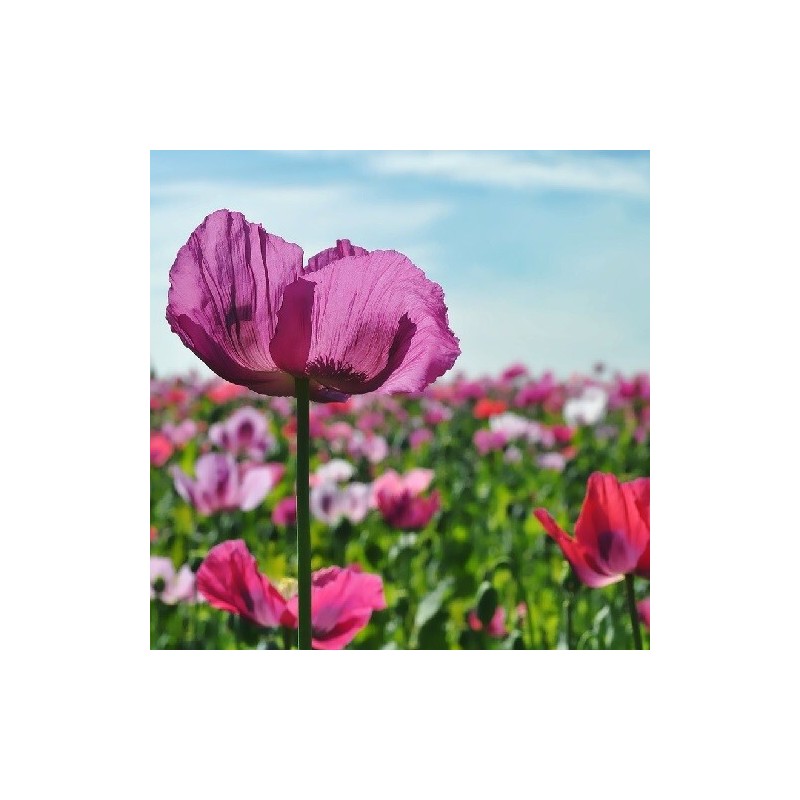
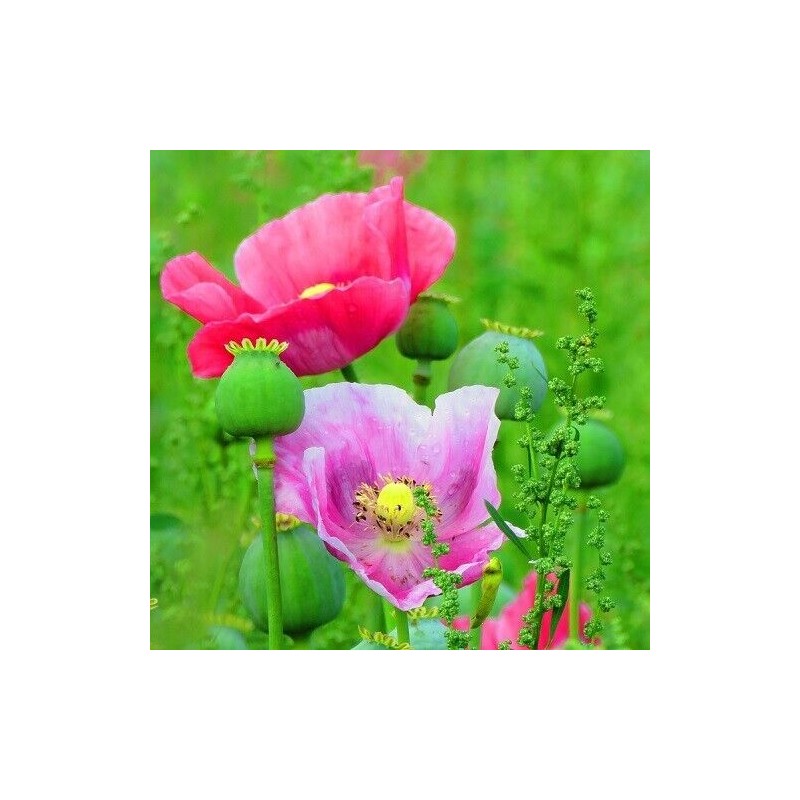
Beautiful Mixed Solids Organic Poppy Flower Seeds (Papaever somniferum) 20,000+ Seeds. Produce Gorgeous Non-GMO Purple, White, Pink and Red Poppies in a Myriad of Color Hues.
USA Seller, Ships Fast
Fresh seeds ready to plant beautiful solid colors poppy flowers
Poppies are some of the most beautiful flowers, and they come in a variety of shapes and colors from black to red to double flowered to peony. They are almost always grown from seed. But growing nice-sized healthy poppy plants is highly dependent upon growing conditions. Temperature, planting depth, spacing and soil can all affect your poppy plants negatively. In some cases, stressful conditions can signal to a poppy that it is at risk of dying. In response, your poppies will flower early in an effort to quickly spread some seeds. This results in little runts that are hardly impressive. But by adhering to a few simple guidelines, you can end up with that lovely display of poppy blooms that will brighten up your landscape this summer.
Starting Inside vs Outside
Poppies can be grown indoors under lights, but the majority of growers grow them outside. In general, the poppy is considered an outdoor plant. So that is what this guide will focus on. It is common practice with many plant varieties to start seeds indoors as a method of getting a head start on the growing season. The idea behind this is that you can use the warmth of your house to begin the growing process when outdoor temperatures are otherwise unsuitable. However, poppies actually tolerate more cold than other plants. In fact, poppies prefer the cool weather. In some cases, they may evenrequire cool temperatures to germinate. While most of the time poppies will germinate throughout the summer, we have also encountered many cases where growers could not get poppy seeds to germinate until temperatures were reduced. So if you are starting your poppy seeds later in the season, you may actually want to try the reverse practice of getting a head start. In other words, you may actually try rewinding the clock back to the cooler months by starting your poppy seeds in the fridge. This will give your poppies a chance to experience that cool period they like even after the time has passed for it to happen naturally.
The drawback of starting poppy seeds indoors is that they can easily etiolate (stretch) if not given adequate light. Etiolation is a plant’s response to low light. It stretches in height hoping to reach up out of a crevice or over competing plants in search of more light. Many newbie growers will be excited that their plants are rapidly gaining height when this happens, but the quick growth comes at a price. In order to output more height, the plant has to sacrifice thickness. This ultimately results in an unstable foundation for the plant to stand on. Poppies grow as rosettes of lettuce-like foliage. But if there is etiolation early on, that big mass of foliage will only be connected to the ground by a thin tap root, which can easily snap and cut off the supply of water and nutrients. Etiolation is especially common indoors, particularly in a dark fridge. So, other than for the sake of providing cooler temperatures later in the season, it is recommended that growers sow their poppies outdoors.
When to Sow Outside
Outdoor sowing time for poppies depends on your location. In areas where the winters are relatively mild (zones 7 or warmer), it is best to sow your poppy seeds in the fall or winter. This will allow the seeds to sprout as soon as the temperatures turn warm enough for poppies to do their thing. The ideal poppy germination temperature is about 55 degrees Fahrenheit. Poppy seeds and even poppy seedlings can handle frost, but most information recommends sowing poppy seeds in the early spring for growers in northern locations. Fall planting is recommended when possible so that you have the seeds in place, but growers in warmer locations can still sow in the spring with plenty of time before conditions turn ideal. The idea is you want to try to get in as soon as the ground is workable so that you have the longest season possible. The exposure to cold may also aid germination. But if you missed fall sowing, don’t let it discourage you from aiming for the spring no matter where you live.
Sunlight
Mature poppies enjoy full sun, meaning at least six hours of direct sun per day. You can still get flowers in partial sun, but they will be smaller. But early on, a bit of shade may actually be beneficial. According to one traditional method, poppies were planted between rows of corn so that they could be shaded by the stalks. Starting poppy plants in containers allows you to keep the seedlings in a shaded area early on while providing full sun later in the growth cycle. But if you’re direct sowing, you can always shade your poppy seedlings with other crops, potted plants or even with something like a lawn chair. Anything that will cast a shadow will help mimic the shade that young plants might experience in the wild. When you eventually increase the sun exposure for your mature poppy plants, it is best to do it gradually. Any sudden increases in light exposure always have the chance of shocking a plant. And if you chose to start your poppy seedlings in containers, be sure to get them used to the full sun environment they will be in before you attempt to transplant. The combination of transplanting and light increase is a recipe for shock. If it does not kill your poppies, it could cause serious setbacks.
Direct Sowing vs. Containers
Most information suggests that poppies do not transplant well. This is true for mature plants, especially because the stems and roots can be somewhat brittle. But poppy seedlings transplant perfectly fine if you do so properly. Considering this, you have the choice between direct sowing or sowing in containers and then transplanting. If you’ve started your poppies indoors, then you’ll obviously be transplanting. But you can also choose to start poppy seeds in containers outside and transplant those seedlings to the ground.
You might wonder what the point of sowing outdoors in containers instead of direct sowing is. There are several advantages actually. Transplanting works better for organization. You can arrange your poppy plants specifically where you want them whereas direct sowing can give you a more erratic pattern. The only way around it with direct sowing is if you really sow a lot of poppy seeds and then thin out to exactly where you want each poppy positioned. But ultimately you will waste more seed doing it that way. If you have plenty of seed to work with or you do not care about arrangement, then direct sowing is the way to go. Otherwise, the increased ability to organize is useful. This is especially apparent if you’re dealing with multiple poppy varieties or other flowers that you want to arrange in a certain pattern.
Transplanting also offers you a chance to escape insects and weather. If you’re starting your poppies in a container you have the option of keeping the seedlings out of harm’s way, whether the threat is too much sun, a rain storm or a windy day. Ants, other insects and birds are known to carry away poppy seeds too. Just like humans, animals enjoy eating poppy seeds. While containers can still be occupied by ants, the ground is more likely to house a colony that will walk away with your crop before it ever sprouts. It is much easier to keep a container out of harm’s way.
Just like insects, wind or rain can ruin your direct sowing job. Even though the seeds are very tiny, wind usually won’t be too much of a problem unless there are unusual gusts. But rain is very likely to wash poppy seeds away. Poppy seeds float easily. And even your normal watering can cause seeds to pool together and sprout in the depressions of your ground space. So even if the seeds don’t get completely washed away, you end up having to thin out more than you intended. Containers give you the option to make adjustments that direct sowing does not. For one, you can move the containers into a protected area when you’re anticipating bad weather. Also, transplanting allows you to correct any type of pooling that might occur.
| Brand: | Unbranded |
|---|---|
| Isin: | IYPGC5FCQOEK |
Out of Stock
In Stock
Backordered
Out of Stock



IBspot Buyer Protection
Shop confidently on IBspot, receive your item as described or your money back for eligible orders. Learn Program Terms
GUARANTEED SAFE CHECKOUT
-

MONEY BACK GUARANTEE
30 days money back guarantee, no additional fee charged.
-

EXCELLENT SUPPORT
We provide 24/7 online customer support via email.
-

Fast Shipping
One week domestic shipping. Global delivery to the US in 2 weeks.
Beautiful Mixed Solids Organic Poppy Flower Seeds (Papaever somniferum) 20,000+ Seeds. Produce Gorgeous Non-GMO Purple, White, Pink and Red Poppies in a Myriad of Color Hues.
USA Seller, Ships Fast
Fresh seeds ready to plant beautiful solid colors poppy flowers
Poppies are some of the most beautiful flowers, and they come in a variety of shapes and colors from black to red to double flowered to peony. They are almost always grown from seed. But growing nice-sized healthy poppy plants is highly dependent upon growing conditions. Temperature, planting depth, spacing and soil can all affect your poppy plants negatively. In some cases, stressful conditions can signal to a poppy that it is at risk of dying. In response, your poppies will flower early in an effort to quickly spread some seeds. This results in little runts that are hardly impressive. But by adhering to a few simple guidelines, you can end up with that lovely display of poppy blooms that will brighten up your landscape this summer.
Starting Inside vs Outside
Poppies can be grown indoors under lights, but the majority of growers grow them outside. In general, the poppy is considered an outdoor plant. So that is what this guide will focus on. It is common practice with many plant varieties to start seeds indoors as a method of getting a head start on the growing season. The idea behind this is that you can use the warmth of your house to begin the growing process when outdoor temperatures are otherwise unsuitable. However, poppies actually tolerate more cold than other plants. In fact, poppies prefer the cool weather. In some cases, they may evenrequire cool temperatures to germinate. While most of the time poppies will germinate throughout the summer, we have also encountered many cases where growers could not get poppy seeds to germinate until temperatures were reduced. So if you are starting your poppy seeds later in the season, you may actually want to try the reverse practice of getting a head start. In other words, you may actually try rewinding the clock back to the cooler months by starting your poppy seeds in the fridge. This will give your poppies a chance to experience that cool period they like even after the time has passed for it to happen naturally.
The drawback of starting poppy seeds indoors is that they can easily etiolate (stretch) if not given adequate light. Etiolation is a plant’s response to low light. It stretches in height hoping to reach up out of a crevice or over competing plants in search of more light. Many newbie growers will be excited that their plants are rapidly gaining height when this happens, but the quick growth comes at a price. In order to output more height, the plant has to sacrifice thickness. This ultimately results in an unstable foundation for the plant to stand on. Poppies grow as rosettes of lettuce-like foliage. But if there is etiolation early on, that big mass of foliage will only be connected to the ground by a thin tap root, which can easily snap and cut off the supply of water and nutrients. Etiolation is especially common indoors, particularly in a dark fridge. So, other than for the sake of providing cooler temperatures later in the season, it is recommended that growers sow their poppies outdoors.
When to Sow Outside
Outdoor sowing time for poppies depends on your location. In areas where the winters are relatively mild (zones 7 or warmer), it is best to sow your poppy seeds in the fall or winter. This will allow the seeds to sprout as soon as the temperatures turn warm enough for poppies to do their thing. The ideal poppy germination temperature is about 55 degrees Fahrenheit. Poppy seeds and even poppy seedlings can handle frost, but most information recommends sowing poppy seeds in the early spring for growers in northern locations. Fall planting is recommended when possible so that you have the seeds in place, but growers in warmer locations can still sow in the spring with plenty of time before conditions turn ideal. The idea is you want to try to get in as soon as the ground is workable so that you have the longest season possible. The exposure to cold may also aid germination. But if you missed fall sowing, don’t let it discourage you from aiming for the spring no matter where you live.
Sunlight
Mature poppies enjoy full sun, meaning at least six hours of direct sun per day. You can still get flowers in partial sun, but they will be smaller. But early on, a bit of shade may actually be beneficial. According to one traditional method, poppies were planted between rows of corn so that they could be shaded by the stalks. Starting poppy plants in containers allows you to keep the seedlings in a shaded area early on while providing full sun later in the growth cycle. But if you’re direct sowing, you can always shade your poppy seedlings with other crops, potted plants or even with something like a lawn chair. Anything that will cast a shadow will help mimic the shade that young plants might experience in the wild. When you eventually increase the sun exposure for your mature poppy plants, it is best to do it gradually. Any sudden increases in light exposure always have the chance of shocking a plant. And if you chose to start your poppy seedlings in containers, be sure to get them used to the full sun environment they will be in before you attempt to transplant. The combination of transplanting and light increase is a recipe for shock. If it does not kill your poppies, it could cause serious setbacks.
Direct Sowing vs. Containers
Most information suggests that poppies do not transplant well. This is true for mature plants, especially because the stems and roots can be somewhat brittle. But poppy seedlings transplant perfectly fine if you do so properly. Considering this, you have the choice between direct sowing or sowing in containers and then transplanting. If you’ve started your poppies indoors, then you’ll obviously be transplanting. But you can also choose to start poppy seeds in containers outside and transplant those seedlings to the ground.
You might wonder what the point of sowing outdoors in containers instead of direct sowing is. There are several advantages actually. Transplanting works better for organization. You can arrange your poppy plants specifically where you want them whereas direct sowing can give you a more erratic pattern. The only way around it with direct sowing is if you really sow a lot of poppy seeds and then thin out to exactly where you want each poppy positioned. But ultimately you will waste more seed doing it that way. If you have plenty of seed to work with or you do not care about arrangement, then direct sowing is the way to go. Otherwise, the increased ability to organize is useful. This is especially apparent if you’re dealing with multiple poppy varieties or other flowers that you want to arrange in a certain pattern.
Transplanting also offers you a chance to escape insects and weather. If you’re starting your poppies in a container you have the option of keeping the seedlings out of harm’s way, whether the threat is too much sun, a rain storm or a windy day. Ants, other insects and birds are known to carry away poppy seeds too. Just like humans, animals enjoy eating poppy seeds. While containers can still be occupied by ants, the ground is more likely to house a colony that will walk away with your crop before it ever sprouts. It is much easier to keep a container out of harm’s way.
Just like insects, wind or rain can ruin your direct sowing job. Even though the seeds are very tiny, wind usually won’t be too much of a problem unless there are unusual gusts. But rain is very likely to wash poppy seeds away. Poppy seeds float easily. And even your normal watering can cause seeds to pool together and sprout in the depressions of your ground space. So even if the seeds don’t get completely washed away, you end up having to thin out more than you intended. Containers give you the option to make adjustments that direct sowing does not. For one, you can move the containers into a protected area when you’re anticipating bad weather. Also, transplanting allows you to correct any type of pooling that might occur.
Item Specifics
Processing Time
- We process and ship orders Monday through Friday, excluding holidays.
- Most orders are processed within 1–3 business days, depending on product availability.
- Processing time does not include delivery time, which varies based on your location and the product’s shipping origin.
Shipping Coverage
We currently ship to addresses within the United States only.
Products may ship from:
- Our U.S. warehouses, or
- Our international fulfillment centers (including Korea, Japan, China, Australia, Mexico, Canada, the United Kingdom, and the EU).
Each product page clearly displays the “Ships From” location before checkout.
Shipping Methods & Estimated Delivery
| Shipping Method | Estimated Delivery | Cost |
|---|---|---|
| Free Shipping (US) | 5–10 business days | Free, available on eligible items |
| Standard Shipping (US to US by Item) | 5–10 business days | $6.50 for the first item, $2.00 each additional |
| Standard Shipping (From US Warehouse by Weight) | 3–7 business days | Starts at $6.50, increasing by $2 for every additional 4 oz (0.25 lb) up to 1 lb, then by $4 for each additional pound beyond 1 lb. |
| Extended Delivery (Ships from Overseas Warehouse) | 10–20 business days | $14.50 for the first item, $2.00 each additional |
Shipping costs vary by product weight, quantity and origin. Exact rates and delivery estimates are displayed on each product page and confirmed during checkout.
Free Shipping
We offer free standard shipping on select products or during promotional periods. Availability of free shipping will be displayed on the product page and at checkout.
Carriers
We primarily use USPS and UPS for U.S. deliveries. Items shipped from international warehouses may be handled by partner carriers depending on the country of origin.
Import Duties & Taxes
All import duties and taxes for goods imported into the United States are included in the product price. There are no hidden fees or additional charges at checkout.
Tracking & Notifications
Every order is fully trackable. You will receive a tracking number via email once your order ships. If your order ships in multiple packages, each package will have its own tracking number. If you don’t receive a shipping confirmation immediately, your order is still being processed and will arrive within the estimated timeframe shown at checkout.
You can track your shipment anytime using the Track Your Order page on our website.
Order Changes & Cancellations
If you need to modify or cancel an order, please contact our customer support team as soon as possible. Orders can only be canceled before they ship. Once shipped, cancellations are not possible, but you may request a return after the item is delivered.
Contact: support@ibspot.com
Item Not Received
If your tracking number shows “Delivered” but you haven’t received your package:
- Check with your local USPS or UPS office.
- Confirm that the shipping address provided was correct.
- If the issue remains unresolved, contact support@ibspot.com for assistance.
Damaged or Lost Parcels
If your package arrives damaged or fails to arrive, please contact us immediately. For deliveries to P.O. boxes, ibspot is not responsible for damage caused by weather, temperature, or theft.
Customer Support
For any questions about shipping, tracking, or delivery, our customer support team is here to help.
Email: support@ibspot.com
We’re always happy to help.
Please read our policy carefully before making a purchase.
We aim to ensure every customer has a smooth and transparent experience with ibspot.com.
Order Cancellation Policy
Customers may request to cancel an order before it has been shipped.
Once the package has been shipped, cancellations are no longer possible; however, you may still request a return after receiving your order.
How to Request a Cancellation
You can contact us through:
- Email: support@ibspot.com
- Contact Form: Submit a request through our Contact Us page
Please submit your cancellation request as soon as possible after placing the order to allow us to process it before shipment.
Return Policy
We accept returns for most items within 30 days of delivery for a full refund.
To be eligible for a return:
- The item must be unused, in the same condition as received, and in its original packaging.
- A tracking number must be provided to confirm the return shipment.
Non-Returnable Items
Certain products cannot be returned, including:
- Perishable goods (for example, food, flowers, newspapers, magazines)
- Intimate or sanitary goods
- Hazardous materials or flammable liquids/gases
- Gift cards
- Downloadable software
- Some health and personal care items
Partial Refunds (If Applicable)
Partial refunds may be granted in specific situations, such as:
- Books with obvious signs of use
- Opened CDs, DVDs, software, or vinyl records
- Items not in their original condition, damaged, or missing parts not due to our error
- Items returned more than 30 days after delivery
How to Return an Item
To initiate a return, please contact us at support@ibspot.com with your order number and details about the product you wish to return.
Our team will provide you with return instructions and a prepaid return label.
Shipping Cost for Returns
Please contact us before returning any item.
We will provide a free return shipping label.
If a return is sent back without prior contact or without our provided label, we cannot be held responsible for return shipping costs.
For items valued over $75, we recommend using a trackable shipping service or purchasing shipping insurance.
We cannot guarantee that we will receive your returned item if shipped independently.
Refund Processing
Once your return is received and inspected:
- In-store returns are refunded to the original form of payment or issued as a gift card.
- Mail-in returns using our prepaid label are refunded to the original payment method within 3–5 business days after we receive your return.
Please allow:
- 5–7 business days for the return to reach our Returns Center.
- An additional 3–10 business days for your bank to post the refund to your account.
Damages, Issues & Claims
Please inspect your order immediately upon receipt.
If you receive a defective, damaged, or incorrect item, contact us right away at support@ibspot.com.
We’ll evaluate the issue promptly and make it right.
Product Claims
Before purchasing, please review product details carefully.
If there is a problem with your order upon arrival, visit our Support Center or contact us directly to arrange return shipping or replacement.
Exchanges
We do not process direct exchanges.
The fastest way to get what you need is to return the original item and place a new order once your return is accepted.
Return Address
IBSPOT Return Center
15 Sawmill Ln
Dover Plains, NY 12522
United States
Customer Support
Our support team is available 24/7 to assist with cancellations, returns, or general inquiries.
Email: support@ibspot.com
Contact Form: Contact Us page

Oops!
Sorry, it looks like some products are not available in selected quantity.